
Views: 0 Author: Site Editor Publish Time: 2026-02-09 Origin: Site
Die casting is a crucial process used to produce high-precision metal parts for industries like automotive and electronics. However, mold costs can quickly add up, impacting your bottom line.
Optimizing die casting mold costs is essential to staying competitive while maintaining product quality. Companies like Kunshan Diamond Precision Mold Co., Ltd. excel at achieving this balance through smart design and efficient production.
In this post, we’ll discuss the top 5 design tips to lower your die casting mold costs without sacrificing quality. You’ll learn how to streamline your mold designs for cost efficiency while maintaining the high standards your customers expect.
When it comes to die casting, mold costs are often a significant part of the overall production expenses. Understanding the factors that contribute to these costs can help manufacturers make smarter decisions and reduce unnecessary expenses.
Material Costs:
The choice of material used for creating the die casting mold plays a key role in determining its cost. Common materials like aluminum, zinc, and steel have distinct price points, each influencing the final expense. For example:
● Aluminum molds are typically more affordable but may wear out quicker than steel, making them more suitable for lower-volume runs.
● Zinc molds are more durable and suitable for small, intricate parts, but they come with a higher initial cost.
● Steel molds are the most expensive but offer the longest lifespan, making them ideal for high-volume manufacturing.
Each material comes with its own set of benefits and trade-offs. Choosing the right material based on your specific production needs can significantly impact the overall mold cost.
Tooling Complexity:
Intricate mold designs often lead to higher tooling costs. The more complex a mold is, the more time and resources are required to manufacture it. This complexity can result in:
● Increased machining time
● Higher labor costs
● Additional material waste during the mold creation process
For instance, molds designed for automotive components often require detailed features like cavities and cores that add to their complexity. The use of advanced design features can make molds more difficult to produce and more expensive. Keeping designs simple yet functional is a key strategy in reducing costs.
Mold Flow Analysis and Simulations:
Before manufacturing, performing mold flow analysis is essential. By simulating how molten metal flows through the mold, manufacturers can detect potential problems early. This proactive approach can help avoid costly mistakes, such as:
● Cold shuts (areas where molten metal fails to meet during filling)
● Air pockets that can compromise the mold’s integrity
● Uneven cooling leading to defects in the final product
Tools like mold flow simulations allow companies like Kunshan Diamond Precision Mold Co., Ltd. to optimize material usage, reduce scrap rates, and ensure more efficient production. They have mastered the art of balancing quality with cost through these advanced technologies, which saves both time and money.
Reducing die casting mold costs doesn't just mean savings on the mold itself—it has a broader impact on production efficiency. Here's how:
Lower Upfront Investment:
By reducing the costs associated with mold design and materials, companies can decrease their overall production investment. This makes it easier to reinvest those savings into other parts of the production process or R&D, which can drive further innovations.
Faster Production Cycles:
Molds that are designed to be cost-effective tend to be simpler, reducing machining time and the need for complex post-processing. This results in quicker turnaround times and more units produced within a shorter timeframe, which is crucial for high-volume manufacturing, like automotive parts.
Long-Term Profitability:
Manufacturers who successfully reduce mold costs can expect to see higher margins. The more efficient the mold is in terms of cost and time, the better the production output over time. Companies that use optimized die casting molds, like those made by Diamond Precision Molds, can leverage their efficient processes to cater to large-scale customers while maintaining profitability.
Through these methods, not only is the production cost lower, but the quality remains high, ensuring customer satisfaction and repeat business. It's all about making the most out of every dollar spent on production.
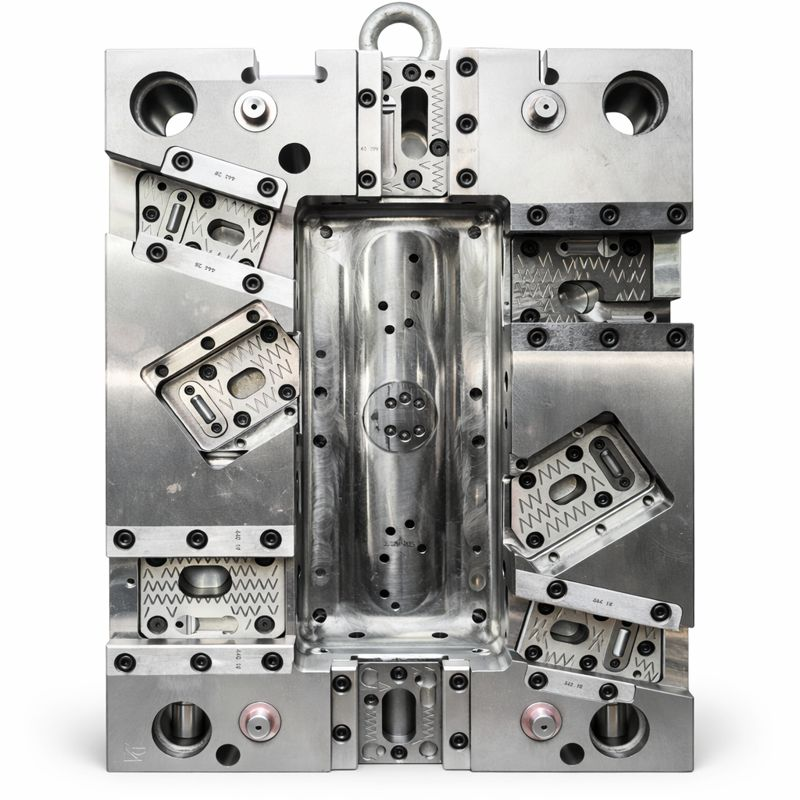
Simplifying the design of your die casting mold can lead to substantial cost savings. The relationship between simplifying features and reducing costs lies in how streamlined designs minimize complexity, lowering tooling and maintenance costs.
Reducing Tooling and Maintenance Costs:
When you simplify the mold design, you reduce the number of components needed for production. Fewer intricate features mean less machining time, fewer parts to produce, and fewer maintenance requirements.
● Avoid Complex Geometries: Intricate features, such as deep cavities, sharp edges, or complex core-pulling mechanisms, demand advanced tooling and more labor hours to produce. Simplifying these features can significantly cut down on tooling and manufacturing costs.
● Fewer Mold Components: Complex molds often require additional components, such as custom inserts or side cores, that increase both the cost and time to develop. Simplified designs reduce the need for these extra components, directly saving on material costs.
Diamond's Approach to Standardization:
Diamond Precision Molds focuses on standardized mold structures to reduce unnecessary complexity in automotive mold designs. By creating molds that rely on common components, Diamond has streamlined production, reducing both development time and costs. This approach ensures that parts fit together more easily, and they can be quickly adapted to new product lines.
Standardize Parts:
Using standardized components across different molds is key. This approach reduces the need to design custom parts for every new product. Instead, manufacturers can use off-the-shelf components that are easier to source and cost-effective.
● Minimize Non-Essential Features:
Focus on the core functionality of the mold. Avoid adding features that do not directly contribute to the part's performance or ease of production. For example, a faucet handle mold, while needing to be durable and precise, does not require overly intricate design features. By keeping it simple, manufacturers can reduce both upfront costs and long-term maintenance needs.
Design for Ease of Manufacturing:
Design molds with ease of manufacturing in mind. This means considering factors like part ejection, cooling channels, and mold alignment. A design that allows for efficient part removal and minimal post-production adjustments will reduce overall costs.
● Example:
Diamond's simplified design for faucet handle molds exemplifies this approach. By focusing on the essential features—functionality and durability—Diamond reduced both the initial mold cost and the need for regular mold repairs or replacements. This approach ensures long-term cost savings for manufacturers, making it a win-win situation.
By focusing on simplicity, manufacturers can reduce both their upfront costs and ongoing expenses. Simplifying your die casting mold designs is a smart way to achieve cost efficiency without compromising the final product's quality.
Maintaining a consistent wall thickness in your die casting mold is crucial for achieving optimal results. It plays a significant role in uniform cooling, reducing defects, and ensuring the most efficient use of materials throughout the casting process.
Uniform Cooling and Quality Control:
When designing a die casting mold, maintaining uniform wall thickness ensures consistent cooling throughout the part. This prevents common casting defects like porosity (tiny air bubbles) and shrinkage, which can lead to product weaknesses. Uneven cooling can cause warping or cracks, leading to unnecessary scrap.
Material Optimization:
A consistent wall thickness helps optimize material usage by ensuring that the flow of molten metal is even. This reduces waste and lowers costs, as material consumption is balanced across the part.
Reducing Scrap and Rework:
Inconsistent wall thickness leads to higher scrap rates and rework costs. Parts with uneven thickness often need additional processing or corrections, increasing time and resources spent on each part. By following Diamond Precision Molds' approach to wall thickness consistency, manufacturers can significantly lower these costs while improving part quality:contentReference[oaicite:0]{index=0}.
Promoting Uniform Metal Flow:
Achieving consistent wall thickness starts with designing molds that promote even metal flow. One of the most effective ways is to optimize gate and runner designs so the molten metal flows evenly throughout the mold cavity. Ensuring the mold cavity is symmetrical can also help achieve uniform thickness, as this balances the metal flow and avoids areas that might cool too quickly or too slowly.
Managing Thermal Stresses:
Thermal stresses caused by uneven cooling are a major concern in die casting. By designing molds with uniform wall thickness, you minimize these stresses, preventing warping and improving the structural integrity of the finished product. For instance, automotive components that undergo high stresses during operation benefit greatly from a mold design with consistent wall thickness to withstand the demands of daily use.
Diamond’s Approach:
At Diamond Precision Molds, designers focus on achieving uniform wall thickness by using advanced mold flow simulation software to predict and optimize material flow. This technology helps design automotive molds and heat sink castings that not only have consistent wall thickness but are also robust enough for high-performance applications:contentReference[oaicite:1]{index=1}.
Aluminum Molds:
Aluminum is a popular choice in die casting due to its excellent thermal conductivity. When designing molds for aluminum, uniform wall thickness is often easier to achieve. The material cools relatively quickly, which means the design can focus on balancing wall thickness without excessive complications. Ideal thickness ranges from 1.5mm to 3mm, depending on the part's size and function.
Zinc Molds:
Zinc, while highly durable, presents more challenges due to its relatively slower cooling time. As a result, careful management of thickness variations is essential when designing molds for zinc. To avoid defects, such as cold shuts or excessive porosity, wall thickness should be consistent, especially in intricate designs. Design modifications like using thinner sections and smooth transitions between thick and thin areas help in achieving better material flow.Here’s a quick overview of recommended wall thickness for different materials:
Material | Recommended Wall Thickness | Benefits |
Aluminum | 1.5mm - 3mm | Good balance of speed and consistency in cooling |
Zinc | 2mm - 4mm | Careful control needed for better material flow |
Steel | 3mm - 5mm | Durable but slower cooling, ideal for high volumes |
By applying these techniques and guidelines, you can ensure that your molds are designed for efficiency, reducing both production time and material costs. Whether for automotive parts or heat sinks, achieving consistent wall thickness is a key strategy in optimizing the die casting mold process.
In die casting, the design features of draft angles and fillets play a crucial role in improving mold efficiency, ejection, and overall durability. When incorporated correctly, these features can significantly reduce manufacturing costs and extend the lifespan of your molds.
Draft Angles:
Draft angles are the slight taper added to the vertical walls of a die casting mold. These angles allow the part to be easily ejected from the mold without getting stuck. Draft angles prevent friction between the part and the mold, reducing wear on both components.
Fillets:
Fillets are rounded corners at the junctions of mold features. These smooth, curved edges replace sharp corners, which act as stress concentrators in the mold. By adding fillets, you can reduce the risk of cracks, especially in high-stress areas.
● Why They Matter:
○ Draft Angles: Help the part to come out of the mold smoothly, reducing the force needed to eject it.
○ Fillets: Prevent cracks and breaks in both the mold and the part, improving longevity.
At Diamond Precision Molds, their expertise in automotive and industrial components highlights the importance of these features. In high-precision parts, like automotive engine components, even the slightest improvement in mold flow and part ejection can significantly enhance overall quality:contentReference[oaicite:0]{index=0}.
Lower Ejection Forces:
Draft angles reduce the ejection forces required to remove the casting. Lower ejection forces mean less stress on the mold, leading to fewer repairs and longer mold life. Over time, this reduces the overall cost of maintenance and mold replacement.
Extended Mold Life:
Molds that incorporate fillets and draft angles are less prone to wear and tear. Sharp edges and corners tend to concentrate stress, leading to cracks and mold degradation. By rounding those areas, you reduce the likelihood of mold damage, extending the mold's useful life.
● Impact on Cycle Times:
The use of draft angles can also help speed up the ejection process, reducing cycle times. Shorter cycle times translate to higher productivity, further reducing per-unit costs.For example, aluminum die casting parts, often used in high-performance industries, benefit from draft angles and fillets. The reduced risk of part deformation and improved ejection make the process more efficient, lowering costs associated with defects and rework.
Recommended Draft Angles:
The ideal draft angle depends on the material and part complexity. Here’s a quick guide:
● Aluminum and Zinc Parts: 1–2 degrees
● Steel Parts: 3–5 degrees
These angles ensure smooth ejection without putting undue stress on the mold or part.
Fillet Sizes:
Fillet radii should generally be at least 0.5mm–1mm for standard parts. For more complex designs, larger radii may be necessary to optimize metal flow and prevent stress buildup.
Example – Precision Automotive Parts:
For high-precision automotive parts like engine brackets or transmission housings, rounded fillets optimize casting flow. This ensures that molten metal fills the mold evenly, preventing defects such as porosity or air pockets. The application of these design principles not only improves part quality but also reduces manufacturing and maintenance costs in the long run.
By incorporating these features, manufacturers can improve both the functionality and cost-effectiveness of their molds, especially for industries with high-precision requirements like automotive, electronics, and aerospace.
Standardizing components in die casting molds can significantly reduce costs and improve production efficiency. By using common parts across different molds, manufacturers can streamline both the design and manufacturing processes, saving time and money.
Standardized Components:
Standardized mold components are parts used across various molds rather than custom-designed parts for each mold. These can include:
● Guide Pillars: Essential for aligning the mold halves during the closing process, ensuring proper part ejection.
● Ejector Pins: Used to push the cast part out of the mold, minimizing the need for manual intervention.
● Cooling Channels: These channels help cool the mold evenly, reducing cycle times and improving the efficiency of the die casting process.
Modular Components:
Modular components play a key role in speeding up the design and manufacturing process. By using these common parts in various mold designs, manufacturers can avoid the time-consuming task of designing new components for each mold. For example, Diamond Precision Molds uses modular components to create molds for automotive die casting that are both flexible and cost-efficient:contentReference[oaicite:0]{index=0}.
Impact on Inventory Management and Procurement:
When manufacturers use standardized components, they can reduce their inventory of custom parts. Instead of maintaining a wide range of unique mold components for every project, manufacturers can stock common, readily available parts. This approach lowers procurement costs and simplifies inventory management.
● Fewer Custom Components: By relying on standardized parts, manufacturers can eliminate the need for expensive custom tooling for each mold.
● Lower Production Costs: Standardized components reduce lead times and manufacturing complexity, which directly translates to lower production costs.
Diamond’s Strategy in Automotive Die Casting Molds:
At Diamond Precision Molds, using standardized components in automotive molds has proven to be an effective way to streamline production. The company has achieved faster mold production and lower manufacturing costs by standardizing key components like guide pillars, ejector pins, and cooling systems:contentReference[oaicite:1]{index=1}. This strategy not only improves efficiency but also ensures consistent quality across different product lines.
Tips for Incorporating Standardized Components:
● Start with Commonly Used Parts: Identify the components that are frequently used across multiple mold designs, such as guide pillars and ejector pins, and source them from reliable suppliers.
● Modular Design Approach: Adopt a modular design strategy, where parts of the mold are interchangeable. This allows you to create different molds by simply swapping modular components, rather than designing an entirely new mold from scratch.
● Use Standardized Cooling Systems: Cooling channels are a critical part of the mold design. Standardizing these channels can reduce customization and lower mold production costs, as they can be adapted for various applications.
By integrating these practices into your mold designs, you can ensure greater flexibility, reduce custom tooling costs, and significantly streamline your mold production process. Standardizing components is a smart strategy for manufacturers looking to reduce costs without sacrificing mold quality or performance.
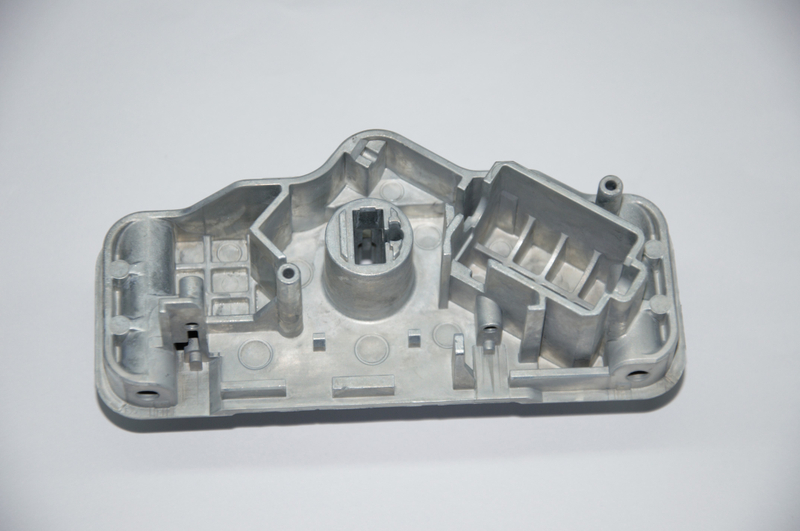
Efficient mold cooling and ventilation are crucial to reducing die casting costs and improving the overall quality of parts. Proper optimization ensures uniform cooling, speeds up the production cycle, and reduces the likelihood of defects.
Optimizing Cooling Channels:
The cooling system in a die casting mold plays a critical role in controlling cycle time and ensuring that parts solidify evenly. If cooling channels are not properly designed or placed, it can lead to longer cycle times, increased energy consumption, and inconsistent part quality. By optimizing cooling channels:
● Cycle Time Is Reduced: Faster cooling results in quicker solidification of parts, speeding up the overall production process.
● Part Quality Improves: Even cooling helps avoid defects like warping or dimensional inaccuracies.
● Production Efficiency Increases: With optimized cooling, manufacturers can achieve higher throughput, ultimately reducing costs.
Diamond’s Mold Cooling Strategy:
Diamond Precision Molds excels in optimizing mold cooling, particularly in high-precision automotive die casting parts. For example, in the production of controller shells, their optimized cooling systems have increased throughput and lowered production costs by reducing cycle time:contentReference[oaicite:0]{index=0}. This approach improves the efficiency of the entire production process, making it cost-effective.
Design Cooling Channels Close to the Mold Cavity:
The proximity of cooling channels to the mold cavity is essential for achieving uniform cooling. Cooling channels should be designed to follow the part geometry, ensuring that all areas of the mold cool at the same rate. The closer the cooling channels are to the cavity, the faster and more efficiently heat can be dissipated.
Use Dynamic Quenching Fluids for Faster Cooling:
Quenching fluids, such as water or oil, are used to cool the molten metal after it has been poured into the mold. Using dynamic quenching fluids—which are more effective in transferring heat—can significantly reduce cooling times. This approach is particularly beneficial in automotive mold production, where time and energy efficiency are critical to lowering operational costs.
For example, Diamond uses dynamic quenching in their automotive molds to reduce energy costs while maintaining the quality and precision required for parts like engine components:contentReference[oaicite:1]{index=1}.
Proper ventilation is just as important as cooling in die casting. If not properly managed, the mold can trap air, leading to defects such as porosity—tiny air pockets that compromise the structural integrity of the part. Effective ventilation ensures that:
● Air Traps Are Prevented: Venting allows trapped gases to escape during the casting process, preventing defects.
● Porosity Is Reduced: Ventilation systems reduce the likelihood of porosity by allowing air to flow out of the mold cavity.
● Improved Quality: Well-vented molds ensure more consistent parts with fewer defects, improving overall product quality.
Diamond’s Exhaust System Optimization:
At Diamond Precision Molds, the focus on optimizing exhaust systems in their automotive die casting molds has led to a significant reduction in scrap rates. Proper vent placement ensures that air is efficiently removed from the mold during the casting process, reducing the chances of defects like air pockets and improving part quality:contentReference[oaicite:2]{index=2}.
By optimizing both mold cooling and ventilation systems, manufacturers can reduce production costs, improve part quality, and increase overall efficiency. These improvements are essential in industries like automotive manufacturing, where precision and speed are crucial.
To reduce die casting mold costs without sacrificing quality, focus on the five key design tips outlined. From simplifying mold design to optimizing cooling and ventilation, these strategies not only cut costs but also improve product consistency. Implementing these changes alongside trusted mold makers like Diamond Precision Molds ensures substantial long-term savings.
Start optimizing your die casting mold design today. Contact experienced manufacturers to begin applying these cost-saving techniques.


