
Views: 0 Author: Site Editor Publish Time: 2025-10-27 Origin: Site
According to industry reports, the global automotive die casting market reached over USD 70 billion in 2023 and is projected to grow at a CAGR of about 5–6% through 2032. This steady rise reflects automakers’ strong demand for lighter, more efficient, and high-precision metal components. Die casting plays a crucial role in meeting these needs, forming durable aluminum, zinc, and magnesium parts with tight tolerances. In this post, you’ll learn what automotive die casting is, why it matters for modern vehicle design, and how new automation and digital technologies are reshaping the industry.
The choice of material defines how strong, light, and reliable an automotive part becomes. Each metal behaves differently under pressure and heat. Automakers select alloys not just for cost, but also for performance, corrosion resistance, and recyclability. Below are the most common die-casting materials shaping today’s vehicles.
Aluminum dominates the automotive die casting market — and for good reason. It’s light, strong, and easy to shape under high pressure. Aluminum parts resist corrosion, conduct heat well, and stay stable even at high temperatures.
Key Advantages:
Low density: helps reduce overall vehicle weight.
High strength-to-weight ratio: ideal for safety-critical parts.
Excellent recyclability: supports greener manufacturing.
Thermal stability: performs well under engine heat.
Common Applications:
| Component | Function | Benefit |
|---|---|---|
| Engine brackets | Supports engine and mounts | Lightweight strength |
| Gearbox housings | Encloses gears | Heat dissipation |
| Cylinder heads | Covers engine cylinders | High temperature resistance |
| Valve bodies | Controls hydraulic flow | Dimensional precision |
These parts must endure stress, heat, and vibration daily. Aluminum makes that possible without adding unnecessary weight.
Zinc doesn’t get as much attention, but it’s a hidden hero in cars. It’s denser than aluminum but extremely fluid when molten, so it fills molds perfectly. That means thin walls, sharp edges, and zero leakage — great for detailed parts.
Why Manufacturers Love Zinc:
Exceptional fluidity and accuracy for intricate designs.
High surface finish — minimal post-polishing needed.
Excellent strength and impact resistance.
Long mold life due to its lower melting point.
Typical Automotive Uses:
Door locks and latch housings.
Seat-belt retractors and small gear housings.
Electronic connectors and decorative trim.
Zinc’s smooth casting and tight tolerance help ensure safety systems and interior mechanisms perform flawlessly.
Magnesium is the lightest structural metal on Earth — roughly 33% lighter than aluminum. It’s ideal for parts that demand strength but must stay ultra-light, such as electric-vehicle components and steering housings.
Benefits at a Glance:
Lowest density among die-casting metals.
High stiffness-to-weight ratio.
Superior heat dissipation for thermal management.
Fully recyclable and abundant in nature.
Common Automotive Uses:
| Part | Function | Why Magnesium? |
|---|---|---|
| Steering wheels | Reduces mass | Improves handling |
| Instrument panels | Low weight | Increases crash safety |
| EV battery housings | Thermal control | Enhances efficiency |
| Transmission covers | Strength & cooling | Lightweight durability |
Its lightness helps vehicles accelerate faster, handle better, and improve energy efficiency — essential for EV design.
Beyond the “big three” — aluminum, zinc, and magnesium — other metals are gaining traction. Copper alloys appear in components exposed to high heat, like electrical terminals. Steel alloys offer unmatched tensile strength for heavy-load parts such as suspension arms or knuckles. Meanwhile, hybrid materials and metal–composite blends are emerging for applications demanding both rigidity and vibration absorption.
Trends to Watch:
Use of copper-based alloys in high-conductivity connectors.
Development of aluminum–magnesium composites for EV frames.
Integration of lightweight hybrid castings combining metals and polymers.
As new alloys evolve, the future of automotive die casting promises even greater strength, efficiency, and sustainability.
The die casting process is the heart of modern automotive production. It transforms molten metal into precise, durable parts within seconds. Two main casting systems — hot chamber and cold chamber — define how efficiently that happens.
Both systems use high pressure to push molten metal into a mold, but they differ in design and purpose.
| Feature | Hot Chamber Die Casting | Cold Chamber Die Casting |
|---|---|---|
| Best for | Low-melting-point metals (zinc, magnesium) | High-melting-point metals (aluminum, brass) |
| Heating method | Built-in furnace melts metal inside the machine | Metal is melted separately and ladled into the chamber |
| Cycle time | Faster (up to 18,000 shots per hour) | Slower due to external transfer |
| Efficiency | High for small parts, minimal waste | Ideal for larger components, greater strength |
| Die life | Longer because of lower temperature stress | Shorter due to high heat exposure |
Hot chamber machines keep the molten metal inside the casting unit. A hydraulic piston forces it directly into the die. That means less handling and shorter cycles. Cold chamber machines, on the other hand, pour metal from a separate furnace into the shot sleeve before injection. It’s a bit slower, but it handles aluminum’s higher melting point safely.
Once the metal is ready, the real transformation begins. The process runs fast but follows a strict order — injection, cooling, and ejection.
Injection – Molten metal enters the die cavity under intense pressure (up to 150 MPa). It fills every corner, capturing fine details and thin walls.
Cooling – The die cools quickly, solidifying the metal. The rate of cooling affects grain size and final strength.
Ejection – Once solid, ejector pins push the new part out. The mold closes again, ready for the next shot.
Pro tip: shorter cooling time speeds up production, but too fast can cause internal stress or warping. Balance is key.
Automation has transformed how foundries work. Robots handle metal pouring, trimming, and even mold lubrication — keeping workers safe and production steady.
Smart manufacturing tools now monitor:
Temperature and pressure sensors — to detect early signs of variation.
AI vision systems — that scan each part for cracks or porosity.
Digital twins — that simulate cycles and predict maintenance needs.
Automated cells reduce downtime, improve consistency, and extend die life. They also track data in real time, allowing engineers to tweak settings before defects appear.
Even with high precision, die casting faces some persistent challenges.
Porosity, shrinkage, and die fatigue can all affect performance — but modern control methods keep them in check.
| Challenge | Cause | Prevention Strategy |
|---|---|---|
| Porosity (air pockets) | Trapped gas during filling | Vacuum assist, optimized gating design |
| Shrinkage | Uneven cooling rates | Controlled temperature zones, balanced die design |
| Die wear | Repeated heating and cooling | Use of high-grade tool steel, surface coatings |
| Hot spots | Metal accumulates unevenly | CFD simulation for better flow and venting |
| Dimensional distortion | Rapid solidification stress | Preheating molds, uniform cooling, post-heat treatment |
With simulation software and sensor feedback, manufacturers catch these issues early. That’s how today’s die casting plants deliver millions of perfect automotive components — cycle after cycle.
Every car on the road today depends on dozens of die-cast components. These parts keep vehicles lighter, safer, and more efficient. From engine blocks to EV battery housings, die casting ensures precision where it matters most.
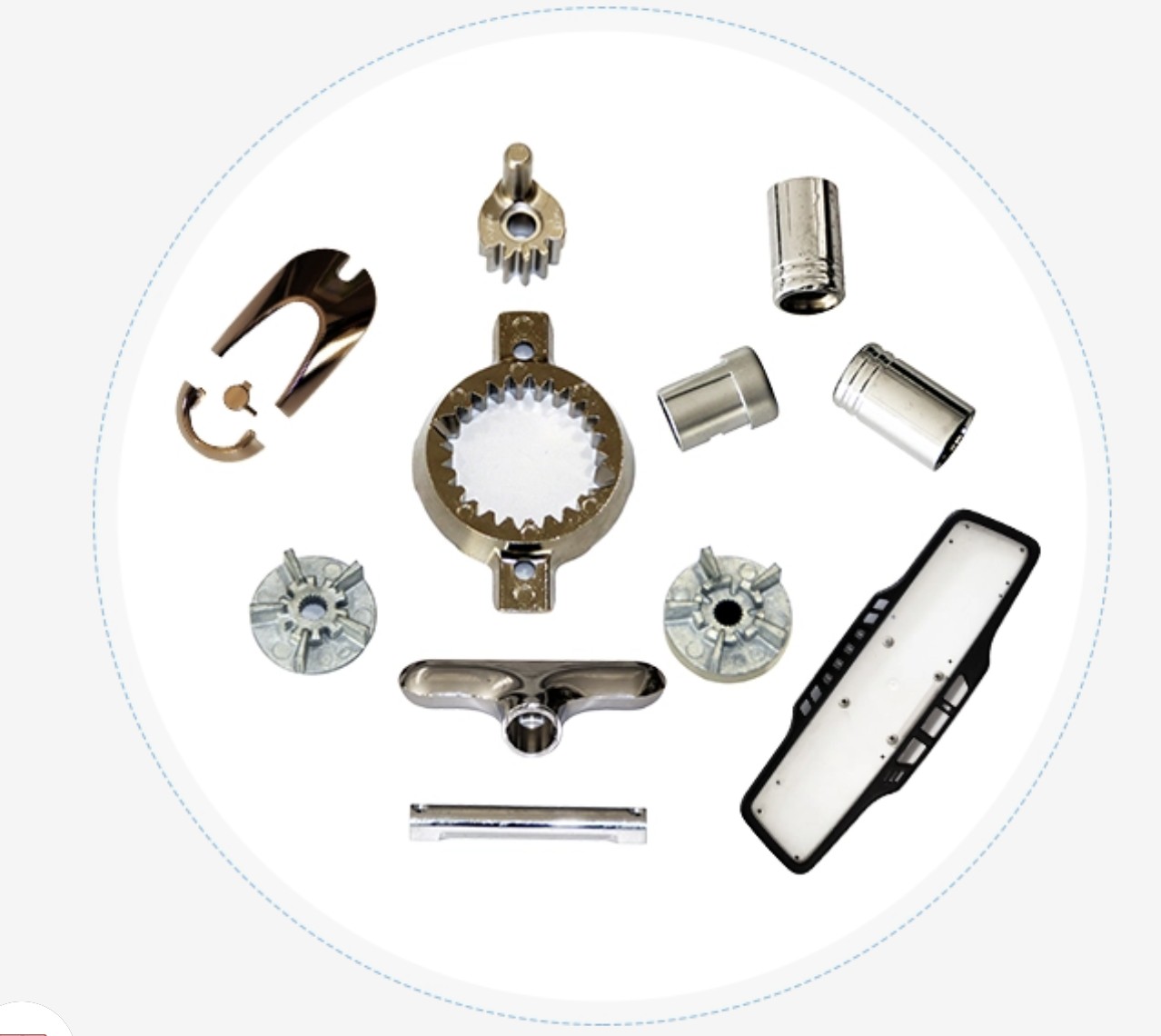
The powertrain is the beating heart of any vehicle. It converts energy into motion, and die casting plays a key role in shaping these high-stress parts.
Typical Die-Cast Powertrain Parts:
| Component | Function | Material | Key Benefit |
|---|---|---|---|
| Engine blocks | Houses pistons and crankshaft | Aluminum | Lightweight, heat resistant |
| Cylinder heads | Seals combustion chamber | Aluminum | Withstands high pressure and heat |
| Valve bodies | Controls hydraulic flow in transmissions | Aluminum | Precision control and leak-free sealing |
| Transmission cases | Encases gear systems | Aluminum | Durable, excellent thermal conductivity |
Aluminum dominates here because it offers the right mix of strength, heat resistance, and low mass. Each piece must handle vibration, oil pressure, and thermal expansion — all while staying perfectly aligned.
Structural integrity defines safety and stability. Die-cast aluminum and magnesium make vehicle frames strong yet lighter than welded steel structures.
Key Applications:
Brackets and mounts – secure components without adding bulk.
Suspension arms – absorb shocks and improve driving comfort.
Steering housings – ensure precise motion control.
Cross-car beams – connect body sections, reinforcing the vehicle frame.
These parts undergo constant mechanical stress. That’s why automakers prefer die-cast alloys — they provide uniform strength and resist fatigue over time.
Modern vehicles are packed with electronics. Each sensor, module, or control unit needs protection from heat, vibration, and moisture.
Common Die-Cast Electronic Parts:
| Component | Purpose | Material |
|---|---|---|
| ECU covers | Protects engine control units | Aluminum or zinc |
| Lidar housings | Shields optical sensors | Magnesium |
| Radar modules | Encloses advanced driver assistance systems (ADAS) | Aluminum |
| Sensor enclosures | Houses safety or motion sensors | Zinc or aluminum |
Die-cast housings act like armor. They dissipate heat efficiently, block electromagnetic interference, and ensure precision alignment for sensitive electronics.
Inside the cabin, die casting keeps safety features compact and reliable. Even small parts — often hidden from view — perform critical functions.
Examples Include:
Door lock mechanisms – zinc castings that ensure smooth engagement.
Seat-belt retractors – precision parts that coil and release straps safely.
Steering-column supports – rigid aluminum pieces absorbing crash energy.
Mounting brackets – secure dashboards and consoles in place.
Each component demands high dimensional accuracy and fatigue strength. That’s why zinc and aluminum dominate this segment — they combine rigidity with flawless surface finishing.
Electric vehicles (EVs) have opened a new chapter for die casting. They require lightweight enclosures and complex thermal-management structures.
Leading EV Applications:
| Component | Function | Benefit |
|---|---|---|
| Battery housings | Encases and protects lithium-ion cells | Lightweight, heat-dissipating |
| Inverter housings | Controls power conversion | Excellent electrical insulation |
| Cooling modules | Regulates battery and motor temperature | High thermal conductivity |
| Giga-cast frames | Large one-piece structural sections | Reduces assembly time and cost |
Manufacturers now use giga casting — single, massive aluminum castings replacing multiple welded parts. It’s faster, cleaner, and perfect for EV platforms aiming for strength, simplicity, and efficiency.
Automotive engineers turn to die casting because it offers speed, precision, and versatility — all at once. It helps them build lighter, more efficient vehicles while keeping costs under control. Here’s how this process continues to reshape the global automotive industry.
Weight reduction is everything in modern vehicle design. A lighter car burns less fuel, accelerates faster, and stops sooner. For electric vehicles, it also means a longer driving range per charge.
Why Die Casting Helps:
Aluminum and magnesium castings cut component weight by up to 50%.
Less weight equals better fuel economy and reduced emissions.
Strong metals maintain safety and rigidity — no compromise needed.
| Vehicle Type | Example Component | Material | Weight Saving |
|---|---|---|---|
| Gasoline car | Transmission housing | Aluminum | ~35% lighter |
| Hybrid | Engine mount | Magnesium | ~40% lighter |
| EV | Battery enclosure | Aluminum alloy | ~30% lighter |
Lighter components mean cleaner, more responsive vehicles. That’s why die casting sits at the core of fuel-efficiency strategies worldwide.
Every curve, ridge, and cavity in a modern car matters. Die casting gives designers the freedom to turn complex shapes into one seamless component. There’s no need for welding, fastening, or multiple mold steps.
What Makes It Flexible:
Thin walls — as fine as 1.0–1.5 mm — yet structurally strong.
Tight tolerances reduce machining needs.
Intricate internal channels can be formed directly during casting.
Surface finishes come out smooth and ready for coating or polishing.
Die casting allows engineers to merge several parts into a single, stronger piece. It reduces assembly time and potential weak points — making every gram count.
Die-cast parts don’t just look precise — they are precise. High pressure ensures molten metal fills every detail of the die, eliminating voids and inconsistencies.
Mechanical Strength Advantages:
| Property | Typical Result | Why It Matters |
|---|---|---|
| Tensile strength | Up to 400 MPa | Handles high stress under load |
| Dimensional tolerance | ±0.005 in (0.13 mm) | Perfect fit for moving parts |
| Heat resistance | Up to 250°C | Works under engine temperatures |
| Repeatability | 1 mold = thousands of identical parts | Ideal for mass production |
When a car’s transmission or steering part needs to endure vibration and heat, die-cast metal delivers consistent performance — every time.
Automakers love die casting for its economics as much as its accuracy. Once the mold is made, each cycle runs fast — often under one minute.
Cost-Saving Features:
High-volume output: one mold produces thousands of parts.
Low scrap rate: excess metal can be reused.
Minimal machining: precision casting reduces secondary processing.
Long die life: tool steel molds can last for over 100,000 shots.
| Production Scale | Cycle Time | Cost per Unit | Typical Material |
|---|---|---|---|
| Small parts (zinc) | 5–10 sec | Low | Zinc alloy |
| Medium parts (aluminum) | 30–60 sec | Moderate | Al-Si alloys |
| Large parts (structural) | 60–120 sec | High, but efficient | Aluminum or magnesium |
The faster the cycle, the better the economics — and that’s where die casting truly excels.
Die casting supports sustainability goals from start to finish. Most aluminum and magnesium alloys can be recycled indefinitely without losing quality.
Eco-Friendly Practices in Modern Foundries:
Use of recycled aluminum reduces energy demand by up to 95%.
Closed-loop cooling systems minimize water waste.
Energy-efficient furnaces cut carbon emissions.
ISO 14001 and IATF 16949 certifications ensure environmental compliance and product consistency.
| Green Metric | Improvement | Description |
|---|---|---|
| Recycled alloy content | 60–80% | Common in modern casting plants |
| Energy reduction | 30–50% | Via induction furnaces |
| Waste reuse | Nearly 100% | Re-melting of scrap runners |
As automakers shift toward greener production, die casting offers a powerful blend of performance and environmental responsibility.
The global automotive die casting industry is evolving fast — powered by electric mobility, sustainability goals, and digital transformation. Manufacturers worldwide are rethinking how they produce metal components to meet the next generation of vehicle demands.
The market for automotive die casting keeps climbing. According to recent studies, it was valued at around USD 70–72 billion in 2023 and is projected to hit nearly USD 120 billion by 2032. That’s a compound annual growth rate (CAGR) of roughly 5.5–6% over the next decade.
Main Growth Regions:
| Region | 2023 Market Share | Key Factors Driving Growth |
|---|---|---|
| Asia-Pacific | ~45% | Strong EV adoption, mass manufacturing in China & India |
| Europe | ~25% | Lightweighting policies, CO₂ reduction targets |
| North America | ~20% | Technological innovation and large-scale OEM investment |
Global automakers are under pressure to meet efficiency standards. As a result, demand for aluminum and magnesium die-cast components continues to rise sharply.
Electric vehicles are reshaping the industry. They need lighter frames to offset battery weight and extend range. This is where die casting shines.
EV and lightweighting trends:
EV production expected to exceed 60% of total car sales by 2035.
Average aluminum content per vehicle is up 30% since 2015.
Governments enforce stricter emission norms, encouraging material substitution from steel to aluminum.
| Driver | Impact on Die Casting |
|---|---|
| CO₂ emission limits | Push OEMs toward lightweight alloys |
| EV battery systems | Need strong yet thermally stable housings |
| Global fuel economy laws | Encourage smaller, lighter components |
As the shift accelerates, automakers rely more on integrated aluminum frames and giga-cast body sections to reduce assembly complexity.
Technology is revolutionizing automotive foundries. Giga casting, first popularized by Tesla, involves producing massive one-piece aluminum structures — replacing dozens of smaller welded parts. It cuts weight, saves time, and boosts structural strength. Meanwhile, digital twins — virtual replicas of production lines — now monitor everything from metal flow to cooling rates. They let engineers simulate, predict, and fix problems before they happen.
Modern Tech at Work:
3D simulation software models molten flow and porosity.
AI analytics optimize injection pressure and die temperature.
Real-time monitoring ensures consistent product quality.
These tools reduce defects, extend mold life, and improve traceability across large-scale manufacturing operations.
Sustainability isn’t optional anymore — it’s a business necessity. Foundries are switching to energy-efficient induction furnaces and closed-loop water-cooling systems to cut resource use.
Green and smart factory practices:
Recycled aluminum content reaching 70–80% in production lines.
ISO 14001 and IATF 16949 certifications for eco-friendly operations.
Use of AI-based control systems to reduce energy waste.
Robotic casting cells to improve worker safety and efficiency.
| Initiative | Environmental Benefit |
|---|---|
| Recycled metal feedstock | Cuts carbon footprint by up to 90% |
| Water recycling loops | Saves up to 40% of cooling water |
| Smart furnace control | Reduces energy use per shot by 20% |
These advances are helping die casting evolve into one of the cleanest, most automated manufacturing sectors in the automotive world.
Despite its progress, the industry faces tough hurdles. High tooling costs and complex mold designs can slow down adoption, especially for small suppliers.
Major Challenges:
Tooling expense: Precision dies can cost hundreds of thousands of dollars.
Skilled labor shortage: Fewer technicians trained in automation and die maintenance.
Raw material volatility: Fluctuating aluminum and magnesium prices affect margins.
Technology gap: Smaller foundries struggle to afford AI and simulation systems.
| Challenge | Impact | Mitigation |
|---|---|---|
| High tooling cost | Limits new entrants | Shared mold programs, modular design |
| Labor shortage | Reduces production quality | Training and robotics integration |
| Raw material price | Increases cost per part | Recycling and local sourcing |
As automakers push toward electric, connected, and sustainable vehicles, die-casting suppliers must evolve just as quickly — embracing innovation while tackling these economic and technical barriers head-on.
Die casting keeps modern vehicles lighter, stronger, and more precise. It supports faster production, tighter tolerances, and long-term sustainability goals. Choosing the right alloy — aluminum, zinc, or magnesium — depends on design, temperature, and strength needs. When matched with the right process, die casting delivers unmatched efficiency for next-generation automotive manufacturing.
At DMMold, we deliver precision-engineered zinc die casting solutions tailored for the automotive industry. Using advanced hot-chamber casting technology and premium alloys like ZAMAK 3/5/7 and ZA-8/12/27, we produce components that meet the highest standards of strength, accuracy, and surface quality. Our in-house mold design and process control ensure consistent quality, minimal porosity, and long tooling life—perfect for high-volume automotive manufacturing.
We go beyond casting to provide full lifecycle support, from tooling and finishing to surface treatment and quality assurance. By integrating recycled zinc and energy-efficient production, we help automakers achieve both performance and sustainability goals. Choosing DMMold means choosing reliability, precision, and innovation in every zinc die-cast automotive part.
A: Aluminum is the most widely used due to its lightweight, corrosion resistance, and strength-to-weight ratio, making it ideal for mass production.
A: It reduces weight, improves fuel efficiency, and resists high temperatures. Aluminum also offers excellent recyclability and dimensional stability.
A: Common examples include engine blocks, transmission cases, valve bodies, brackets, sensor housings, and seat-belt retractors.
A: Lightweight die-cast alloys reduce vehicle mass, lowering fuel consumption and increasing performance or electric range.
A: Yes. It’s widely used for EV battery housings, inverter covers, and giga-cast structural frames that enhance strength and reduce assembly time.


