
Views: 0 Author: Site Editor Publish Time: 2025-10-24 Origin: Site
What makes modern door locks both precise and durable? The answer lies in die casting — a manufacturing process that injects molten metal into molds to create complex, high-accuracy parts. Known for its strength, smooth finish, and cost efficiency, die casting is widely used in industries from automotive to home hardware. In this post, we’ll explore the application of die casting in door lock accessories, revealing how this process enhances reliability, design, and performance.
Die casting is one of the most precise ways to turn molten metal into solid, durable parts. It’s fast, efficient, and perfect for creating complex shapes that need accuracy and smooth finishes — like the small mechanical pieces inside door locks.
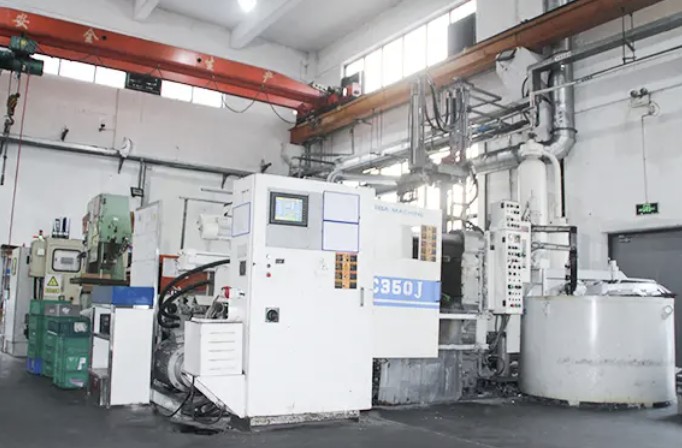
DMMOLD die casting machine
In simple terms, die casting means forcing molten metal into a hardened steel mold under high pressure. This pressure ensures the metal fills every detail of the mold, forming parts that are accurate and repeatable.
Here’s how it works step by step:
| Stage | Description |
|---|---|
| Melting | Metal is heated until it becomes liquid. |
| Injection | The molten metal is injected into the mold cavity at high pressure. |
| Cooling | It quickly cools and solidifies into the desired shape. |
| Ejection | The solid piece is pushed out from the mold. |
| Finishing | Any extra metal is trimmed, and the surface is cleaned or polished. |
These molds can be reused thousands of times, making die casting ideal for mass production. That’s why manufacturers prefer it — the process saves time, reduces waste, and ensures consistent quality.
Different metals give different strengths, finishes, and performance. The choice depends on what the part needs to do and where it will be used.
Zinc alloys (Zamak 3, 5) – Excellent for fine details and mechanical strength. They flow easily into molds and are ideal for small, precise door lock components.
Aluminum alloys – Lightweight, corrosion-resistant, and perfect for handles or decorative lock covers. They balance strength with good aesthetics.
Copper and brass alloys – Offer high durability and a premium look. Often used for luxury or decorative lock accessories.
These materials make die casting a versatile method for producing both functional and stylish metal parts used in modern door locks.
Door lock components must be strong, precise, and beautiful — all at once. Die casting meets these needs better than most manufacturing methods. It delivers accuracy, flexibility, and efficiency, making it a top choice for lock producers around the world.
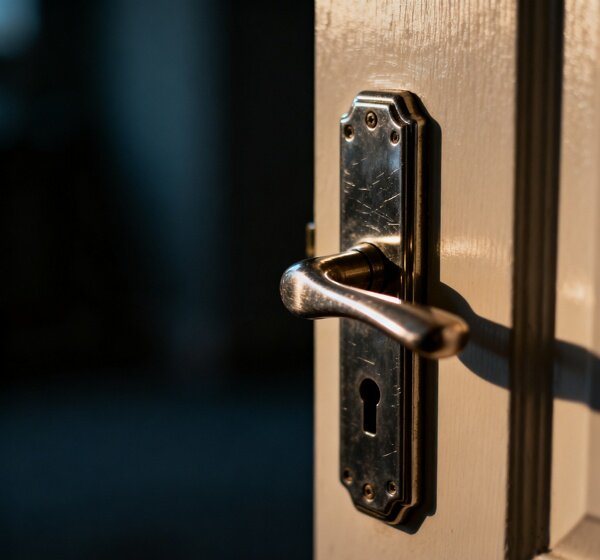
Every lock depends on tight-fitting parts to work smoothly. Die casting can achieve tolerances as close as ±0.005 inch, ensuring perfect alignment between moving components. That precision keeps handles firm, latches smooth, and locking mechanisms reliable. Even small variations can cause a lock to jam — die casting prevents that from happening.
Key benefits of high precision:
Consistent fit and operation across thousands of pieces.
Less post-machining and rework.
Long-term durability of internal mechanisms.
Door locks have intricate internal structures — from latch housings and cams to decorative trims and curved handles. Die casting easily handles these complex geometries by forcing molten metal deep into every mold cavity.
To see how it compares:
| Process | Complex Shape Capability | Cost Efficiency | Typical Use |
|---|---|---|---|
| Die Casting | Excellent — supports intricate, hollow, and thin-wall designs | High for mass production | Door locks, handles, decorative parts |
| CNC Machining | Very high precision but limited efficiency for complex shapes | Expensive for large runs | Prototypes, small batches |
| Metal Stamping | Limited to flat or simple profiles | Cheap for 2D parts | Brackets, plates |
This makes die casting the go-to method for functional and decorative parts that need strength and visual detail.
Modern door hardware isn’t just about function — appearance matters too. Die-cast parts come out of the mold with a naturally smooth surface, ready for finishing.
Manufacturers often use:
Electroplating for glossy, corrosion-resistant layers.
Powder coating or painting for color and durability.
Polishing or brushing for premium texture and shine.
A sleek surface improves both the look and lifespan of door locks, fitting well in modern architectural designs.
Speed is another reason die casting dominates in lock manufacturing.
Its rapid cycle times allow multiple parts to be produced within seconds.
That means:
High output, even for complex shapes.
Lower cost per piece, especially for bulk orders.
Reliable repeatability, ensuring each part matches the last one perfectly.
For OEM door lock makers, this combination of speed, precision, and cost control makes die casting the most practical and profitable solution.
Door locks might look simple, but each one is built from many precision parts. Most of these pieces are die-cast because the process combines accuracy, strength, and an attractive finish.
Here’s how each part benefits from die casting.
| Component | Function | Die Casting Benefit |
|---|---|---|
| Lock body housing | Holds and protects the core mechanism | High precision and structural strength |
| Latch bolt & deadbolt | Control the locking and unlocking action | Excellent wear resistance and reliability |
| Handle base & mounting plates | Connect the handle securely to the door | Great dimensional stability and alignment |
| Trim & decorative cover | Add a clean, stylish exterior | Smooth surface, easy plating and coating |
| Gear and cam parts | Transfer motion inside the lock system | Tight fit and long-term durability |
The lock housing, latch, and internal frame form the backbone of every door lock. They need to be solid, stable, and perfectly aligned. Die casting gives these parts uniform density and high tensile strength, making them resistant to repeated stress and wear. These parts are often made from zinc or aluminum alloys, which offer excellent hardness while keeping the weight low. That balance helps ensure reliable function over years of use.
Inside every lock, there are tiny moving parts — gears, cams, pins, and levers. Each one must fit precisely to keep the lock working smoothly. Die casting allows manufacturers to create these small, complex shapes consistently, avoiding friction or misalignment. Because the metal fills every cavity of the mold under pressure, each component comes out clean, accurate, and ready for assembly. It saves extra machining and keeps production fast and consistent.
The outer face of a lock matters just as much as what’s inside. Parts like trim rings, faceplates, and covers are die-cast to achieve a sleek, professional look. They can be chrome-plated, powder-coated, or brushed to match various door styles. Besides aesthetics, these finishes add corrosion protection, preventing tarnish and keeping the lock’s appearance fresh for years. Die casting makes it possible to combine beauty, durability, and function in a single process.
Creating high-quality door lock parts through die casting requires precision at every step. From the design of the mold to the final polish, each stage shapes how reliable and attractive the finished component will be. Let’s look at how this process unfolds.
Every die-cast part begins as a mold design. A well-designed mold determines the final accuracy, surface finish, and even the lifespan of the tooling itself. In door lock production, molds must handle complex shapes such as latch housings, handle bases, and gear chambers without distortion.
Manufacturers use advanced CAD (Computer-Aided Design) and CAE (Computer-Aided Engineering) tools to perfect these designs. Before cutting steel, engineers perform mold-flow simulations — digital tests showing how molten metal will fill the cavity.
This analysis helps prevent issues like:
Air traps and voids
Uneven cooling or shrinkage
Metal turbulence and incomplete fills
A precise mold design not only improves product consistency but also extends mold life, reducing long-term production costs.
Once the mold is ready, molten metal enters under high pressure.This step demands careful control of temperature, pressure, and injection speed. If any of these vary, defects like porosity or warping can occur. Modern die casting machines automate these settings to maintain consistent results. Sensors monitor each shot, ensuring steady metal flow and uniform cooling across all cavities.
Typical process parameters for zinc die casting:
| Parameter | Typical Range |
|---|---|
| Injection Pressure | 3,000 – 10,000 psi |
| Mold Temperature | 150 – 250 °C |
| Cooling Time | 1 – 5 seconds |
| Cycle Time | 10 – 40 seconds |
The cooling phase is just as critical as injection. It defines the metal’s grain structure, giving parts their strength and stability. Once cooled, the mold opens, and the part is ejected — ready for finishing.
Freshly ejected parts often have excess metal edges called “flash.” These are trimmed away during deburring and trimming stages. Then comes polishing, which smooths the surface and prepares it for coating. Surface treatments give the final product both beauty and protection.
Common options include:
Electroplating — adds gloss and corrosion resistance.
Powder coating or painting — offers color variety and scratch protection.
Passivation or special coatings — improve wear resistance and extend product life.
These finishing processes ensure every die-cast door lock part — from inner gears to decorative trims — meets both performance and aesthetic expectations.
Smart locks represent today’s evolution in security technology — blending mechanical precision with digital intelligence. From fingerprint and card access to fully app-controlled entry, these devices demand both structural strength and sleek design.
Here, die casting becomes essential: it allows manufacturers to create thin yet durable metal housings that protect internal electronics while keeping the overall profile compact and elegant. Using die-cast zinc or aluminum parts, modern smart locks achieve a perfect balance between reliability, miniaturization, and visual appeal, proving how this process elevates the performance and design of next-generation door lock accessories.
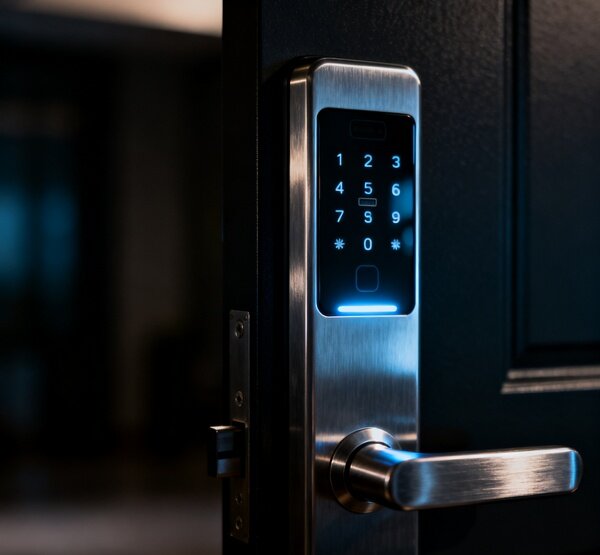
Modern locks, including smart locks, biometric locks, and digital access systems, rely on die-cast frames to hold sensitive electronics. These housings must fit circuit boards, sensors, and batteries precisely, protecting them from vibration and heat. A small shift or loose fit could affect signal stability or sensor alignment — die casting eliminates that risk.
How die casting supports smart lock design:
| Feature | Die Casting Advantage |
|---|---|
| Precision Housing | Ensures accurate fit for PCBs, gears, and sensors |
| Compact Structure | Thin walls and detailed cavities reduce overall lock size |
| Thermal Management | Metal conducts heat away from internal electronics |
| Surface Options | Smooth finish for modern aesthetics and coating compatibility |
These housings often use zinc or aluminum alloys for balance — light enough for battery-powered locks, strong enough to resist tampering.
Precise Fit for Electronic Modules
Every smart lock needs alignment between its moving parts and electronic modules. Die casting guarantees tight tolerances, preventing gaps that could affect lock response.
Compact and Elegant Design
The ability to create thin walls and intricate geometries allows designers to make smaller, more stylish locks. It helps brands blend technology into sleek architectural hardware.
Long-Term Reliability and Durability
Die-cast housings resist wear, corrosion, and temperature changes. They ensure the lock performs consistently — whether on a busy office door or an outdoor gate.
Cost and Production Efficiency
Once molds are set, production runs quickly and consistently. That efficiency supports large-scale smart lock manufacturing without sacrificing precision.
By integrating die-cast components, manufacturers achieve both technological performance and lasting strength, enabling the next generation of secure, connected door systems.
As door lock designs grow more advanced, so do the demands on die casting. Manufacturers must constantly refine their processes to meet higher standards of precision, surface finish, and sustainability. Let’s explore the main challenges and the innovations shaping the future of die casting in lock production.
Even the most efficient die-casting setups face engineering limits. Each production stage — from mold design to finishing — can introduce small but critical issues.
Common technical challenges include:
| Issue | Impact on Product | Control Methods |
|---|---|---|
| Mold Wear | Reduces accuracy and surface finish over time | Use high-hardness tool steels, regular maintenance |
| Porosity | Trapped air weakens parts, affects plating | Apply vacuum systems, optimize injection speed |
| Heat Management | Uneven cooling causes warping or cracks | Add cooling channels, control mold temperature |
| Surface Defects | Visible blemishes reduce appearance quality | Improve die lubrication, maintain proper venting |
Die-cast components used in door lock accessories require smooth surfaces and exact fits. Any variation can affect locking performance or coating adhesion. That’s why manufacturers use 3D scanning and automated dimensional inspection systems to detect deviations early.
Quality inspection technologies such as X-ray imaging and laser measurement help ensure every piece meets tolerance standards — often within ±0.005 inch. As demand for premium smart locks rises, these controls become even more critical.
The die-casting industry isn’t standing still. New techniques and materials are transforming how manufacturers build stronger, cleaner, and more sustainable door lock parts.
Key innovations shaping the future:
Vacuum and High-Pressure Precision Casting
Removing trapped air during injection prevents porosity and improves density.It creates cleaner surfaces — ideal for electroplated or polished lock housings.
Hybrid Manufacturing (Die Casting + CNC Finishing)
Combining die casting’s efficiency with CNC’s fine detailing ensures perfect tolerances. It’s especially useful for smart lock components where electronics require precise fitting.
Eco-Friendly Coatings and Recyclable Alloys
Manufacturers are shifting to low-VOC coatings and fully recyclable zinc and aluminum alloys. This reduces environmental impact and supports circular production systems.
Data-Driven Production and Automation
Smart monitoring systems track mold wear, temperature, and shot pressure in real time. They allow instant adjustments, keeping each casting cycle consistent and waste-free.
These trends show how die casting continues to evolve — not only solving current challenges but also redefining what’s possible in modern door lock manufacturing.
Die casting remains the most precise and efficient way to produce durable door lock components. It combines accuracy, smooth finishes, and cost efficiency in one process. By supporting both function and design, it elevates modern locks’ quality and appearance. Choosing a skilled die-casting manufacturer ensures lasting performance and reliability for every application.
Selecting the right die-casting partner is key to achieving reliable quality and long-term performance. A trusted manufacturer ensures your components meet both mechanical and aesthetic requirements while keeping production efficient and cost-effective.
What to look for in a supplier:
Proven ability to maintain tight tolerance control and precision across batches.
In-house mold design and engineering for faster project turnaround.
Consistent surface finishing, from polishing to electroplating and coating.
Flexible OEM/ODM support to customize designs for different lock models.
If you’re seeking a partner that delivers precision, efficiency, and dependable service, DMMold is an excellent choice. Their expertise in high-pressure die casting, mold design, and metal finishing ensures every door lock accessory meets the highest standards of durability and aesthetics.
Work with DMMold today to turn your design into precision-cast reality.
A: Zinc and aluminum alloys are the most common. Zinc offers fine detail, strength, and cost efficiency, while aluminum provides lightweight corrosion resistance ideal for modern lock housings and trims.
A: Die casting creates dense, uniform metal parts with precise fits. This reduces wear, enhances mechanical strength, and ensures consistent performance over years of use.
A: Yes. Die-cast housings provide compact strength and perfect alignment for electronic modules in smart, biometric, and digital locks.
A: Common finishes include electroplating, powder coating, painting, and polishing — all improving appearance and corrosion protection.
A: Choose one offering precise tolerance control, in-house mold design, advanced finishing, and reliable OEM/ODM capabilities for cost-effective production.


