
Views: 0 Author: Site Editor Publish Time: 2026-03-26 Origin: Site
Why do some die casting molds fail early? The answer often lies in the material choice. Zinc Die Casting creates precise metal parts. But mold material affects tool life and quality.
In this article, you will learn how to choose the right mould materials. You will also understand key factors behind durable Zinc Die Casting molds.
In Zinc Die Casting, moulds operate in an environment characterized by constant temperature fluctuations. Each production cycle exposes the mould cavity to molten zinc followed by rapid cooling as the metal solidifies. Although zinc alloys melt at lower temperatures than aluminum or copper alloys, repeated thermal cycling still places significant stress on mould materials over time.
A mould material must therefore demonstrate strong resistance to thermal fatigue, which occurs when repeated heating and cooling create micro-cracks on the mould surface. If this resistance is insufficient, the mould may experience heat checking, distortion, or premature failure. In high-volume manufacturing environments, this can lead to reduced tool life and inconsistent part quality.
Key characteristics that help mould materials withstand thermal cycling include:
● Stable microstructure under repeated heating
● Resistance to thermal expansion distortion
● Ability to maintain hardness at elevated temperatures
In practice, manufacturers often evaluate mould materials based on how they perform under repeated injection cycles rather than just their theoretical heat resistance. For example, precision zinc casting producers rely on stable tooling materials to ensure that intricate geometries and thin-wall designs remain consistent across long production runs.
A simplified comparison of critical thermal performance characteristics is shown below.
Performance Requirement | Importance in Zinc Die Casting | Impact on Mold Life |
Thermal fatigue resistance | Prevents surface cracking during repeated heating and cooling cycles | Extends mould service life |
Heat stability | Maintains mechanical strength at elevated temperatures | Prevents cavity deformation |
Controlled thermal expansion | Maintains dimensional accuracy of mould cavities | Improves part consistency |
When mould materials maintain stable properties under thermal cycling, manufacturers benefit from longer die life, fewer production interruptions, and more consistent casting quality.
Another essential requirement for mould materials is the ability to withstand the mechanical stress generated during injection. During the Zinc Die Casting process, molten metal is injected into the mould cavity at high pressure and velocity. This force ensures the metal fills thin walls and complex geometries, but it also places considerable load on the mould structure.
If the mould material lacks sufficient hardness or toughness, several issues may occur:
● gradual erosion of cavity surfaces
● deformation of thin mould sections
● dimensional drift in precision components
To prevent these problems, mould materials must combine high hardness with good impact toughness. Hardness protects the cavity surface from wear caused by molten metal flow, while toughness allows the material to absorb mechanical stress without cracking.
Several structural properties are particularly important for mould durability:
● Compressive strength: ensures the mould can resist deformation under injection pressure
● Wear resistance: protects cavity surfaces from erosion caused by molten metal flow
● Impact toughness: prevents cracking caused by mechanical shock and repeated operation
In high-precision Zinc Die Casting applications, mould materials must maintain these properties across thousands or even hundreds of thousands of casting cycles. When these mechanical requirements are met, the mould can maintain accurate cavity geometry, ensuring that each produced component meets dimensional specifications and surface quality standards.
Selecting mould materials is a balancing process between durability, machinability, thermal performance, and cost efficiency. Several tool steels and specialized alloys have become standard choices in the Zinc Die Casting industry because they provide reliable performance under repeated production conditions.
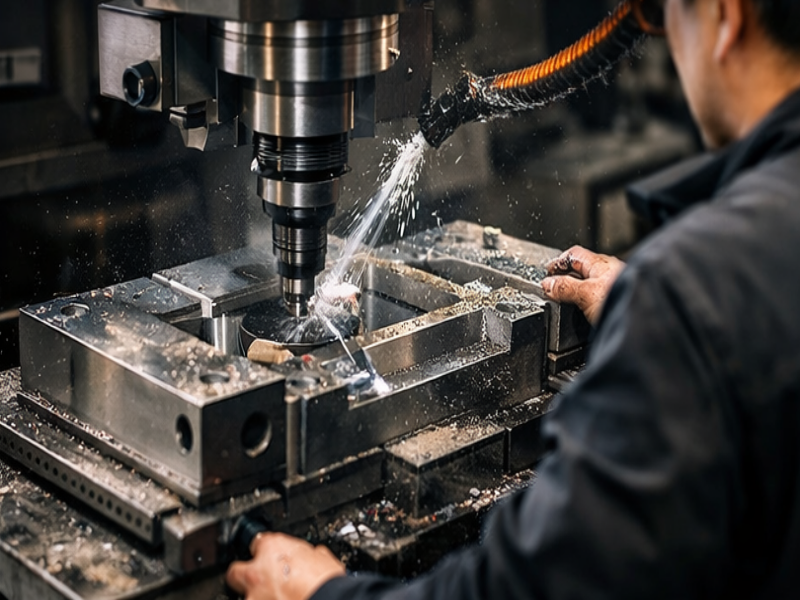
H13 hot-work tool steel is widely recognized as one of the most reliable materials for die casting mould cavities. Its popularity comes from its balanced combination of thermal fatigue resistance, toughness, and wear resistance, making it particularly suitable for high-volume Zinc Die Casting operations.
In production environments where moulds must withstand hundreds of thousands of injection cycles, H13 maintains structural integrity and resists heat-checking on the mould surface. This stability helps manufacturers maintain consistent part geometry and surface finish throughout extended production runs.
Typical advantages of H13 include:
● excellent resistance to thermal fatigue
● stable hardness at elevated temperatures
● strong mechanical toughness under repeated stress
Because of these characteristics, H13 is frequently used for core and cavity components that come into direct contact with molten zinc.
SKD61 and 8407 steels are closely related to H13 and belong to the category of hot-work tool steels. They are often selected for mould sections exposed to particularly demanding conditions, such as high injection pressure or intensive thermal cycling.
Compared with standard tool steels, these materials offer improved resistance to:
● surface heat checking
● abrasive wear
● thermal cracking caused by repeated production cycles
These steels are commonly applied in:
● mould cavity inserts
● gate areas where molten metal flow is strongest
● sections exposed to concentrated mechanical stress
Their improved durability allows mould designers to reinforce critical areas of the die without increasing the cost of the entire mould structure.
While cavity materials require high thermal resistance, the mould base and supporting structure typically experience lower direct thermal stress. For these components, P20 steel is widely used because it provides a good balance between machinability, strength, and cost efficiency.
P20 is a pre-hardened tool steel, which means it can be machined and polished without extensive heat treatment. This property significantly simplifies mould manufacturing and reduces production costs.
Common applications of P20 in Zinc Die Casting moulds include:
● mould base plates
● support frames
● structural components that maintain mould alignment
Because P20 offers reliable mechanical strength while remaining easy to machine, it is frequently used in medium-volume production tooling where cost control is an important factor.
In certain sections of a mould, efficient heat removal becomes critical for maintaining stable production cycles. For these localized areas, mould designers often use beryllium copper inserts instead of standard tool steels.
Beryllium copper offers significantly higher thermal conductivity than most steels. This property allows heat to dissipate quickly from specific mould regions, helping control solidification rates and improve overall casting quality.
Typical uses of beryllium copper inserts include:
● thin-wall casting areas requiring rapid cooling
● sections prone to overheating
● core pins and localized mould inserts
The advantages of this material can be summarized below.
Material | Key Advantage | Typical Application |
H13 Tool Steel | Excellent thermal fatigue resistance | Core and cavity surfaces |
SKD61 / 8407 | Improved heat-checking resistance | High-stress inserts |
P20 Steel | Good machinability and cost efficiency | Mold base and structural components |
Beryllium Copper | High thermal conductivity | Cooling-sensitive inserts |
By combining multiple materials within a single mould structure, engineers can optimize durability, cooling efficiency, and manufacturing cost. This hybrid tooling approach is widely used in modern Zinc Die Casting operations to ensure stable production performance and consistent casting quality.
Selecting mould materials for Zinc Die Casting is not simply a matter of choosing the hardest or most heat-resistant steel. Engineers must evaluate several production conditions simultaneously, including expected output, part geometry, cooling efficiency, and downstream finishing requirements. Each factor influences mould durability, casting precision, and overall production cost. Understanding these variables helps manufacturers design tooling systems that remain stable throughout long production cycles while maintaining consistent product quality.
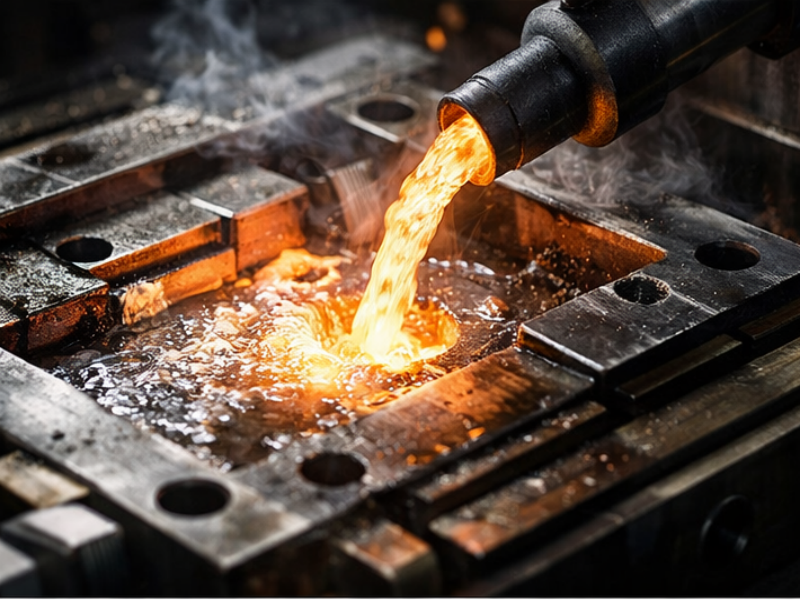
Production volume is often the first factor considered when selecting mould materials. The expected number of casting cycles determines how durable the mould must be and what level of tool steel performance is required. In low-volume or prototype production, mould materials may prioritize machinability and cost efficiency. In contrast, high-volume Zinc Die Casting operations require hardened tool steels capable of surviving hundreds of thousands of injection cycles without significant wear.
When mould materials are selected correctly, they help maintain dimensional consistency and reduce unplanned downtime caused by tool repairs. The relationship between production scale and material selection can be summarized as follows:
Production Scale | Typical Mold Material Approach | Expected Tool Life |
Prototype / low volume | Easily machinable steels or aluminum tooling | Short production runs |
Medium production | P20 or similar pre-hardened steels | Moderate cycle counts |
High-volume manufacturing | H13, SKD61, or equivalent hot-work steels | Long die life with minimal wear |
Beyond durability, selecting materials suited to production volume also affects operational efficiency. Longer-lasting moulds reduce maintenance interruptions and allow manufacturers to maintain stable casting conditions throughout extended production schedules.
The complexity of the casting design also plays a significant role in mould material selection. Zinc Die Casting is often used to produce parts with thin walls, complex geometries, and tight dimensional tolerances. These characteristics demand mould materials that can maintain cavity precision while supporting advanced machining methods such as CNC milling and EDM.
When mould materials lack dimensional stability, even small thermal expansion or mechanical deformation can cause inaccuracies in the final cast part. This issue becomes particularly critical for components used in precision assemblies, where consistent tolerances are essential for proper fit and function.
Important considerations for complex part geometry include:
● Machinability: the material must allow precise cavity machining without excessive tool wear.
● Dimensional stability: mould cavities must maintain accurate geometry across repeated heating cycles.
● Structural rigidity: mould sections must resist deformation during high-pressure injection.
In practical production environments, mould designers often combine multiple materials within a single die. High-performance steels may be used in critical cavity areas, while structural components may utilize more cost-efficient materials that still maintain mechanical stability.
Cooling efficiency is another essential factor influencing mould material selection. During Zinc Die Casting, molten metal must solidify quickly to maintain production speed and dimensional accuracy. If heat cannot dissipate efficiently from the mould cavity, cycle times increase and casting defects such as porosity or surface imperfections may occur.
Materials with higher thermal conductivity help regulate mould temperature and promote faster solidification. In some mould designs, specialized inserts are used in localized areas to improve cooling performance without increasing the cost of the entire mould structure.
Several design strategies improve thermal performance:
● Use of high-conductivity inserts: materials such as copper alloys can enhance heat transfer in localized mould regions.
● Optimized cooling channels: proper mould design ensures coolant flows close to high-temperature zones.
● Balanced thermal distribution: uniform temperature across the mould reduces distortion and improves casting consistency.
These measures not only shorten production cycles but also help maintain stable mould conditions, which is critical for large-scale Zinc Die Casting operations.
Surface finish requirements also influence mould material selection because the mould cavity directly determines the surface condition of the cast part. Zinc Die Casting is frequently used for products that require decorative finishes or corrosion-resistant coatings. Any imperfections in the mould surface can be transferred directly to the casting.
Manufacturers producing finished hardware components must therefore ensure that mould materials support high-quality polishing and maintain smooth cavity surfaces throughout long production runs. This is particularly important for industries where both functionality and appearance are important.
For example, Kunshan Diamond Precision Mold Co., Ltd. produces zinc die casting components used in furniture fittings, sanitary hardware, and beauty appliances. These products often undergo finishing treatments such as electroplating, chromate coating, silver plating, and precision polishing. A well-polished mould surface ensures that the base casting is smooth and uniform before these finishing processes are applied.
Typical finishing requirements and their relationship to mould quality include:
Finishing Method | Purpose | Mold Surface Requirement |
Electroplating | Improve corrosion resistance and appearance | Smooth, defect-free casting surface |
Chromate treatment | Protective corrosion barrier | Consistent surface texture |
Silver plating | Decorative and conductive finish | High polish quality |
Mechanical polishing | Surface refinement before coating | Stable mould cavity finish |
When mould materials maintain a stable polished surface, manufacturers can achieve consistent finishing results while minimizing secondary processing costs.
While understanding technical factors is important, practical decision-making often requires balancing engineering performance with manufacturing efficiency. Successful mould design integrates material selection with the overall production strategy to ensure reliable and cost-effective Zinc Die Casting operations.
One of the most common challenges in mould design is balancing the initial cost of tooling materials with their long-term durability. High-performance tool steels often require more complex machining and heat treatment, which increases the initial manufacturing cost of the mould. However, these materials typically provide longer service life and lower maintenance costs over time.
A practical evaluation approach considers both short-term investment and long-term operational efficiency. In many cases, choosing a higher-grade tool steel results in lower cost per part during mass production because the mould requires fewer repairs and replacements.
Key cost considerations include:
● tooling manufacturing cost
● expected number of casting cycles
● maintenance frequency and downtime
Evaluating these factors together helps manufacturers determine the most cost-effective mould material for a specific project.
Mould material selection should never be considered independently from mould design. Structural design elements such as cooling channels, insert configurations, and reinforcement features must be aligned with the mechanical and thermal properties of the chosen material.
A well-coordinated design approach typically includes:
● Strategic insert placement to reinforce high-stress areas of the mould
● Cooling channel optimization to improve heat dissipation and cycle time
● Material pairing strategies where different materials are used for cavities, bases, and inserts
By integrating design and material selection, mould engineers can improve durability while controlling production costs.
For manufacturers delivering finished components rather than raw castings, mould material selection must also consider compatibility with downstream surface treatments. The smoother and more stable the mould cavity surface, the easier it is to achieve consistent finishing results after casting.
Companies that combine mould manufacturing, casting production, and finishing processes often adjust their tooling strategies to ensure compatibility between casting and finishing stages. For example, Kunshan Diamond Precision Mold Co., Ltd. integrates precision mould manufacturing with zinc die casting production and multiple finishing technologies. By optimizing mould materials and surface preparation, the company ensures that cast parts can undergo polishing, electroplating, or protective coating without surface defects or adhesion issues.
This integrated manufacturing approach provides several advantages:
● improved consistency between casting and finishing stages
● reduced need for additional surface correction
● more reliable aesthetic and functional performance of finished products
Ultimately, selecting the right mould material is not only about tool durability—it also supports the entire production workflow, from casting to final surface finishing.
Choosing the right mould material improves Zinc Die Casting performance. It supports longer tool life and stable part quality. Proper material selection also improves cooling and surface finish. Kunshan Diamond Precision Mold Co., Ltd. delivers precise zinc cast parts. Their integrated casting and finishing services ensure durable products.
A: In Zinc Die Casting, mould material affects die life, dimensional stability, and resistance to thermal fatigue during repeated casting cycles.
A: Zinc Die Casting molds commonly use H13, SKD61, and P20 tool steels, while beryllium copper inserts improve local cooling performance.
A: Higher production volumes in Zinc Die Casting require durable hot-work tool steels to withstand long-term thermal cycling and injection pressure.
A: Key factors include production volume, part geometry, thermal conductivity, wear resistance, and surface finish requirements.


