
Views: 0 Author: Site Editor Publish Time: 2026-03-19 Origin: Site
Ever wondered why some cast parts fail? Often the problem is not the metal.
It is the zinc casting mold. In modern manufacturing, zinc die casting is widely used.But mold quality decides the result. A precise zinc casting mold controls accuracy and surface finish.Companies like Kunshan Diamond Precision Mold Co., Ltd. develop molds for automotive, electronics, and hardware parts.In this article, you will learn how mold design
leads to high-quality results.
In zinc die casting, the zinc casting mold is more than just a forming tool—it is the core element that determines whether the final product achieves the required precision, appearance, and structural reliability. Every stage of the casting process, from molten metal injection to solidification and ejection, is governed by the mold’s design and manufacturing accuracy. A well-engineered mold ensures consistent part geometry, reduces defect rates, and enables large-scale production without compromising quality. Because zinc alloys have excellent flow characteristics and solidify quickly, the mold must precisely control how the metal enters, fills, and cools within the cavity. This is why industries such as automotive components, electronics housings, and hardware fittings rely heavily on precision zinc casting molds to maintain product consistency and manufacturing efficiency.
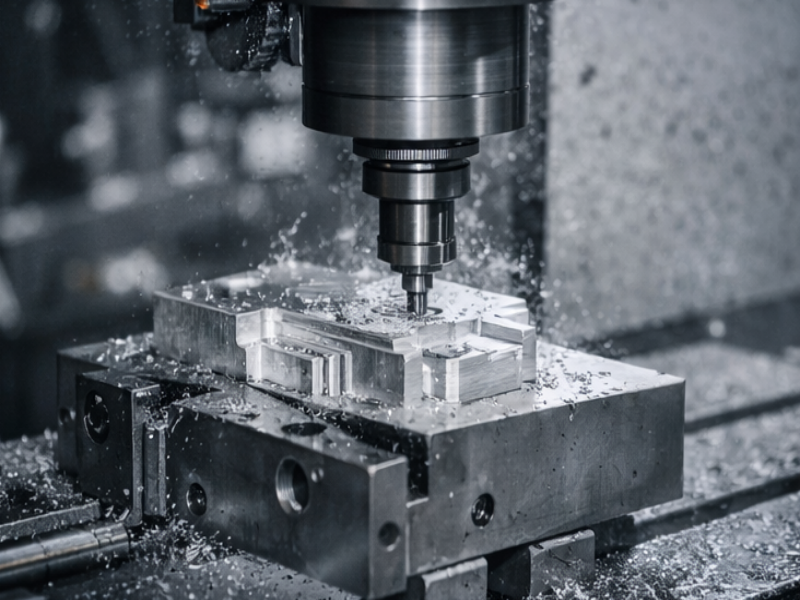
The geometry of a zinc die cast part is directly defined by the mold cavity, which acts as the negative shape of the final product. Every dimension, surface detail, and structural feature must be carefully machined into the mold with high precision. When molten zinc is injected into the cavity under pressure, it fills the mold space and solidifies, producing a component that mirrors the cavity’s shape. If the mold cavity is inaccurate or poorly designed, the resulting parts may suffer from dimensional deviations, assembly issues, or inconsistent quality between production batches.
In large-scale manufacturing, repeatability is just as important as accuracy. Precision zinc casting molds allow manufacturers to produce thousands—or even millions—of identical parts with minimal variation. This capability is essential in industries where parts must fit precisely with other components during assembly.
Key reasons why mold precision affects dimensional accuracy:
● The cavity defines all external and internal part dimensions.
● Tolerance control depends on the machining accuracy of mold inserts.
● Stable mold structure ensures consistent geometry during repeated casting cycles.
When molds are engineered with high precision, manufacturers can achieve stable production quality while minimizing machining or adjustment work after casting.
Another critical factor determined by the zinc casting mold is the surface quality of the final component. Zinc alloys are known for their excellent fluidity, meaning molten metal can flow easily into small details and reproduce the mold’s internal texture with remarkable fidelity. This property allows die casting to produce parts with smooth surfaces and complex decorative features directly from the mold.
Because the mold surface is replicated so precisely, the finishing quality of the cavity has a direct impact on the appearance and functional performance of the cast component. Polished mold surfaces result in smooth castings, while textured cavities can intentionally create specific surface patterns.
How mold surface quality affects final products:
● Smooth cavity surfaces lead to low surface roughness on cast parts.
● Fine mold textures can create decorative finishes without additional machining.
● High-quality surfaces improve adhesion of coatings and plating layers.
These characteristics are especially valuable when zinc die cast parts require electroplating, powder coating, or decorative finishing. Since the cast surface already has a refined finish, manufacturers often avoid extensive polishing or grinding operations.
Key advantages of high-quality mold surfaces include:
● Reduced need for secondary finishing processes
● Improved corrosion resistance after plating
● Enhanced visual appearance for consumer products
In industries such as electronics and decorative hardware, these advantages significantly reduce production costs while maintaining a premium product appearance.
One of the most significant advantages of zinc die casting is the ability to manufacture thin-wall components and intricate structures. Achieving this capability, however, depends heavily on the design accuracy and structural stability of the zinc casting mold.
Because zinc alloys flow easily and solidify quickly, well-designed molds can create narrow sections and complex geometries that would be difficult or expensive to produce using other manufacturing methods. Precision molds allow molten zinc to reach every corner of the cavity before solidification, ensuring that delicate structural features are fully formed.
Typical structural capabilities enabled by precision zinc casting molds include:
● Thin-wall components for lightweight product design
● Integrated structural ribs and mounting features
● Detailed logos, textures, or micro-structures
The following list highlights common structural advantages achieved through high-precision molds:
● Lightweight product design: Thin walls reduce material usage while maintaining structural strength.
● Integrated component features: Threads, bosses, and mounting points can often be cast directly into the part.
● Reduced machining requirements: Complex shapes can be produced in a single casting step.
In industrial applications, zinc casting molds can produce thin sections measuring only fractions of a millimeter while still maintaining structural integrity. This capability is particularly valuable in industries such as:
● Automotive hardware components
● Electronic device housings
● Precision mechanical fittings
By combining precise cavity engineering with zinc’s natural casting properties, manufacturers can produce parts that are both structurally efficient and visually refined.
Overall, the zinc casting mold plays a decisive role in determining whether die cast products achieve the required levels of precision, surface quality, and structural complexity. Without carefully engineered molds, it would be impossible to fully utilize the manufacturing advantages that zinc die casting provides.
Designing a high-performance zinc casting mold requires a balance of structural engineering, thermal control, and metal flow management. Unlike simple molds used in low-pressure casting processes, zinc die casting molds must withstand rapid injection cycles while ensuring molten metal fills the cavity evenly and solidifies with minimal distortion. Because zinc alloys have excellent fluidity and relatively low melting temperatures, mold design focuses heavily on controlled metal flow, precise cavity geometry, and thermal stability. When these design principles are properly implemented, manufacturers can achieve consistent dimensional accuracy, high surface quality, and minimal defect rates across large production volumes.
The gating and runner system forms the pathway that molten zinc follows as it travels from the injection chamber into the mold cavity. Proper design of this system ensures that the molten metal enters the mold smoothly, fills all sections evenly, and avoids turbulence that could introduce air pockets or structural defects.
In zinc die casting, metal enters the mold at high pressure. If the flow path is poorly designed, molten zinc may fill certain areas too quickly while leaving others incomplete. This uneven filling can lead to defects such as cold shuts, porosity, or surface imperfections.
Key functions of a well-designed gating system include:
● Directing molten zinc into the cavity with controlled velocity and pressure.
● Ensuring simultaneous filling of multiple cavity sections to prevent premature solidification.
● Reducing turbulence and air entrapment during metal injection.
The relationship between runner layout and casting quality can be summarized as follows:
Design Element | Purpose in Mold Design | Impact on Casting Quality |
Main runner | Transfers molten zinc from injection point to cavity network | Maintains stable flow rate |
Gate | Controls final entry of metal into cavity | Prevents turbulence and splashing |
Runner branches | Distribute metal evenly across cavity areas | Improves filling balance |
A balanced gating system is especially important when producing multi-cavity molds or parts with thin-wall structures. When molten zinc reaches each section of the cavity simultaneously, the resulting casting is more uniform and structurally stable.
The mold cavity is the most critical part of a zinc casting mold because it determines the exact shape and structural features of the finished component. Engineering the cavity requires careful consideration of geometry, metal flow behavior, and the material’s solidification characteristics.
Designing cavities for complex components involves more than simply reproducing the product shape. Engineers must anticipate how molten zinc will flow through narrow passages, how quickly it will cool, and how slight shrinkage may affect dimensional accuracy.
Several structural considerations are commonly used when designing cavities:
● Rounded internal corners help maintain smooth metal flow and reduce stress concentrations.
● Uniform wall thickness minimizes uneven cooling that could cause warping or internal stress.
● Strategic reinforcement ribs strengthen thin sections without significantly increasing weight.
A well-designed cavity also supports the creation of integrated product features such as mounting points, bosses, and detailed surface patterns. By incorporating these features directly into the mold, manufacturers reduce the need for additional machining steps.
Another important factor is dimensional stability during solidification. Zinc shrinks slightly as it cools, and the cavity must be designed with precise allowances so the final part meets the intended dimensions after cooling.
Even with a perfectly designed gating system, trapped air inside the mold cavity can still cause casting defects if it cannot escape during injection. This is why venting systems are essential components of a high-performance zinc casting mold.
During the injection phase, molten zinc pushes air ahead of it as it fills the cavity. If the air has no escape path, it becomes trapped inside the metal, forming porosity or surface blemishes. Venting channels allow this air to exit the mold quickly, ensuring that molten metal fills the cavity completely.
Key roles of venting systems include:
● Releasing trapped gases during metal injection.
● Preventing gas porosity in finished castings.
● Allowing molten zinc to fill intricate cavity details.
Thermal management is equally important. Because zinc solidifies rapidly, mold temperature must be controlled carefully to ensure consistent filling behavior and stable production cycles.
Cooling channel design helps regulate mold temperature by circulating coolant through internal passages. Proper thermal control provides several advantages:
● Prevents overheating that could damage mold surfaces.
● Maintains consistent solidification rates for each casting cycle.
● Reduces cycle time and improves overall production efficiency.
A stable mold temperature also contributes to longer tool life, since repeated thermal stress can gradually degrade mold materials if temperature fluctuations are excessive.
Modern zinc casting mold development increasingly relies on digital simulation technologies to improve design accuracy before the mold is manufactured. These tools allow engineers to analyze metal flow behavior, temperature distribution, and potential defect areas within the mold.
Mold flow simulation software can visualize how molten zinc will travel through the runner system and fill the cavity. By studying these simulations, engineers can identify potential problems such as incomplete filling, turbulence zones, or excessive cooling before production begins.
Typical insights provided by mold flow analysis include:
● Flow velocity patterns, showing how metal moves through the cavity.
● Pressure distribution, indicating whether injection pressure is balanced.
● Hot spots and cooling zones, helping engineers refine thermal control strategies.
These insights allow engineers to adjust gate placement, modify runner geometry, or redesign venting channels before the mold is fabricated. As a result, simulation-driven mold design reduces costly trial-and-error adjustments during production.
In modern die casting operations, combining advanced mold engineering with digital simulation tools significantly improves product quality, shortens development cycles, and ensures that zinc casting molds perform reliably throughout large production runs.
The manufacturing process of a zinc casting mold directly determines its performance, durability, and ability to produce consistent die cast components. Unlike general-purpose tooling, zinc die casting molds must withstand repeated high-pressure injection cycles while maintaining dimensional accuracy and stable thermal behavior. This requires advanced machining technologies, strict quality control, and carefully engineered mold structures. In modern manufacturing environments, mold development typically integrates precision machining, digital design tools, and customized engineering solutions to meet the specific requirements of different industries. By combining accurate fabrication with optimized mold structures, manufacturers can ensure reliable casting performance and efficient production cycles.
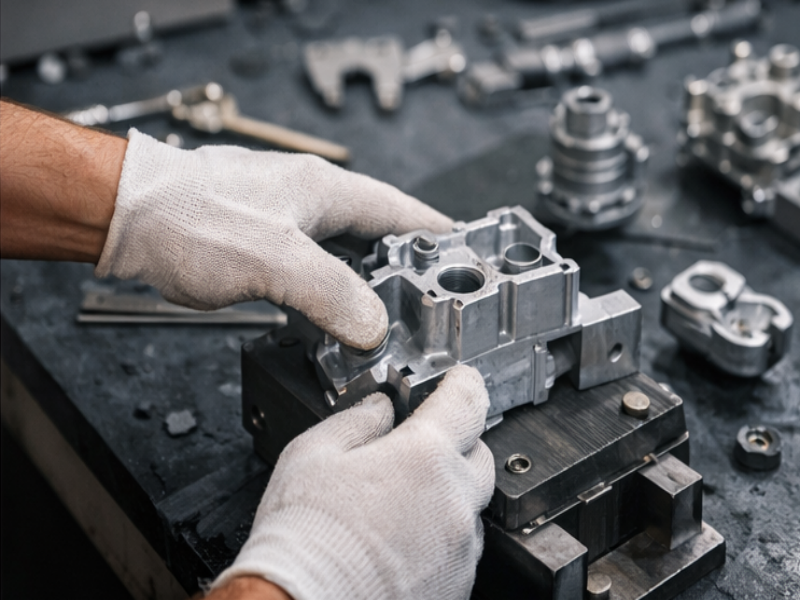
The production of a zinc casting mold involves multiple stages of precision machining and finishing processes, each designed to ensure that the mold cavity accurately reproduces the geometry of the final component. Because zinc die casting requires high dimensional accuracy, even small deviations in the mold cavity can lead to defects or inconsistent product quality during mass production.
Modern mold fabrication commonly integrates several advanced machining technologies:
● CNC machining: Used to create the main mold structure and cavity geometry with extremely high precision. Multi-axis CNC machines allow complex cavity shapes to be produced while maintaining tight tolerances.
● Electrical Discharge Machining (EDM): Ideal for forming intricate features that are difficult to achieve through conventional cutting methods. EDM is particularly useful for producing sharp corners, small slots, and detailed mold inserts.
● Surface finishing and polishing: Ensures the cavity surface reaches the required smoothness, which directly affects the surface quality of the die cast parts.
These machining techniques work together to ensure that mold cavities match the design specifications exactly. High-precision fabrication is essential not only for dimensional accuracy but also for maintaining stable casting conditions during repeated production cycles.
To better understand the role of machining technologies in mold fabrication, the following table summarizes their main functions.
Manufacturing Process | Purpose in Mold Fabrication | Contribution to Casting Quality |
CNC machining | Produces main mold structure and cavity geometry | Ensures dimensional precision |
EDM processing | Creates intricate features and narrow cavities | Enables complex part designs |
Surface polishing | Improves cavity smoothness | Enhances surface finish of cast parts |
A well-fabricated mold ensures that molten zinc fills the cavity consistently and that each casting cycle produces parts with identical dimensions and surface characteristics.
In zinc die casting, mold durability is closely connected to production efficiency. A mold designed and manufactured with high precision allows stable casting cycles, minimizes production interruptions, and supports long-term industrial operation.
Zinc alloys have a relatively low melting temperature compared with many other casting metals. This characteristic reduces thermal stress on mold materials and allows molds to maintain their structural integrity over extended production runs. However, durability still depends heavily on mold design, material selection, and machining accuracy.
Several factors influence mold durability and productivity:
● Accurate mold alignment ensures proper closure during injection, preventing flash and reducing wear.
● Optimized cooling systems maintain stable mold temperature, preventing overheating and extending tool life.
● Precision cavity machining reduces uneven stress distribution during metal injection.
A durable mold also contributes directly to faster production cycles. When metal flow and cooling behavior are properly controlled, each casting cycle can be completed quickly while still maintaining dimensional accuracy.
Typical advantages of high-quality molds in production environments include:
● Shorter casting cycles and higher output rates
● Reduced downtime caused by mold maintenance
● Improved consistency between production batches
In high-volume manufacturing, these factors significantly reduce the overall cost per part while maintaining strict quality standards.
Although the fundamental principles of zinc die casting remain the same, different industries often require customized mold solutions to meet their specific design and performance requirements. Product geometry, functional features, and production volume all influence how a zinc casting mold should be designed.
For example, components used in automotive applications often require higher structural strength and precise dimensional tolerances. Electronic components may demand extremely fine features and compact structures, while hardware products may emphasize decorative surfaces and corrosion resistance.
Customized mold development typically focuses on the following aspects:
● Adapting cavity design to match complex product geometries
● Optimizing gating systems for thin-wall or intricate components
● Adjusting mold structure to support high-volume production requirements
Specialized mold manufacturers play a crucial role in providing these tailored solutions. Companies such as Kunshan Diamond Precision Mold Co., Ltd. focus on the research, design, and manufacturing of precision zinc casting molds used in a wide range of applications, including automotive hardware, electronic fittings, and industrial components. Their expertise in customized tooling allows manufacturers to achieve consistent die casting quality while adapting molds to different product structures and production demands.
Customized mold development ultimately ensures that each zinc casting mold is optimized for its specific application, allowing manufacturers to produce high-quality components efficiently while maintaining stable production performance.
The zinc casting mold is key to quality casting.Good mold design improves accuracy and efficiency.Precision molds support complex zinc components.Kunshan Diamond Precision Mold Co., Ltd. provides advanced custom molds.Their tooling ensures stable production and high value.
A: A zinc casting mold forms molten zinc into precise components with consistent dimensions and surface quality.
A: Proper zinc casting mold design controls metal flow, reducing defects and improving dimensional accuracy.
A: A well-engineered zinc casting mold supports faster cycles and stable high-volume die casting.
A: Tool steels such as H13 are often used because a zinc casting mold must resist wear and thermal fatigue.
A: Yes. A precision zinc casting mold enables thin walls, intricate features, and repeatable industrial production.


