
Views: 0 Author: Site Editor Publish Time: 2026-04-02 Origin: Site
How are metal parts made so fast? The answer often starts with Die Casting Molds. These molds shape molten metal into precise parts. But how does the mold system really work?
In this article, you will learn how Die Casting Molds operate. We will explore their structure, casting cycle, and key design factors.
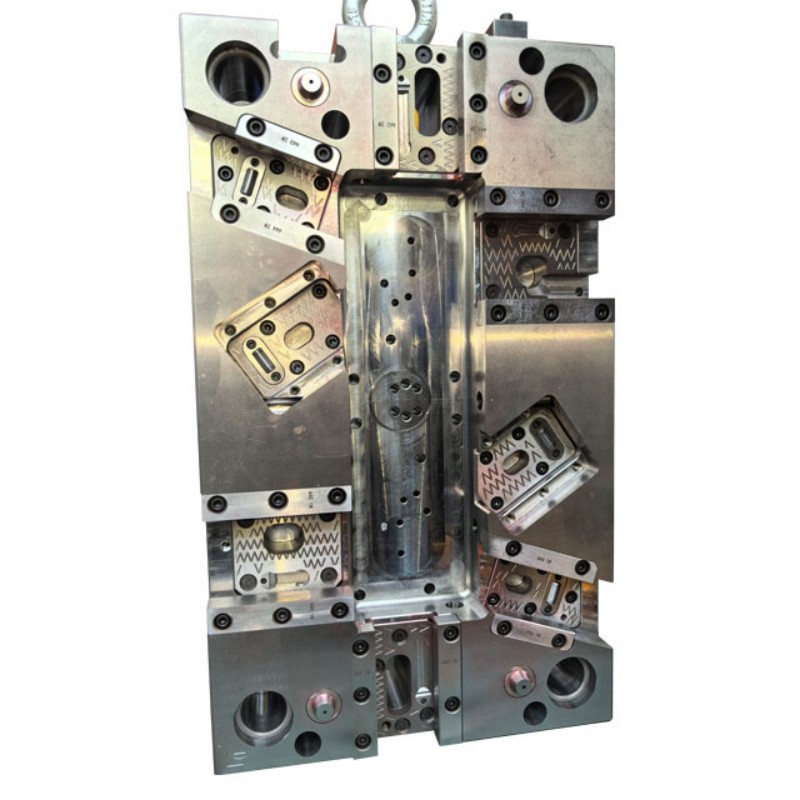
In the die casting process, die casting molds act as the precision tooling that transforms molten metal into fully formed industrial components. Molten metal—commonly aluminum, zinc, or magnesium alloys—is injected into the mold cavity under extremely high pressure. As the metal cools and solidifies inside the cavity, it takes on the exact geometry defined by the mold. This process enables manufacturers to produce complex shapes that would otherwise require multiple machining operations.
From a manufacturing perspective, the mold is not simply a container but a precision-engineered system that controls metal flow, cooling, and part formation. The mold cavity determines the external shape of the final product, while internal features such as ribs, holes, and recesses are created by specialized inserts and cores integrated into the mold.
Key characteristics of die casting molds include:
● High dimensional precision for producing repeatable parts
● Ability to withstand high temperatures and injection pressures
● Integration with machine systems that control injection and cooling
Because of these capabilities, die casting molds are widely used in industries where consistent quality and complex geometry are required, such as automotive housings, electronic enclosures, and structural hardware components.
Unlike sand casting or other temporary molding techniques, die casting relies on permanent molds made from hardened tool steel. These molds are designed for repeated use across thousands—or even millions—of production cycles. The durability of permanent molds allows manufacturers to maintain consistent tolerances while producing large quantities of identical components.
Permanent molds also contribute significantly to the efficiency of the die casting process. Since the mold is reused repeatedly, manufacturers can achieve faster production cycles and lower per-unit costs when producing parts at scale.
Key advantages of permanent molds in die casting include:
● High repeatability across production cycles
● Reduced need for post-processing or machining
● Ability to produce thin-walled and complex structures
● Consistent surface finish and dimensional stability
The following table highlights how permanent molds compare to temporary mold systems used in other casting methods.
Feature | Permanent Die Casting Molds | Temporary Casting Molds |
Reusability | Designed for thousands or millions of cycles | Usually used only once |
Production Volume | Ideal for high-volume manufacturing | Typically suited for low-volume production |
Dimensional Accuracy | High precision and repeatability | Lower consistency |
Surface Finish | Smooth surfaces with minimal finishing | Often requires additional machining |
Because of these advantages, die casting molds are particularly suited for industries that require mass production of precision metal parts, such as consumer electronics housings, automotive structural components, and appliance hardware.
Producing a high-quality die casting mold requires advanced engineering expertise and specialized manufacturing equipment. Mold manufacturers must design tooling that can handle extreme thermal conditions, high injection pressure, and long production cycles while maintaining dimensional stability.
Modern mold production typically involves a combination of technologies, including:
● CNC precision machining for cavity and core formation
● EDM (Electrical Discharge Machining) for intricate features
● Heat treatment processes to enhance hardness and durability
● Surface finishing to improve wear resistance and mold release performance
These technologies allow mold makers to produce tooling capable of supporting complex casting requirements across multiple industries. Precision mold manufacturers also collaborate closely with product designers and engineers to optimize mold design for manufacturability and efficiency.
For example, Kunshan Diamond Precision Mold Co., Ltd. focuses on the development of custom die casting molds for aluminum and zinc alloy components. The company integrates mold design, mold manufacturing, and die casting part production, allowing customers to obtain tailored tooling solutions for applications in automotive components, electronic hardware, and precision structural parts.
In industrial production environments, this level of integration helps ensure that molds are not only accurate but also optimized for long-term performance, production stability, and large-scale manufacturing demands.
A typical die casting mold is built as a two-part structure consisting of the fixed mold (cover die) and the movable mold (ejector die). These two sections work together during the casting process to form a sealed cavity where molten metal can be injected and shaped.
The fixed mold is mounted on the stationary side of the die casting machine and connects directly to the metal injection system. This side usually contains the primary inlet for molten metal and serves as the structural base of the mold assembly. The movable mold, on the other hand, is attached to the moving platen of the machine and shifts during each cycle to open and close the mold.
When the mold closes, the two halves align precisely to form the cavity. Once the metal has solidified, the movable mold retracts, allowing the finished casting to be released.
Important functions of the two mold halves include:
● Creating the enclosed cavity where metal solidifies
● Maintaining precise alignment during injection
● Supporting ejection mechanisms that remove the finished part
The coordinated movement of these two halves forms the mechanical foundation of the entire die casting process.
At the center of every die casting mold is the mold cavity, which defines the external shape of the finished component. The cavity acts as a negative impression of the product design, allowing molten metal to fill every contour during injection.
In many cases, cast parts require internal features such as holes, channels, or recessed structures. These are formed using cores, which are specialized inserts positioned inside the mold cavity. Cores may be fixed or movable depending on the complexity of the part geometry.
Together, cavities and cores enable the mold to reproduce intricate designs with high dimensional accuracy.
Typical features created by cavity and core systems include:
● Internal holes and passageways
● Mounting bosses and threaded features
● Structural ribs for reinforcement
● Complex internal geometries
Because these components directly define the part geometry, they must be manufactured with extremely tight tolerances. Even minor deviations in cavity or core dimensions can affect the final casting quality.
The gating system is responsible for directing molten metal into the mold cavity during injection. Instead of entering the cavity directly, the metal flows through a carefully designed network of channels that control the speed and direction of the flow.
The gating system typically includes several interconnected elements:
● Sprue: The main vertical channel through which molten metal enters the mold
● Runner: Horizontal channels that distribute the metal from the sprue to the cavity
● Gate: The narrow opening where the molten metal finally enters the cavity
This controlled flow path ensures that the molten metal fills the cavity evenly and reduces turbulence, which can cause defects such as air pockets or incomplete filling.
A well-designed gating system improves casting quality by:
● Ensuring balanced metal distribution
● Reducing internal defects such as porosity
● Maintaining stable injection pressure
● Controlling metal flow speed and direction
Because metal flow behavior strongly affects part quality, gating system design is one of the most critical aspects of mold engineering.
Once molten metal enters the mold cavity, it must cool rapidly to solidify into the final shape. This process is controlled by the cooling system, which consists of channels drilled inside the mold blocks. Water or oil circulates through these channels to remove heat from the mold and regulate its temperature.
Efficient cooling plays a major role in production efficiency. Faster heat removal shortens the casting cycle and allows the mold to be reused quickly for the next injection.
After the metal has solidified, the mold opens and the ejection system removes the finished casting. This system typically includes ejector pins, ejector plates, and return mechanisms that push the casting out of the cavity without damaging its surface.
The relationship between cooling and ejection systems can be summarized as follows:
System | Primary Function | Impact on Production |
Cooling Channels | Remove heat from the mold | Controls solidification speed and cycle time |
Temperature Control | Maintain stable mold temperature | Prevents distortion and defects |
Ejector Pins | Push casting out of cavity | Enables automated part removal |
Ejector Plate Mechanism | Synchronizes movement of ejector pins | Ensures safe and consistent ejection |
Together, the cooling and ejection systems allow the mold to operate continuously, enabling die casting to achieve high-volume production with consistent quality and efficiency.
Before molten metal is injected, the die casting mold must be properly prepared and secured. The preparation stage ensures that the mold cavity is clean, temperature-controlled, and ready to withstand the high-pressure injection process. In most industrial setups, a release agent or lubricant is sprayed onto the cavity surfaces. This coating performs two important functions: it prevents the molten metal from sticking to the mold and helps regulate mold temperature during continuous production cycles.
Once lubrication is complete, the die casting machine closes the mold using a powerful clamping mechanism. The clamping force must be strong enough to keep the mold halves sealed while molten metal is injected under extreme pressure. Even a slight misalignment can cause metal leakage or defects in the finished component.
Typical preparation tasks before each casting cycle include:
● Applying mold release agents to reduce adhesion and improve surface finish
● Stabilizing mold temperature to maintain consistent casting conditions
● Aligning the fixed and movable mold halves to ensure cavity accuracy
● Applying sufficient clamping force to prevent separation during injection
These preparation steps create a stable production environment, ensuring that each cycle begins with the mold in optimal working condition.
After the mold is tightly closed, molten metal is injected into the cavity at extremely high speed and pressure. This stage is the most dynamic part of the casting cycle because the molten alloy must fill every corner of the mold before it begins to solidify.
Depending on the type of die casting system being used, molten metal is either automatically delivered from a furnace or transferred manually into the injection chamber. A hydraulic piston then forces the metal into the mold cavity, often at pressures exceeding thousands of bars.
During this phase, several factors influence how effectively the metal fills the cavity:
● Injection velocity and pressure
● Metal temperature and fluidity
● Gating and runner design within the mold
● Venting pathways that allow trapped air to escape
When these parameters are properly controlled, the molten metal fills the cavity smoothly and evenly. This allows the mold to reproduce complex geometries such as thin walls, detailed ribs, and intricate structural features.
Once the cavity is completely filled, the molten metal begins to lose heat to the surrounding mold structure. Because die casting molds are typically made from high-strength tool steels with excellent thermal conductivity, they absorb heat rapidly and accelerate the solidification process.
The cooling stage determines the final dimensional accuracy and internal structure of the casting. If cooling occurs too quickly or unevenly, defects such as warping, shrinkage cavities, or internal stress may appear. To prevent these problems, molds are designed with carefully positioned cooling channels that distribute heat removal evenly across the cavity.
Key factors affecting cooling performance include:
● Placement of cooling channels inside the mold
● Circulation rate of cooling fluids
● Mold temperature stability during continuous production
● Thickness variations within the casting geometry
Efficient cooling is critical for maintaining short cycle times while ensuring the casting retains the correct shape and mechanical properties.
After the metal has completely solidified, the die casting machine opens the mold by retracting the movable half. At this stage, the casting remains attached to one side of the mold—usually the movable section—because of the geometry of the cavity and internal features.
To remove the casting, the mold activates the ejection system, which typically consists of ejector pins connected to an ejector plate. These pins push the casting outward from the cavity in a controlled motion, ensuring that the part is released without damaging delicate features or surface finishes.
The typical sequence during this stage includes:
1. The clamping force is released and the mold halves separate
2. The ejector plate moves forward, pushing ejector pins against the casting
3. The casting is expelled from the cavity
4. The ejector system retracts, and the mold closes again for the next cycle
Because die casting is designed for high-volume production, this entire cycle—from mold preparation to ejection—can repeat many times per hour.
The performance and lifespan of die casting molds depend heavily on the materials used in their construction. Since molds must withstand extreme temperatures, rapid thermal cycling, and high injection pressures, they are typically manufactured from specialized tool steels designed for hot-working conditions.
These materials are selected for their ability to resist thermal fatigue, abrasion, and deformation. In aluminum die casting, for example, molds may be exposed to molten metal temperatures exceeding 600°C, while simultaneously enduring intense pressure during each injection cycle.
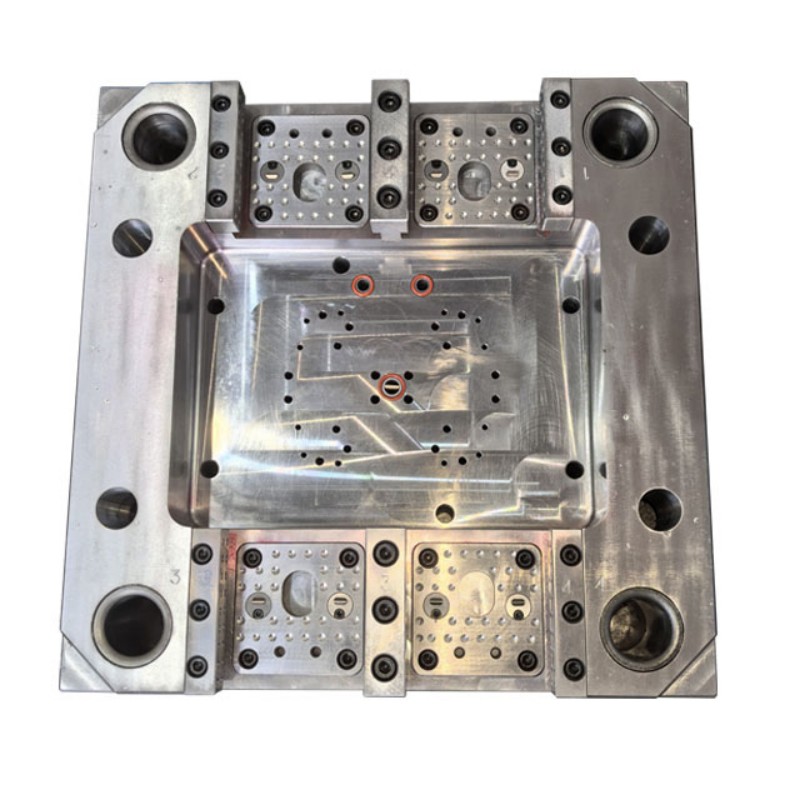
Common performance requirements for die casting mold materials include:
● High thermal resistance to prevent structural degradation
● Excellent wear resistance under repeated metal flow
● Dimensional stability during rapid heating and cooling cycles
● Adequate toughness to resist cracking under pressure
Selecting the correct mold material ensures that the tooling can maintain accuracy and reliability throughout long production runs.
The gating system inside a die casting mold determines how molten metal enters and spreads through the cavity. If the metal flow is poorly controlled, the casting may suffer from defects such as air entrapment, incomplete filling, or cold shuts.
To avoid these problems, engineers design the gating system to guide the molten metal smoothly from the injection point to the farthest areas of the cavity. Proper gate placement helps distribute metal evenly and reduces turbulence during injection.
Important considerations in gating system design include:
● Gate size and shape to regulate metal flow speed
● Runner layout that balances distribution across the cavity
● Venting locations that allow trapped gases to escape
● Alignment with the geometry of the casting
A well-designed gating system not only improves part quality but also reduces waste and improves production efficiency.
Effective thermal management is one of the most important aspects of die casting mold design. Because the casting cycle involves repeated heating and cooling, temperature fluctuations inside the mold can directly affect production stability.
Cooling channels are strategically placed within the mold body to extract heat from areas where molten metal accumulates. These channels circulate water or oil, maintaining a stable mold temperature that allows metal to solidify quickly and uniformly.
The following table summarizes how thermal management elements influence mold performance:
Thermal Design Element | Function | Impact on Production |
Cooling Channels | Remove heat from mold interior | Shortens cycle time and stabilizes casting quality |
Temperature Control | Maintains consistent mold temperature | Reduces thermal distortion |
Heat Distribution | Balances cooling across cavity surfaces | Prevents uneven shrinkage |
Cycle Temperature Stability | Keeps mold within optimal operating range | Improves repeatability of cast parts |
When thermal management is properly integrated into mold design, manufacturers can achieve faster production speeds while maintaining consistent dimensional accuracy and surface quality in every casting cycle.
Die Casting Molds shape precise metal parts. Their structure controls casting quality and speed. Understanding the mold system improves production stability.Kunshan Diamond Precision Mold Co., Ltd. provides custom precision die casting molds. Their molds support reliable, high-volume manufacturing.
A: Die Casting Molds are hardened steel tools used to shape molten metal into precise components during high-pressure die casting.
A: Die Casting Molds operate through clamping, metal injection, cooling, and ejection to produce repeatable metal parts.
A: Die Casting Molds are typically made from heat-resistant tool steels that withstand high pressure and thermal cycling.
A: Proper cooling in Die Casting Molds controls solidification speed and helps maintain dimensional accuracy and production stability.


