
Views: 0 Author: Site Editor Publish Time: 2026-03-17 Origin: Site
EVs are growing fast. But batteries are heavy.Weight affects range. Engineers must reduce mass.Aluminum Die Casting helps. It creates strong, light parts.In this article, you will learn how die casting supports EV lightweighting in 2026.
The shift from internal combustion vehicles to electric mobility has significantly changed vehicle design priorities. One of the biggest challenges in EV engineering is the heavy battery system, which can greatly affect energy efficiency, driving range, and overall vehicle performance. As a result, lightweighting has become a critical strategy in EV development. By reducing the mass of structural components, manufacturers can improve vehicle efficiency without relying solely on larger battery packs.
Battery packs are typically the heaviest components in electric vehicles, often weighing 400–700 kg depending on battery capacity and vehicle type. This additional mass increases energy consumption and places greater stress on vehicle structures. To maintain performance and range, automakers must reduce weight in other parts of the vehicle, including chassis structures, housings, and powertrain components.
Key impacts of battery weight on EV performance include:
● Higher energy consumption: More power is required to accelerate and maintain vehicle motion.
● Reduced driving range: Increased mass leads to greater energy use per kilometer.
● Vehicle dynamics: Excessive weight can influence braking, handling, and stability.
● Structural load: Heavier vehicles place more stress on suspension and structural components.
Because reducing battery size can limit driving range, manufacturers instead focus on lightweight materials and optimized structural design to offset battery weight.
To achieve weight reduction while maintaining safety and durability, automakers increasingly use advanced lightweight materials. Among them, aluminum has become one of the most widely adopted options due to its strong strength-to-weight ratio and excellent manufacturability.
Compared with traditional steel, aluminum components significantly reduce vehicle mass while still meeting strict automotive performance standards. In addition, aluminum’s thermal conductivity makes it suitable for components related to battery systems and power electronics.
Common lightweight materials used in EV manufacturing include:
Material | Key Advantages | Typical Applications |
Aluminum alloys | Lightweight, corrosion-resistant, good thermal conductivity | Structural parts, battery housings, motor housings |
High-strength steel | Strong and cost-effective | Safety structures and reinforcement components |
Magnesium alloys | Extremely lightweight | Select interior structures and brackets |
Composite materials | High strength-to-weight ratio | High-performance vehicle structures |
Among these materials, aluminum offers the best balance between weight reduction, manufacturing efficiency, and cost, making it especially suitable for large-scale EV production. Technologies such as aluminum die casting further enhance these advantages by enabling the production of complex, lightweight components for modern electric vehicles.
As electric mobility expands, lightweight structural design has become essential for EV performance and efficiency. Among modern manufacturing solutions, Aluminum Die Casting is one of the most effective technologies for producing lightweight, high-strength components at large scale. By combining advanced aluminum alloys with high-pressure casting processes, manufacturers can create integrated parts that reduce weight, simplify assembly, and support high-volume EV production. In addition to structural parts, aluminum die casting is widely used in battery housings, powertrain casings, and electronic modules where both strength and thermal performance are required.
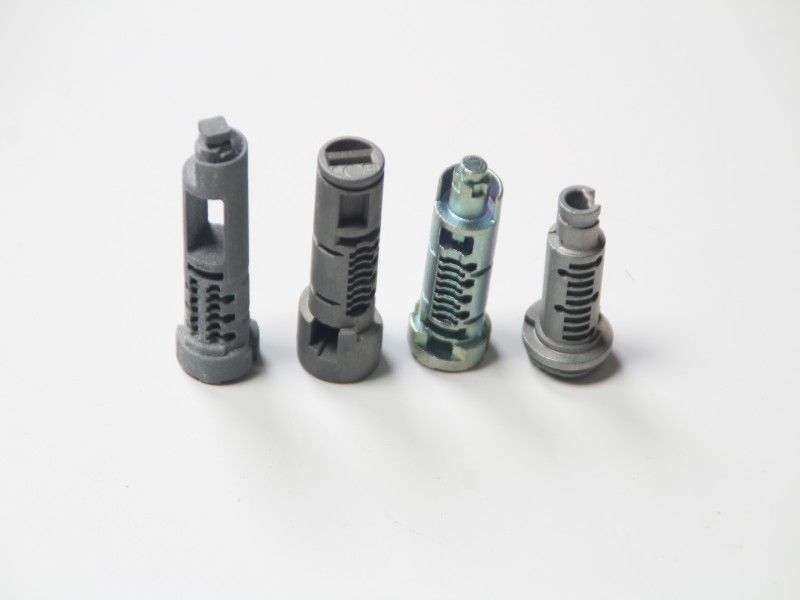
A key advantage of aluminum die casting is its excellent strength-to-weight ratio. Aluminum alloys provide strong structural performance while remaining much lighter than traditional steel. This allows EV manufacturers to reduce overall vehicle mass while maintaining safety and durability.
Weight reduction also improves several aspects of EV performance. Lighter vehicles require less energy for acceleration, which increases energy efficiency and extends driving range. At the same time, die-cast aluminum components maintain the rigidity needed to support battery systems and vehicle structures.
Common EV components benefiting from aluminum die casting include battery enclosure frames, chassis connectors, and powertrain housings that must combine structural strength with heat dissipation capability.
Property | Aluminum Die Cast Components | Traditional Steel Assemblies |
Density | Lower density, lighter weight | Higher density |
Structural strength | High strength with optimized alloys | Strong but heavier |
Design flexibility | Complex integrated geometries | Limited by stamping and welding |
Impact on EV efficiency | Improves vehicle range | Adds structural weight |
Another important advantage of aluminum die casting is the ability to integrate multiple structural features into a single component. Traditional vehicle structures often require many stamped parts joined through welding or fastening, which increases both weight and manufacturing complexity.
Die casting allows engineers to incorporate reinforcement ribs, mounting points, cooling channels, and structural connections directly into the casting. This reduces the number of individual parts and simplifies the assembly process.
Key benefits of integrated die-cast structures include:
● Reduced component count, allowing one casting to replace multiple smaller parts
● Improved structural rigidity, as integrated designs eliminate weak weld seams
● Simplified assembly, reducing manufacturing steps and production time
For example, a die-cast structural node can connect suspension components, chassis beams, and electronic modules within one integrated structure, improving both strength and efficiency.
The rapid growth of EV manufacturing requires production technologies capable of producing complex parts quickly and consistently. Aluminum die casting is particularly effective for this purpose because it supports fast production cycles and high dimensional accuracy.
In high-pressure casting systems, molten aluminum is injected into steel molds under high pressure, filling the cavity within milliseconds. The metal then solidifies rapidly, allowing manufacturers to produce large numbers of identical components with minimal variation.
Important advantages of die casting in EV production include:
● Short cycle times, enabling rapid mass production
● High dimensional precision, reducing the need for additional machining
● Consistent quality, supported by automated casting systems and process monitoring
Modern die-casting facilities often integrate digital monitoring technologies that track parameters such as temperature, pressure, and cooling rates to ensure stable production quality.
As EV platforms evolve, manufacturers are increasingly moving toward integrated vehicle architectures with fewer individual components. Aluminum die casting supports this trend by enabling larger, multifunctional structures that replace multiple welded assemblies.
Instead of assembling dozens of parts, engineers can design single cast components that serve as load-bearing structures while also providing mounting points for electronic systems, suspension components, and powertrain modules.
This approach provides several advantages:
● Fewer assembly steps, improving manufacturing efficiency
● Higher structural stiffness, due to integrated load paths
● Lower vehicle weight, achieved by removing redundant materials and fasteners
Through the combination of lightweight materials and advanced casting technology, aluminum die casting enables EV manufacturers to design vehicles that are lighter, structurally stronger, and easier to produce at scale.
In modern electric vehicles, Aluminum Die Casting is widely used to manufacture critical components that combine structural strength, lightweight performance, and thermal efficiency. Unlike traditional fabrication methods that require multiple stamped and welded parts, die casting enables complex geometries to be produced in a single integrated component. This capability allows engineers to reduce part count, improve structural reliability, and simplify vehicle assembly.
Across EV platforms, die-cast aluminum parts appear in structural systems, powertrain housings, electronic enclosures, and sensor assemblies. These components must meet demanding requirements such as crash protection, thermal management, corrosion resistance, and long-term durability. The following sections highlight several key applications where aluminum die casting plays a central role in modern electric vehicle design.
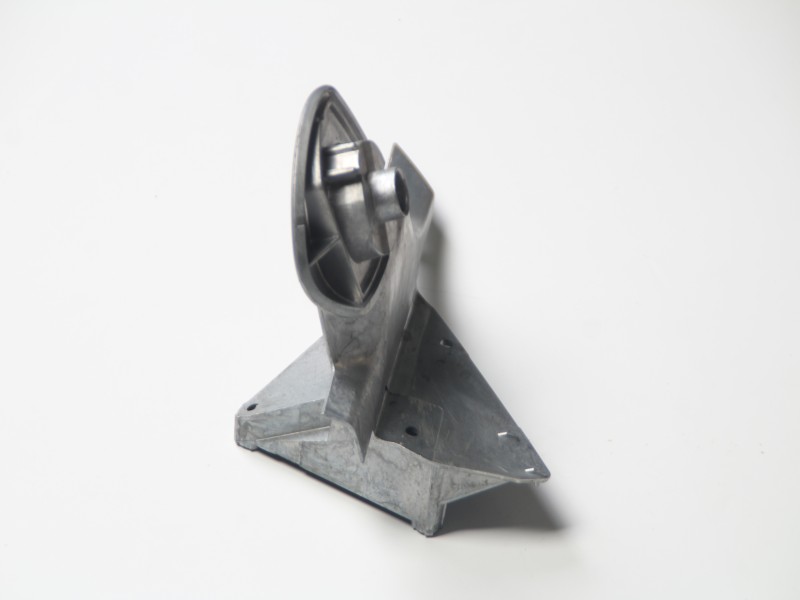
Battery systems are the largest and most critical components in electric vehicles. The enclosure surrounding the battery modules must provide mechanical protection, thermal stability, and structural rigidity while minimizing additional weight. Aluminum die casting is particularly well suited for this application because it allows manufacturers to produce strong yet lightweight battery housings with integrated structural features.
A die-cast battery enclosure can incorporate reinforcement ribs, mounting interfaces, and cooling channels directly into the casting. This design reduces the number of separate components and improves structural integrity compared with welded assemblies. In addition, aluminum’s corrosion resistance helps protect battery systems from environmental exposure during long-term vehicle operation.
Typical functions of die-cast EV battery enclosures include:
● Crash protection: The enclosure must shield battery modules from impact forces during collisions while maintaining structural stability.
● Thermal management support: Integrated cooling channels or mounting points allow battery cooling systems to operate efficiently.
● Structural integration: The battery housing can act as a load-bearing element that contributes to chassis stiffness.
The following table summarizes the key requirements for battery enclosure materials and how aluminum die casting addresses them.
Design Requirement | Importance in EV Systems | Advantage of Aluminum Die Casting |
Structural strength | Protects battery cells during collisions | High strength-to-weight ratio |
Lightweight performance | Improves vehicle efficiency and range | Significantly lighter than steel |
Thermal compatibility | Supports battery cooling systems | Good thermal conductivity |
Corrosion resistance | Ensures long-term durability | Natural oxide layer prevents corrosion |
Through these advantages, aluminum die-cast battery housings help manufacturers balance safety, durability, and lightweight vehicle design.
Electric motors and inverters form the core of an EV’s powertrain system. These components require highly precise housings that can withstand mechanical loads, protect sensitive electronics, and dissipate heat generated during operation. Aluminum die casting is widely used to manufacture these housings because it provides excellent dimensional accuracy and thermal performance.
Motor housings must maintain precise alignment between the rotor, stator, and bearings. Even small deviations can affect motor efficiency or cause vibration during operation. Die casting enables engineers to produce complex motor housings with tight tolerances and smooth internal surfaces, ensuring reliable motor performance.
Key advantages of die-cast aluminum motor and inverter housings include:
● Dimensional stability: Precision casting allows accurate alignment of rotating components inside the motor.
● Thermal conductivity: Aluminum efficiently transfers heat away from the motor windings and inverter electronics.
● Integrated mounting features: Cooling channels, brackets, and sensor mounts can be incorporated into the housing design.
In addition, aluminum housings help protect sensitive inverter electronics from environmental conditions while maintaining electromagnetic shielding and structural durability.
Electric vehicles contain numerous electronic control systems that generate heat during operation. Power electronics, battery controllers, and onboard charging systems all require effective thermal management to maintain stable performance. Aluminum die casting is widely used to manufacture heat sinks, controller housings, and electronic enclosures that help regulate temperature in these systems.
Die-cast aluminum heat sinks are designed with complex fin structures that increase surface area, allowing heat to dissipate more efficiently. Because die casting can produce intricate shapes with thin walls, engineers can optimize heat sink geometry to improve cooling performance while keeping the component lightweight.
Several important EV electronic components rely on aluminum die casting for thermal management:
● Power electronic heat sinks: These components dissipate heat from inverters and power control modules. The complex fin structures produced through die casting maximize cooling efficiency.
● Controller housings: Die-cast aluminum shells protect electronic control units while also functioning as heat spreaders that prevent overheating.
● Electronic module enclosures: Aluminum housings shield sensitive electronics from environmental factors such as moisture, vibration, and electromagnetic interference.
Companies such as Kunshan Diamond Precision Mold Co., Ltd. manufacture precision aluminum die-cast heat sinks and controller shells designed specifically for EV electronic systems. These components help maintain stable operating temperatures and protect sensitive electronic modules, supporting reliable performance across the vehicle’s power management systems.
As electric vehicles become more technologically advanced, they increasingly rely on sensors, cameras, and electronic perception systems to support features such as driver assistance and vehicle monitoring. These components require protective housings and mounting structures that are both durable and lightweight.
Aluminum die casting provides an ideal solution for producing these structural elements. Die-cast aluminum brackets and housings can maintain dimensional stability while protecting sensitive sensors from environmental exposure such as moisture, dust, and vibration. At the same time, their lightweight design helps reduce unnecessary vehicle mass.
Common die-cast aluminum exterior and sensor components include:
● Camera housings: These protect optical sensors used in driver assistance systems while maintaining alignment accuracy.
● Mirror brackets and structural mounts: Die-cast aluminum brackets support exterior mirror systems and camera modules while resisting corrosion and wear.
● Sensor support structures: Lightweight housings and mounting frames ensure reliable operation of radar, lidar, or camera systems used in modern EV platforms.
These applications highlight how aluminum die casting supports both mechanical durability and advanced vehicle electronics, making it a versatile manufacturing technology across the entire EV ecosystem.
By enabling lightweight structural parts, precision powertrain housings, efficient thermal management components, and durable sensor supports, aluminum die casting has become an essential manufacturing solution for electric vehicle development. As EV platforms continue to evolve, the range of die-cast aluminum applications is expected to expand further, supporting the industry's ongoing pursuit of efficiency, reliability, and lightweight vehicle design.
As electric vehicle production expands worldwide, manufacturers increasingly rely on High Pressure Aluminum Die Casting (HPDC) to meet both structural performance and large-scale manufacturing requirements. HPDC enables the efficient production of lightweight aluminum components with complex geometries, which is essential for EV platforms that require precise engineering and strict weight control.
Compared with conventional fabrication methods such as stamping, welding, or machining multiple parts, HPDC allows engineers to produce integrated aluminum structures in a single casting process. This capability reduces overall component weight while improving structural efficiency. As EV manufacturers seek to optimize range and production efficiency, HPDC has become a core technology supporting the lightweight evolution of modern electric vehicle architectures.
Another major advantage of HPDC lies in its compatibility with high-volume automotive manufacturing. Electric vehicle platforms often require the production of hundreds of thousands of identical components with consistent quality. High-pressure die casting supports this demand by delivering high repeatability, excellent dimensional accuracy, and smooth surface finishes that reduce the need for secondary machining. These characteristics make HPDC particularly suitable for EV structural components and powertrain housings.
High-pressure die casting involves injecting molten aluminum alloy into hardened steel molds at extremely high pressure and speed. The molten metal rapidly fills the mold cavity and solidifies within seconds, forming parts with precise dimensions and detailed structural features.
For EV component manufacturing, HPDC enables the production of thin-walled aluminum structures that maintain both strength and lightweight characteristics. Engineers can incorporate design features such as reinforcement ribs, mounting points, and cooling channels directly into the casting. This integration significantly reduces the number of separate components required in a vehicle assembly.
Several characteristics make HPDC particularly valuable for EV component production:
● High injection pressure: Ensures complete mold filling and supports complex geometries with thin walls. These thin structures help reduce material usage while maintaining structural strength.
● Rapid cooling cycles: The fast solidification process produces fine microstructures that enhance the mechanical properties of aluminum components.
● Dimensional precision: HPDC produces parts with tight tolerances, reducing the need for extensive machining and improving assembly accuracy.
The table below highlights key characteristics that make HPDC suitable for EV component manufacturing.
While standard HPDC provides excellent manufacturing efficiency, certain EV components require even higher levels of structural reliability. Components such as battery enclosures and structural safety parts must meet strict quality standards because they protect high-voltage systems and contribute to vehicle safety.
To address these requirements, manufacturers increasingly apply vacuum-assisted die casting technology. In this process, air is removed from the mold cavity before molten aluminum is injected. Eliminating trapped air significantly reduces internal porosity—microscopic gas pockets that can weaken the casting.
Vacuum-assisted casting provides several advantages for EV manufacturing:
● Reduced internal porosity: Removing trapped gases creates denser aluminum structures, improving strength and fatigue resistance.
● Improved sealing performance: Battery housings and electronic enclosures often require airtight or waterproof sealing. Vacuum casting helps maintain structural integrity in these applications.
● Higher reliability for safety-critical components: Components produced through vacuum-assisted casting are better suited for applications that require long-term durability and mechanical stability.
As EV platforms become more structurally integrated, vacuum-assisted HPDC is increasingly used to ensure consistent casting quality and reliability across large production volumes.
One of the most transformative trends in EV manufacturing is the shift toward large integrated aluminum cast structures. Traditional vehicle body structures were typically assembled from numerous stamped steel parts joined by welding or mechanical fastening. While effective, this approach increased production complexity and added unnecessary vehicle weight.
With modern aluminum die casting technology, manufacturers can produce large structural sections as single integrated components. These castings can replace multiple smaller parts, reducing both assembly complexity and total vehicle mass.
Key advantages of structural consolidation include:
● Reduced component count: Large die-cast structures can replace dozens of stamped parts, simplifying the vehicle body architecture.
● Improved structural rigidity: Eliminating weld seams reduces weak points and improves load distribution across the vehicle structure.
● Faster production processes: Fewer components lead to fewer assembly steps, increasing manufacturing efficiency.
● Weight reduction: Integrated designs remove redundant materials and fasteners, contributing directly to EV lightweighting.
This shift toward integrated aluminum cast structures represents a major evolution in automotive manufacturing. As casting technologies continue to advance, large-scale die-cast components are expected to play an increasingly important role in achieving lighter, stronger, and more efficient electric vehicle platforms.
EVs need lighter structures. Range and efficiency matter.Aluminum Die Casting supports this shift. It enables strong and lightweight EV parts.From battery housings to electronics, die-cast aluminum improves performance.Kunshan Diamond Precision Mold Co., Ltd. provides precision die-cast solutions.Its components enhance reliability, thermal performance, and EV efficiency.
A: Aluminum Die Casting produces strong, thin-wall components that reduce vehicle mass while maintaining structural strength and manufacturing efficiency.
A: Aluminum Die Casting is widely used for battery enclosures, motor housings, inverter casings, and structural nodes requiring precision and heat dissipation.
A: High-pressure Aluminum Die Casting enables complex parts to be produced quickly and consistently, supporting large-scale EV manufacturing.
A: Aluminum offers lower density, good thermal conductivity, and corrosion resistance, making it suitable for lightweight EV structural and electronic components.


