
Views: 0 Author: Site Editor Publish Time: 2026-03-24 Origin: Site
Can manufacturing be greener? Many industries now seek cleaner production. Environmental rules are stricter today. Material choices now matter more. Zinc Die Casting offers a practical solution. It reduces waste and energy use. In this article, you will learn why zinc die casting supports sustainable manufacturing.
Zinc die casting is a high-pressure casting process used to manufacture precise metal components. During production, molten zinc alloy is injected into hardened steel molds, allowing manufacturers to create complex shapes with high dimensional accuracy and smooth surface finishes.
The process is widely used in industries such as automotive, electronics, and hardware manufacturing because it supports high-volume production with consistent quality and minimal material waste.
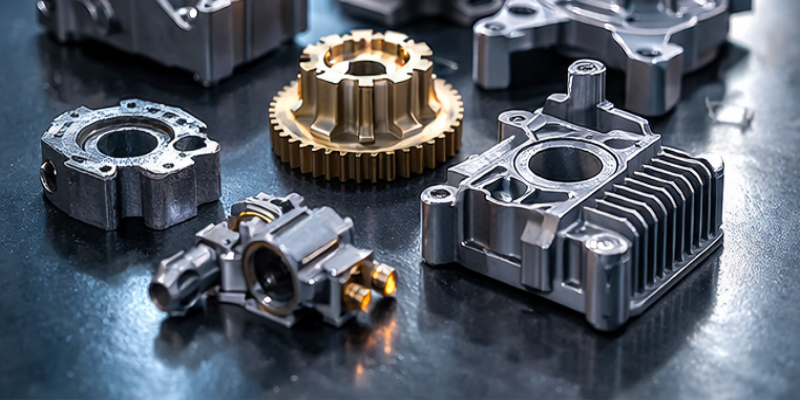
The manufacturing process follows several controlled stages that ensure precision and repeatability.
Step | Process Stage | Description |
1 | Die preparation | The mold is cleaned and lubricated before casting |
2 | Injection | Molten zinc alloy is injected into the mold under pressure |
3 | Cooling | The metal solidifies quickly inside the mold |
4 | Ejection | The finished component is released from the die |
This controlled workflow allows manufacturers to produce detailed parts efficiently while maintaining stable product quality.
Sustainable manufacturing increasingly focuses on processes that reduce energy consumption, minimize waste, and extend the lifespan of production resources. Zinc die casting supports these goals by combining efficient energy use, high material utilization, and long-lasting tooling. Compared with many traditional metal forming methods, it allows manufacturers to produce precise components while lowering emissions and reducing material loss.
Three key characteristics make zinc die casting environmentally advantageous: its low melting temperature, its ability to produce near-net-shape parts, and the long service life of die casting molds.
One major sustainability advantage of zinc die casting is the relatively low melting point of zinc alloys. Zinc typically melts at around 380–420°C, significantly lower than many other engineering metals. Because less heat is required during the melting process, foundries consume less energy during production.
Lower operating temperatures also reduce equipment stress and decrease production-related emissions. For manufacturers producing high volumes of components, these energy savings can significantly reduce the overall carbon footprint of the manufacturing process.
Another environmental benefit of zinc die casting is its ability to produce near-net-shape parts—components that are very close to their final dimensions directly after casting. This high precision significantly reduces the need for secondary machining operations.
Key sustainability advantages include:
● Reduced machining requirements
● Parts produced with tight tolerances require less additional processing, saving both energy and machining resources.Lower raw material waste
● Because parts are formed accurately within the mold, less material must be removed during finishing.Integrated design features
The durability of die casting molds also contributes to the sustainability of zinc die casting. Since zinc alloys melt at relatively low temperatures, molds experience less thermal stress compared with processes that use higher-temperature metals.
As a result, die casting molds can often produce hundreds of thousands or even millions of parts before replacement is needed. This extended tooling lifespan reduces the need for new molds, lowers material consumption, and improves production efficiency.
Overall, the combination of lower energy demand, reduced waste, and durable tooling makes zinc die casting a highly sustainable option for precision metal manufacturing.
Material efficiency is an important factor in sustainable manufacturing because it directly affects resource consumption, production costs, and environmental impact. Zinc die casting is known for its ability to maximize material utilization while minimizing waste. Thanks to the excellent fluidity of molten zinc alloys and the precision of high-pressure die casting, manufacturers can produce complex components using less raw material and fewer secondary processes.
One key advantage of zinc die casting is its ability to produce thin-wall components while maintaining structural stability. Zinc alloys flow easily into narrow mold sections, allowing engineers to design lightweight parts without compromising strength or dimensional accuracy. This capability reduces the amount of metal required for each component and supports more efficient product designs, especially in industries where weight reduction is important.
Material | Typical Minimum Wall Thickness |
Zinc Die Casting | ~0.5–1.5 mm |
Aluminum Die Casting | ~1.5–3 mm |
Sand Casting | >3 mm |
Zinc die casting also delivers high production yield due to precise molds and controlled casting conditions. Stable mold dimensions and controlled injection parameters help reduce defects such as shrinkage or misruns. As a result, a larger percentage of produced parts meet quality standards, minimizing scrap and improving overall material efficiency.
Another advantage is the ability to integrate multiple design features into a single casting. Threads, ribs, mounting points, and structural supports can often be formed directly in the mold. By combining several parts into one die-cast component, manufacturers reduce assembly materials, simplify production processes, and further decrease material consumption.
Together, these capabilities allow zinc die casting to achieve high material efficiency while supporting sustainable and cost-effective manufacturing.
One of the most important sustainability advantages of zinc die casting is the excellent recyclability of zinc as a material. In modern manufacturing, the ability to reuse metals without degrading their performance is essential for reducing resource depletion and lowering environmental impact. Zinc stands out among engineering metals because it can be repeatedly recycled while maintaining its mechanical properties, dimensional stability, and corrosion resistance.
In zinc die casting operations, recyclability occurs at multiple stages of the product lifecycle—from the recovery of production scrap to the recycling of finished components after their service life. This closed-loop capability helps manufacturers reduce reliance on newly mined raw materials while improving overall production efficiency. As a result, zinc die casting supports both sustainable manufacturing practices and long-term resource conservation.
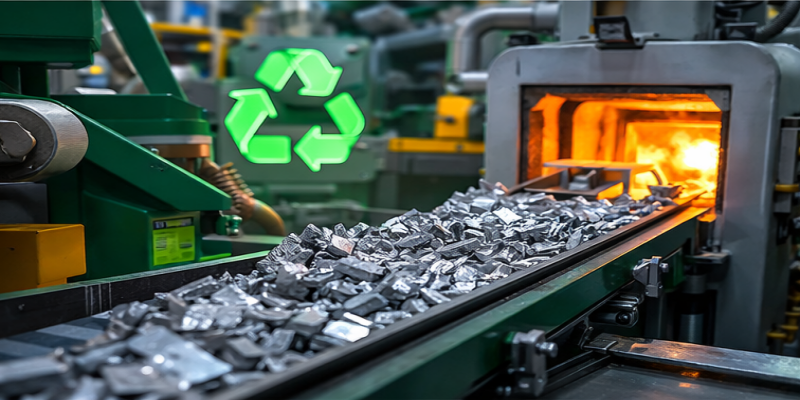
Zinc is considered one of the most recyclable metals used in industrial manufacturing. Unlike certain materials that degrade after repeated recycling cycles, zinc can be melted and reused multiple times without significant loss of quality or performance. This makes it particularly suitable for manufacturing processes such as die casting, where consistent material properties are essential for precision components.
When recycled zinc is reintroduced into the production process, it retains key characteristics such as strength, castability, corrosion resistance, and dimensional stability. This ensures that recycled zinc alloys can perform just as effectively as primary zinc in many industrial applications.
Key Sustainability Advantages of Recyclable Zinc
● Stable material properties
● Recycled zinc maintains nearly identical physical and mechanical properties to newly refined zinc. This stability allows manufacturers to use recycled material without compromising product performance or durability.Reduced demand for virgin raw materials
● By incorporating recycled zinc into production, manufacturers reduce the need for newly mined zinc ore. This helps decrease environmental impacts associated with mining and refining operations.Lower lifecycle environmental footprint
Recycling metals typically requires less energy than producing them from raw ore. In the case of zinc, this contributes to reduced overall emissions throughout the manufacturing lifecycle.These advantages make zinc an ideal material for industries that prioritize sustainable resource management and circular manufacturing systems.
During the zinc die casting process, a small amount of excess material is generated as part of the casting cycle. This includes elements such as runners, sprues, overflow material, and occasionally defective castings. Rather than becoming waste, these materials can be collected, remelted, and reused directly in the production process.
This internal recycling capability significantly improves manufacturing efficiency because the majority of casting scrap can be reintegrated into new production batches with minimal additional processing. As a result, zinc die casting facilities often achieve extremely high material utilization rates.
Common Types of Recyclable Zinc Die Casting Scrap
Scrap Type | Source in Production | Recycling Method |
Runners | Channels guiding molten metal into the mold | Collected and remelted |
Sprues | Entry point of molten metal in the casting system | Recycled during next melting cycle |
Overflow material | Excess metal used to ensure complete mold filling | Remelted and reused |
Rejected castings | Parts failing quality inspection | Reprocessed as raw material |
Because zinc alloys melt at relatively low temperatures, recycling this scrap requires less energy compared with many other metals. This further enhances the overall environmental efficiency of zinc die casting operations.
In well-managed die casting facilities, a large portion of the material used during production can be recycled internally, which reduces waste disposal and improves the sustainability of the manufacturing process.
The recyclability of zinc does not end at the factory level. Even after a zinc die cast component has completed its service life, it can still be recovered and recycled. Products containing zinc components—such as automotive parts, hardware, electronic housings, and industrial equipment—can be collected, separated, and reprocessed into new zinc alloys.
This capability supports the concept of a circular material lifecycle, where metals remain in continuous use rather than being discarded after a single application. Recycling end-of-life zinc components provides several long-term environmental benefits:
● Resource conservation
● Recovering zinc from used products reduces the demand for newly extracted ore, helping preserve natural mineral resources.Reduced landfill waste
● Durable metals like zinc are highly suitable for recycling, which prevents valuable materials from entering landfills.Support for circular manufacturing systems
By returning zinc to the material supply chain, manufacturers can continue producing high-quality components while minimizing environmental impact.In many industries, recycling programs and metal recovery systems already exist to collect used metal products. Zinc die cast components can easily be integrated into these recycling streams because they can be remelted and refined using standard metallurgical processes.
Overall, the recyclability of zinc is one of the strongest environmental advantages of zinc die casting, enabling manufacturers to maintain efficient production while supporting sustainable resource management across the entire product lifecycle.
The environmental and manufacturing advantages of zinc die casting make it valuable across industries that require precision, durability, and efficient high-volume production. Zinc alloys offer excellent dimensional stability, corrosion resistance, and the ability to form intricate geometries. These properties allow manufacturers to produce reliable components with minimal material waste and reduced energy consumption.
The automotive industry widely uses zinc die casting for small precision components that require strength and high dimensional accuracy. Zinc alloys allow manufacturers to produce complex parts with integrated design features, reducing the number of separate components and simplifying assembly.
Common applications include:
● Door lock and latch housings – Durable parts designed to withstand repeated mechanical use while maintaining precise movement.
● Fuel system and engine components – Small structural parts that benefit from zinc’s corrosion resistance and dimensional stability.
● Electrical housings and brackets – Protective components for vehicle electronics that require strength and compact design.
In electronics manufacturing, zinc die casting is valued for its dimensional accuracy and structural stability. Many electronic products require precise housings and connectors to maintain reliable electrical performance.
Typical applications include connector housings, electromagnetic shielding parts, and device enclosures. Zinc alloys also support thin-wall designs, making them suitable for compact electronic devices where space efficiency and heat management are important.
Zinc die casting is also widely used in consumer products and industrial hardware because of its durability and surface quality. The process allows manufacturers to produce strong mechanical components with decorative finishes and minimal machining.
Application Type | Typical Components |
Home Hardware | Door handles, locks, hinges |
Industrial Equipment | Brackets, mechanical housings |
Consumer Products | Appliance components, device frames |
Because zinc die cast parts are durable and corrosion-resistant, they often serve as long-lasting alternatives to plastic components in many products.
Zinc Die Casting supports sustainable manufacturing. It reduces energy use.
It improves material efficiency. It enables reliable recycling. These benefits support greener production. Kunshan Diamond Precision Mold Co., Ltd. provides precision zinc die casting solutions. Their products deliver durability, accuracy, and efficient manufacturing value.
A: Zinc Die Casting uses low melting temperatures, high material efficiency, and recyclable alloys, reducing energy consumption and manufacturing waste.
A: Zinc Die Casting produces near-net-shape parts with high precision, minimizing machining, scrap material, and secondary processing.
A: Yes. Zinc Die Casting alloys can be recycled repeatedly without losing mechanical properties, supporting circular manufacturing systems.
A: Industries such as automotive, electronics, and industrial hardware use Zinc Die Casting for durable, precise, and resource-efficient components.


