
Views: 0 Author: Site Editor Publish Time: 2026-03-31 Origin: Site
How are tiny metal parts made so precise? Many industries rely on Zinc Die Casting. It uses high pressure and steel molds. Molten zinc forms detailed metal parts.Why is this process so popular today? It offers accuracy, strength, and efficiency.In this guide, you will learn the process. You will also explore design, advantages, and finishing methods.
Zinc die casting is a precision manufacturing process in which molten zinc alloy is injected into a hardened steel mold (called a die) under high pressure to form metal components with complex shapes. The mold is carefully machined so that every cavity inside the die represents the exact geometry of the final product. When the molten metal fills the cavity and solidifies, the die opens and the finished casting is ejected, ready for trimming or finishing. This process is widely used because zinc alloys combine excellent castability with strong mechanical performance. The relatively low melting temperature of zinc (typically around 380–450°C) allows the metal to flow easily into detailed mold cavities, enabling the production of parts that require precise dimensions and intricate features. As a result, zinc die casting is often selected for components used in electronics housings, hardware fittings, automotive assemblies, and industrial mechanisms where both accuracy and durability are essential.
Beyond basic shaping, zinc die casting is also valued for its ability to support near-net-shape manufacturing. This means many parts leave the mold very close to their final dimensions, reducing the need for secondary machining. By minimizing post-processing operations, manufacturers can achieve faster production cycles and lower manufacturing costs while maintaining consistent part quality.
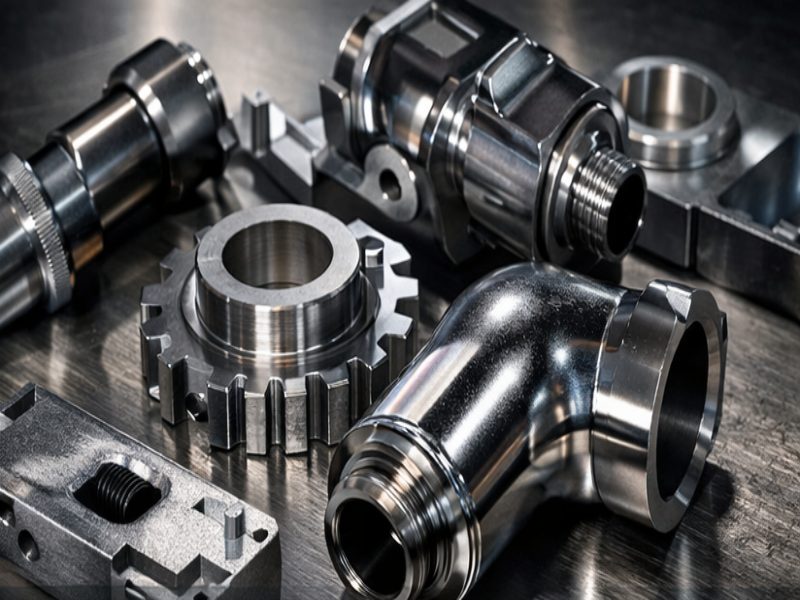
Zinc die cast components are known for several structural and manufacturing advantages that distinguish them from other metal forming methods. One of the most important characteristics is the ability to produce complex geometries with high dimensional stability. Because molten zinc has excellent fluidity, it can flow into thin ribs, deep cavities, and fine details inside the mold without compromising structural integrity.
Another defining feature is the capability to produce thin-wall components with high precision. In many applications, zinc die casting can achieve wall thicknesses as small as fractions of a millimeter while maintaining strength and stability. This allows engineers to design lightweight yet durable parts, which is especially valuable for mechanical assemblies that require compact designs.
Key performance characteristics include:
● High dimensional accuracy: Zinc die casting can achieve tight tolerances and repeatable measurements across thousands or millions of parts in a production run.
● Smooth surface finish: Components produced through this process typically have surfaces suitable for plating, coating, or polishing.
● Strong mechanical properties: Zinc alloys provide good impact resistance and structural strength for small to medium-sized components.
● Excellent repeatability: Once the mold is optimized, identical parts can be produced consistently with minimal variation.
The table below summarizes the main characteristics that make zinc die casting attractive for precision manufacturing:
Characteristic | Manufacturing Impact | Typical Benefit |
High fluidity of zinc alloys | Allows metal to fill intricate mold cavities | Enables complex part geometries |
Tight dimensional tolerances | Maintains consistent dimensions during production | Reduces need for machining |
Thin-wall capability | Supports lightweight component design | Improves material efficiency |
Smooth surface finish | Suitable for plating or coating processes | Enhances appearance and corrosion resistance |
Together, these characteristics make zinc die casting a reliable method for producing precision metal components in high-volume manufacturing environments.
The zinc die casting process begins with the design and preparation of a precision steel die, which determines the final geometry of the component. These dies are typically manufactured from hardened tool steel so they can withstand repeated exposure to high pressure and temperature during casting cycles. The design phase is critical because even small errors in the mold structure can lead to defects such as incomplete filling, surface flaws, or dimensional inaccuracies.
A typical die includes several important structural features that control the casting process. The gating system guides molten metal into the cavity, while cooling channels regulate temperature inside the mold to ensure uniform solidification. In addition, ejector mechanisms are incorporated into the mold so that the finished casting can be released smoothly after solidification. Careful mold preparation also includes cleaning and lubrication. These steps help prevent the molten metal from sticking to the die surface and extend the operational life of the mold during long production runs.
Once the mold is prepared, zinc alloy ingots are melted in a furnace until they reach the appropriate casting temperature. The molten metal is then transferred into a die casting machine, where it is injected into the mold cavity at extremely high pressure. This injection phase is the defining step of the die casting process because it ensures the molten metal fills every detail of the mold before solidification begins.
The high-pressure injection allows zinc to reproduce even very fine design features. Threads, logos, ribs, and internal cavities can all be formed directly during the casting stage. Zinc’s excellent fluidity plays a crucial role here, enabling the molten metal to flow quickly through narrow passages and thin sections without forming voids or gaps.
Key factors that influence this stage include:
● Injection pressure and speed
● Molten metal temperature
● Mold temperature control
● Alloy composition
These parameters must be carefully balanced to ensure the mold fills completely while avoiding turbulence or trapped air that could cause defects.
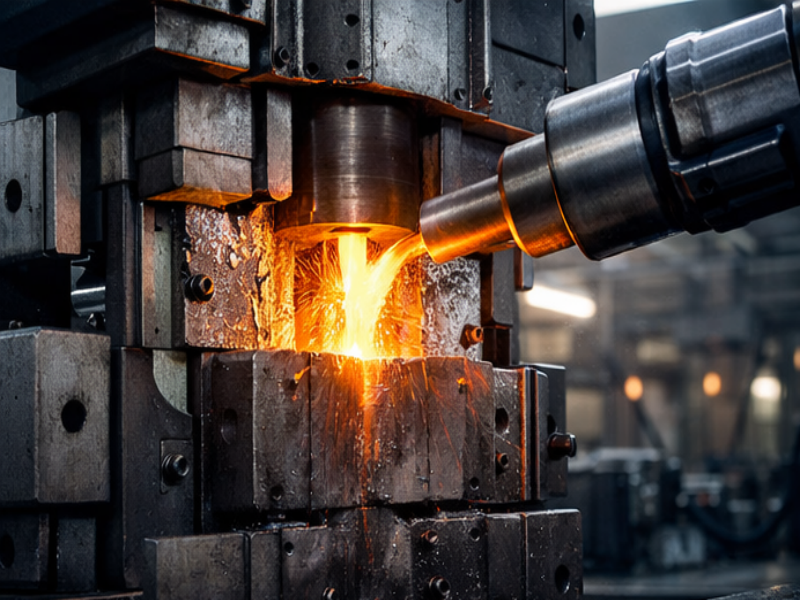
After the molten zinc fills the cavity, it begins to cool and solidify inside the mold. Zinc has a relatively high thermal conductivity compared with many other metals, which allows it to release heat quickly into the surrounding steel die. This rapid cooling process contributes to the short cycle times that make zinc die casting suitable for large-scale manufacturing.
Uniform cooling is essential for maintaining dimensional stability in the finished component. If different sections of the part cool at different rates, internal stresses or distortion may occur. For this reason, molds are designed with carefully positioned cooling channels that help distribute heat evenly throughout the die.
The controlled solidification stage provides several important benefits:
● Improved dimensional accuracy
● Consistent mechanical properties
● Reduced internal defects
● Faster production cycles
Because cooling happens quickly, a single mold can often produce hundreds or even thousands of parts per hour depending on component size and machine capacity.
Once the zinc alloy has completely solidified, the mold opens and the finished casting is pushed out of the cavity using ejector pins integrated into the die. These pins are positioned strategically so they apply force evenly across the part without damaging delicate features.
After ejection, the component still contains extra material from the casting process, such as runners, gates, or flash. These excess elements must be removed through trimming operations before the part proceeds to finishing or assembly stages. Depending on the complexity of the component, trimming may be performed manually or with automated equipment.
Typical post-casting preparation steps include:
● Removal of runners and gating channels
● Trimming of flash from mold parting lines
● Surface cleaning or polishing
● Inspection for dimensional accuracy
The following table summarizes the key stages in the zinc die casting process:
Process Stage | Purpose | Result |
Mold design & preparation | Create the die that shapes the final component | Accurate mold geometry |
Metal injection | Force molten zinc into mold cavity under pressure | Complete mold filling |
Cooling & solidification | Allow metal to harden inside the die | Stable component structure |
Ejection & trimming | Remove part and eliminate excess material | Finished casting ready for finishing |
Through these carefully controlled stages, zinc die casting enables manufacturers to produce precise, high-quality metal parts at industrial scale while maintaining consistent performance and appearance.
One of the most important advantages of zinc die casting is its ability to produce parts with extremely high dimensional precision. Because the molten zinc alloy is injected into precision-engineered steel molds under high pressure, the material fills the mold cavity completely and replicates the exact geometry of the die. This process enables manufacturers to achieve tight tolerances and maintain consistent dimensions across large production runs, which is critical for mechanical assemblies where parts must fit together reliably.
In practical manufacturing environments, dimensional stability also reduces the need for secondary machining. Since many zinc die cast parts come out of the mold close to their final dimensions, manufacturers can significantly reduce post-processing steps such as drilling, milling, or grinding. This not only improves production efficiency but also lowers manufacturing costs and ensures uniform quality across batches.
Key benefits of dimensional accuracy in zinc die casting include:
● Precise component fit: Ideal for assemblies where alignment and tolerance control are essential.
● Reduced machining requirements: Near-net-shape production minimizes additional manufacturing steps.
● Stable repeatability: Identical molds allow thousands of parts to be produced with minimal variation.
The following table summarizes how zinc die casting contributes to precision manufacturing:
Precision Feature | Manufacturing Impact | Benefit for Products |
Tight tolerances | Accurate mold replication | Reliable mechanical assembly |
Dimensional stability | Consistent cooling and solidification | Uniform part quality |
Near-net-shape casting | Reduced machining requirements | Lower production cost |
Another major advantage of zinc die casting is its ability to support high-volume production with consistent efficiency. The process is highly automated and uses durable steel molds that can withstand repeated casting cycles. Once the mold and machine parameters are optimized, manufacturers can produce large quantities of parts with minimal variation.
Fast cycle times are a key factor in production efficiency. Zinc alloys cool quickly inside the mold due to their thermal conductivity, allowing each casting cycle to be completed in a short period of time. This rapid solidification means that thousands of components can be produced during a single production shift, making zinc die casting particularly suitable for industries that require large quantities of precision parts.
Several factors contribute to the efficiency of zinc die casting:
● Rapid solidification: Zinc cools quickly, shortening production cycles and increasing throughput.
● Long mold life: Because zinc has a lower melting temperature than many other metals, molds experience less thermal stress and can be used for extended production runs.
● Automation compatibility: Modern die casting machines allow automated injection, cooling, and ejection processes that maintain consistent quality while reducing manual labor.
These characteristics make zinc die casting a cost-effective manufacturing method for products that must be produced in large volumes while maintaining strict quality standards.
Zinc die casting is especially valuable for producing components with intricate geometries and thin-wall structures. The fluidity of molten zinc alloys allows the metal to flow easily into narrow cavities, small features, and complex shapes inside the mold. This capability enables engineers to design detailed components that might be difficult or expensive to produce using other manufacturing processes.
The process can replicate fine design elements such as threads, ribs, logos, and internal channels directly during casting. By incorporating these features into the mold design, manufacturers can eliminate additional machining or assembly operations, simplifying production workflows.
Typical design features achievable through zinc die casting include:
● Thin walls that reduce overall part weight while maintaining strength
● Integrated structural elements such as ribs or bosses
● Fine details for decorative or branding purposes
● Complex internal cavities for mechanical functionality
Because of this design flexibility, zinc die casting is widely used in industries that require compact yet durable components, including electronics housings, hardware fittings, and precision mechanical assemblies.
Uniform wall thickness is one of the most important design principles in zinc die casting. When molten metal enters the mold cavity, it must flow smoothly and evenly throughout the entire geometry of the part. If certain areas of the component are significantly thicker than others, the metal may cool unevenly, which can lead to defects such as shrinkage, internal stresses, or incomplete filling.
Maintaining consistent wall thickness helps ensure that the molten zinc flows at a uniform rate and solidifies evenly. This improves both the structural integrity and dimensional accuracy of the finished component. Engineers often adjust the geometry of the design to maintain balance between strength and manufacturability.
Design guidelines commonly applied include:
● Avoiding sudden changes in wall thickness
● Using gradual transitions between thicker and thinner sections
● Maintaining consistent structural proportions throughout the component
When these principles are applied correctly, the casting process becomes more stable and predictable, reducing the risk of production defects.
Draft angles are small tapers added to the vertical surfaces of a component to allow it to be removed from the mold easily after casting. Without adequate draft, the solidified metal could stick to the mold surfaces, increasing the risk of part damage or mold wear during ejection.
The inclusion of draft angles helps reduce friction between the casting and the mold, ensuring smooth release when ejector pins push the component out of the die. In addition to protecting the finished part, proper draft design also extends the lifespan of the mold by minimizing mechanical stress during repeated production cycles.
Typical draft angle considerations include:
● External surfaces generally require slightly larger draft angles than internal features
● Smooth surface finishes allow smaller draft angles to be used
● Deep cavities may require increased draft to facilitate proper ejection
These design adjustments allow manufacturers to maintain production efficiency while preserving the precision of the mold.
To improve the strength of zinc die cast parts without significantly increasing weight, designers often incorporate structural reinforcement features into the component geometry. Two of the most commonly used elements are ribs and bosses, which provide additional stiffness and support for mechanical loads.
Ribs are thin structural walls added to flat surfaces to increase rigidity and prevent bending or deformation. Bosses are cylindrical features used to support screws, pins, or mounting hardware within mechanical assemblies. By integrating these features directly into the casting design, engineers can strengthen the component while minimizing material usage.
Key benefits of structural reinforcement features include:
● Increased mechanical stability without excessive material consumption
● Improved resistance to bending or vibration
● Integration of assembly points for fasteners or connectors
Careful placement and sizing of ribs and bosses ensure that these reinforcement features enhance performance without interfering with the metal flow during casting.
Surface finishing is often applied to zinc die cast components to improve both their durability and appearance. One of the most widely used finishing processes is electroplating, in which a thin layer of metal is deposited onto the surface of the casting through an electrochemical process.
Electroplating enhances corrosion resistance and protects the underlying zinc alloy from environmental exposure. It also improves the visual appearance of the component by providing a uniform metallic finish. Common plating materials include nickel, chrome, and zinc coatings, each offering different levels of protection and aesthetic qualities.
Benefits of electroplating include:
● Increased resistance to corrosion and oxidation
● Improved wear resistance for mechanical components
● Enhanced surface appearance for decorative applications
These advantages make electroplating an essential finishing process for zinc die cast parts used in hardware, electronics, and automotive components.
In addition to functional protection, many zinc die cast products require decorative finishing to enhance their appearance. This is especially important for consumer-facing products such as furniture fittings, sanitary hardware, and decorative metal accessories.
Decorative finishing techniques can include polishing, chrome plating, or specialized coatings that create a refined metallic surface. These treatments not only improve aesthetics but also contribute to surface smoothness and durability. For products used in visible applications, surface quality often plays an important role in overall product value.
Common decorative applications include:
● Furniture handles and fittings
● Bathroom hardware components
● Kitchen accessories and decorative fixtures
These finishing methods allow zinc die cast parts to combine mechanical strength with high visual quality.
In modern manufacturing environments, many producers integrate surface finishing processes directly into their die casting production workflow. This integrated approach ensures that cast components move efficiently from raw casting to finished product without unnecessary handling or delays.
For example, manufacturers such as Kunshan Diamond Precision Mold Co., Ltd. combine zinc die casting with finishing technologies including polishing, electroplating, and chromate treatment. By controlling both the casting and finishing stages within the same production system, the company can ensure consistent quality and compatibility between the zinc alloy substrate and the applied surface treatment.
This integrated manufacturing model provides several advantages:
● Improved consistency between casting and finishing processes
● Better adhesion of coatings and plating layers
● Reduced production lead times
Such capabilities allow manufacturers to deliver complete zinc die cast components for industries including beauty appliances, furniture hardware, sanitary accessories, and precision industrial equipment, where both functional performance and surface quality are essential.
Zinc Die Casting creates precise metal parts. It supports complex shapes and stable quality.This guide explained the process and design. It also covered key advantages and finishing methods.Kunshan Diamond Precision Mold Co., Ltd. provides precision zinc die casting parts. Their integrated casting and finishing services deliver durable, high-quality components.
A: Zinc Die Casting produces precise metal parts such as housings, brackets, and hardware used in automotive, electronics, and industrial equipment.
A: In Zinc Die Casting, molten zinc alloy is injected into a steel mold under high pressure to create detailed components.
A: Zinc Die Casting enables tight tolerances, thin walls, and repeatable quality in high-volume manufacturing.
A: Zinc Die Casting offers fast cycle times, strong mechanical properties, and efficient production for complex small parts.


