
Views: 0 Author: Site Editor Publish Time: 2026-03-10 Origin: Site
What protects metal parts from wear? Many products use Zinc Die Castings today.
They are strong and precise. But raw surfaces may dull. They also resist corrosion poorly. Surface finishing solves this problem.
In this article, you will learn key finishing options. We explore electroplating and powder coating. You will see how each improves performance.
Zinc alloys are widely valued for their excellent casting performance. During the die casting process, molten zinc flows easily into complex mold cavities, allowing manufacturers to produce parts with fine details, thin walls, and relatively smooth surfaces. Because zinc solidifies with a fine grain structure, Zinc Die Castings often require less machining compared with many other metal casting processes.
These properties make zinc die casting suitable for applications such as furniture hardware, appliance components, decorative fittings, and precision mechanical parts. However, although the as-cast surface is generally smooth, it is not always sufficient for products that require high durability or premium appearance.
Another natural characteristic of zinc is the formation of a thin oxide film when exposed to air. This oxide layer provides limited corrosion protection, but it is typically not strong enough to withstand long-term exposure to moisture, chemicals, or outdoor conditions. In addition, raw zinc surfaces may appear dull over time and may contain minor casting marks such as parting lines or small surface irregularities.
Because of these limitations, most industrial applications require additional finishing processes to improve both the appearance and performance of zinc components.
Surface finishing significantly improves the durability and reliability of Zinc Die Castings. By applying protective coatings or plating layers, manufacturers can create a barrier that shields the zinc surface from environmental exposure. This protection is particularly important for components used in humid environments, household fixtures, or outdoor equipment where corrosion resistance is essential.
In addition to corrosion protection, finishing treatments can improve mechanical durability. Coatings such as plating or powder coating increase surface hardness and reduce wear caused by repeated contact or movement. This helps maintain dimensional stability and prolongs the service life of components used in mechanical assemblies.
Surface finishing also plays an important role in product design. Decorative coatings provide consistent color, metallic shine, or textured surfaces that enhance the visual quality of finished products. For industries such as sanitary hardware, furniture fittings, and consumer appliances, these finishes contribute directly to both functionality and product aesthetics.
Overall, surface finishing transforms Zinc Die Castings from basic structural components into parts that meet demanding requirements for corrosion resistance, durability, and visual quality.
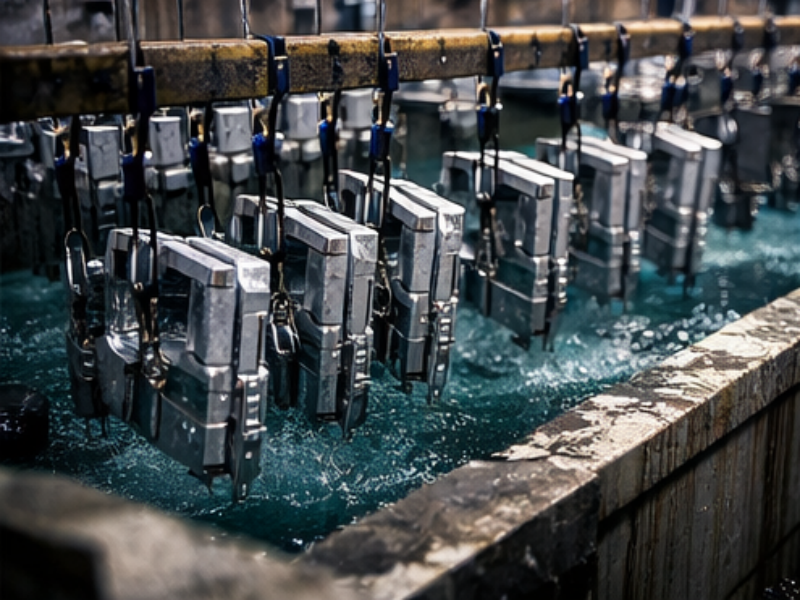
Electroplating is one of the most widely used surface finishing techniques for Zinc Die Castings, particularly when both functional performance and decorative appearance are required. The process works through an electrochemical reaction in which a thin layer of metal is deposited onto the surface of a zinc die cast component. The part is immersed in a plating bath containing metal ions, and an electric current causes those ions to bond with the surface of the casting, forming a uniform metallic coating. This process creates a tightly adhered layer that enhances both durability and visual quality.
From a manufacturing perspective, electroplating is particularly valuable because it adds very little thickness to the component. This makes it suitable for precision parts where dimensional accuracy must be preserved. For example, components with threaded holes, mating surfaces, or mechanical interfaces benefit from electroplating because the coating does not significantly alter the part’s geometry while still improving surface performance.
The plating layer also serves as a barrier between the zinc substrate and the surrounding environment. By preventing direct exposure to moisture, chemicals, and atmospheric contaminants, electroplating significantly improves corrosion resistance while simultaneously creating a refined metallic finish.
Common Plating Material | Surface Appearance | Typical Functional Benefit |
Nickel | Bright silver or satin metallic finish | Wear resistance and corrosion protection |
Chrome | Mirror-like reflective surface | Decorative finish and durability |
Copper | Warm reddish metallic tone | Base layer for multi-stage plating |
Brass | Gold-like decorative appearance | Decorative hardware applications |
Silver | Highly conductive metallic finish | Electrical components |
Tin | Soft metallic surface | Improved solderability |
These materials may be applied individually or in multi-layer plating systems, where one metal acts as an adhesion layer and another provides the final decorative or protective surface.
One of the key advantages of electroplating is its ability to enhance surface properties without significantly increasing coating thickness. Because the plating layer is extremely thin, it preserves the dimensional accuracy of Zinc Die Castings, which is crucial for components that must fit precisely within assemblies. This characteristic makes electroplating particularly valuable for mechanical hardware, connectors, and precision industrial components.
Another major benefit lies in the aesthetic flexibility of plated surfaces. Electroplated finishes can produce a wide range of metallic appearances, including mirror-polished chrome, brushed nickel, or satin finishes. These visual characteristics are often required in consumer-facing products where appearance contributes directly to perceived product quality.
Electroplating also provides several functional improvements beyond visual enhancement:
● Improved surface hardness: The plated layer protects the base metal from scratches, abrasion, and mechanical wear. This is particularly important for frequently handled components such as knobs, handles, and switches.
● Enhanced corrosion resistance: Multi-layer plating systems can significantly extend the service life of zinc components used in humid environments.
● Better surface conductivity: Certain plated metals improve electrical performance in connectors and electronic assemblies.
These advantages explain why electroplating is commonly selected for both decorative hardware and functional precision parts.
Electroplated Zinc Die Castings are widely used across industries where durability and appearance must be balanced. Many consumer products require metallic finishes that remain stable over time while also resisting corrosion from environmental exposure. This is particularly true in industries such as household hardware, furniture fittings, and sanitary equipment.
Typical examples of electroplated zinc components include faucet handles, cabinet hardware, appliance control knobs, decorative brackets, and precision mechanical parts. In these applications, the plated finish enhances the product’s visual appeal while protecting the underlying zinc alloy from corrosion or wear.
Manufacturers with integrated casting and finishing capabilities often specialize in producing such components. For instance, Kunshan Diamond Precision Mold Co., Ltd. applies electroplating technologies to a variety of zinc alloy products, including faucet handle castings, furniture accessories, and beauty appliance components. By combining precision die casting with controlled plating processes, the company is able to produce parts that meet both structural requirements and decorative design expectations.
Before electroplating is applied, zinc die cast components typically undergo surface preparation processes, with polishing being one of the most important steps. The as-cast surface may contain small imperfections such as burrs, tool marks, or minor roughness that could interfere with plating adhesion or reduce the visual quality of the final finish. Polishing removes these irregularities and creates a smooth, uniform substrate.
A properly polished surface ensures that the plating layer deposits evenly across the component. This step is particularly important for decorative finishes such as chrome or nickel plating, where even small surface defects could become visible after plating. In many production workflows, polishing is combined with cleaning and degreasing steps to remove contaminants before the plating bath.
The preparation process generally includes the following stages:
● Mechanical smoothing: Removes burrs and parting line marks produced during casting.
● Surface cleaning: Eliminates oils, dust, and oxidation that could interfere with plating adhesion.
● Final polishing: Creates a refined surface texture that allows the plating layer to reflect light evenly.
Without proper preparation, even high-quality plating processes may produce inconsistent results. For this reason, polishing is considered an essential step in achieving a high-quality electroplated finish on Zinc Die Castings, ensuring both strong coating adhesion and an attractive final appearance.
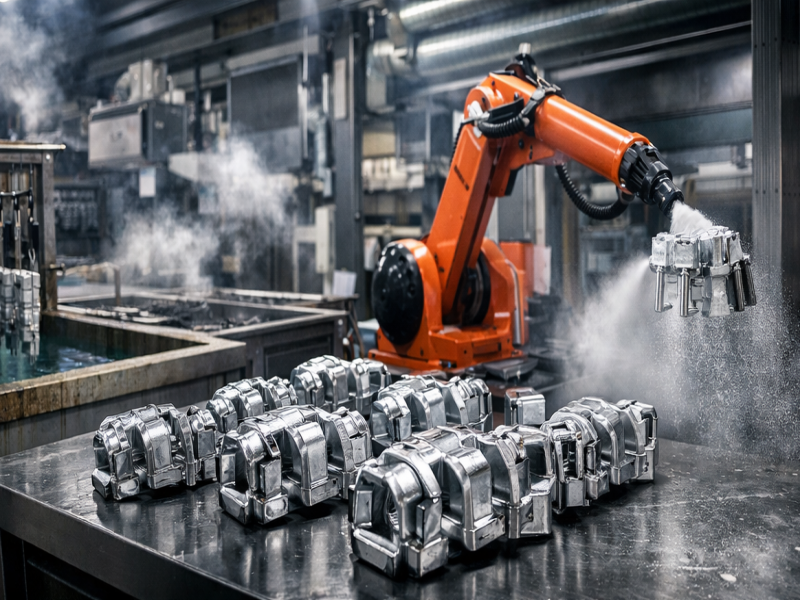
Powder coating is a widely used finishing technique for Zinc Die Castings, especially when manufacturers require durable, uniform coatings combined with flexible color and texture options. Unlike liquid painting methods, powder coating applies a dry, free-flowing powder to the metal surface. The powder particles are electrostatically charged so they adhere evenly to the grounded zinc component. This electrostatic attraction ensures that the coating spreads uniformly across the entire part, including complex geometries and recessed areas.
After the powder has been applied, the coated zinc die cast components are transferred to a curing oven. During curing, the powder melts and flows together, forming a continuous protective film that bonds strongly with the metal substrate. As the material cools, the coating solidifies into a smooth, durable surface layer. Because the coating is thermally cured rather than air-dried, it forms a stronger molecular bond compared to many traditional painting systems.
The overall powder coating workflow typically includes several stages designed to ensure consistent coating quality and adhesion. Surface preparation is particularly important for zinc die cast parts because it removes oils, residues, and oxidation that could otherwise reduce coating adhesion.
Typical powder coating workflow for zinc components includes:
1. Surface Preparation The casting is cleaned through degreasing, blasting, or chemical treatment. This stage removes contaminants and prepares the metal surface for proper coating adhesion.
2. Electrostatic Powder Application Dry powder particles are sprayed onto the grounded zinc die cast part using an electrostatic spray gun. The electrostatic charge helps the powder adhere evenly to the surface.
3. Thermal Curing The coated part is heated in an oven where the powder melts, flows, and chemically cross-links into a continuous film.
4. Inspection and Quality Control After curing, the coating is inspected for uniformity, surface defects, and thickness consistency.
The thickness of powder coatings is typically greater than that of electroplated finishes. This thicker coating layer provides enhanced mechanical protection and helps seal the metal surface from environmental exposure.
Powder coating is frequently selected for Zinc Die Castings because it provides a combination of durability, corrosion protection, and design flexibility. The thicker coating layer acts as a robust protective barrier that isolates the metal surface from environmental exposure. This protection is particularly valuable in applications where components may encounter moisture, chemicals, or frequent handling.
One of the most significant advantages of powder coating is its mechanical durability. Once cured, the coating forms a tough surface that resists chipping, scratching, and abrasion. This durability makes powder-coated zinc parts suitable for components that experience frequent physical contact or mechanical stress. Compared with thinner coatings, powder coatings can better absorb minor impacts and maintain their appearance over extended periods.
Another key benefit is enhanced corrosion resistance. Because the coating forms a continuous protective film over the metal surface, it prevents water, air, and contaminants from directly contacting the zinc alloy. This protective barrier significantly reduces the risk of oxidation and extends the service life of the component, especially in outdoor or humid environments.
Key performance advantages of powder coating include:
● High resistance to scratches and abrasion Powder-coated surfaces maintain their appearance even when exposed to repeated handling, friction, or minor impacts. This durability helps reduce maintenance and replacement costs.
● Superior corrosion protection The thick protective layer effectively seals the metal surface, protecting it from moisture, chemical exposure, and atmospheric corrosion.
● Environmental friendliness Powder coating produces minimal volatile organic compounds and allows excess powder to be recycled, making it a more environmentally responsible finishing process.
Powder coating is therefore widely used in products where both durability and appearance are important. These include appliance housings, industrial equipment enclosures, architectural hardware, and outdoor mechanical components.
Application Area | Why Powder Coating Is Suitable |
Industrial equipment housings | Provides strong protection against mechanical wear and environmental exposure |
Household appliances | Offers durable coatings with customizable colors and textures |
Outdoor hardware | Protects metal surfaces from moisture, sunlight, and corrosion |
Architectural fittings | Maintains long-lasting color and surface quality |
By combining corrosion resistance, mechanical strength, and aesthetic flexibility, powder coating has become a preferred finishing method for many Zinc Die Castings used in demanding industrial and consumer applications.
Chromate conversion coating is an important supplementary finishing process used for Zinc Die Castings, particularly when moderate corrosion protection or improved coating adhesion is required. Unlike plating or powder coating, chromate treatment does not deposit a thick layer of material on the surface. Instead, it triggers a chemical reaction between the zinc substrate and a specialized solution, forming a thin protective film that bonds directly with the metal surface. This chemically converted layer acts as a protective barrier and enhances the metal’s resistance to oxidation.
From a manufacturing standpoint, chromate coatings are often applied as a secondary protective treatment or as a preparation step before additional finishing processes such as painting or powder coating. Because the conversion layer is extremely thin, it does not significantly alter the dimensions of the component, which makes it particularly useful for precision parts where dimensional tolerances must remain consistent. The coating also provides a stable base surface that improves the adhesion of subsequent coatings.
In practice, chromate coatings can appear in several colors depending on the specific formulation used. These visual variations often correspond to differences in corrosion protection levels and environmental compliance requirements.
Chromate Type | Typical Appearance | Functional Purpose |
Clear/Blue Chromate | Slight bluish iridescent tone | Basic corrosion protection and coating base |
Yellow Chromate | Yellow or golden tint | Enhanced corrosion resistance |
Black Chromate | Dark matte finish | Decorative appearance with moderate protection |
Chromate treatments are particularly beneficial for components used in humid or moisture-prone environments, such as bathroom fixtures, kitchen hardware, and certain industrial equipment housings. In these applications, the conversion layer helps slow oxidation and extend the service life of zinc components without significantly increasing coating thickness.
Another advantage of chromate conversion coatings is their ability to function as a primer layer. When used before powder coating or painting, the chemically treated surface improves adhesion and reduces the risk of peeling or delamination. This multi-stage finishing approach is commonly adopted in industries that require both corrosion protection and decorative surface finishes.
In modern manufacturing environments, surface finishing processes are increasingly integrated directly into the die casting production workflow. Instead of outsourcing finishing operations to multiple facilities, many manufacturers now combine casting, surface preparation, and finishing within a single controlled production system. This integration improves product consistency, shortens production cycles, and ensures that surface treatments are optimized for the specific material properties of the zinc alloy.
An integrated finishing approach typically includes several coordinated processes that prepare the casting surface and apply protective or decorative coatings. By controlling these stages internally, manufacturers can maintain tighter quality control over coating thickness, adhesion strength, and overall surface quality.
A typical integrated finishing workflow may include the following stages:
● Precision die casting: Zinc alloy is cast into molds to create high-accuracy components with fine surface detail.
● Mechanical finishing: Processes such as deburring, polishing, or blasting remove surface imperfections and prepare the substrate for coating.
● Surface treatment: Chemical treatments such as chromate conversion are applied to enhance corrosion resistance or prepare the surface for further coatings.
● Decorative or functional finishing: Electroplating, powder coating, or specialty plating processes provide the final protective and aesthetic layer.
Manufacturers that integrate these processes often achieve higher reliability and repeatability in finished components. For example, Kunshan Diamond Precision Mold Co., Ltd. offers an integrated manufacturing system that combines zinc die casting production with multiple surface finishing technologies, including polishing, electroplating, chromate treatment, and silver plating. This coordinated workflow allows the company to ensure that each finishing layer bonds effectively with the zinc substrate while maintaining strict dimensional tolerances required for precision components.
Manufacturing Stage | Role in Surface Finishing | Benefit to Final Product |
Die casting production | Creates accurate zinc alloy components | High dimensional precision |
Surface preparation | Removes burrs and improves surface smoothness | Better coating adhesion |
Chemical treatment | Applies protective conversion layers | Improved corrosion resistance |
Final finishing | Adds decorative or functional coating | Enhanced durability and appearance |
By integrating die casting and finishing processes within a unified production system, manufacturers can better control the interaction between the zinc substrate and surface treatment layers. This approach not only improves coating reliability but also ensures that the final zinc die cast components meet both performance requirements and visual quality standards across a wide range of industrial and consumer applications.
Surface finishing improves Zinc Die Castings performance and appearance. Coatings increase corrosion resistance and durability.Electroplating and powder coating serve different needs. Polishing and chromate treatments add extra protection.Kunshan Diamond Precision Mold Co., Ltd. provides integrated die casting and finishing. Its precision parts deliver durability, quality, and reliable industrial value.
A: Common finishes for Zinc Die Castings include electroplating, powder coating, and chromate conversion coatings, each improving corrosion resistance or appearance.
A: Electroplating improves corrosion resistance and surface hardness of Zinc Die Castings while maintaining tight dimensional tolerances.
A: Yes, powder coating creates a thick protective layer on Zinc Die Castings, improving durability and resistance to environmental exposure.
A: Finishing for Zinc Die Castings is selected based on corrosion risk, design requirements, and mechanical performance needs.


