
Views: 0 Author: Site Editor Publish Time: 2026-03-12 Origin: Site
Can a design work in real production? Many ideas fail after tooling starts. Engineers avoid that risk early. Prototype zinc die casting helps test designs. It checks structure, fit, and manufacturability.
In this guide, you will learn key methods. You will also see design factors engineers consider.
In engineering development, prototype zinc die casting refers to producing early-stage components that replicate the geometry and structural characteristics of a final die cast part. Unlike simple visual models, these prototypes are functional parts used to determine whether a design can realistically be manufactured through the zinc die casting process.
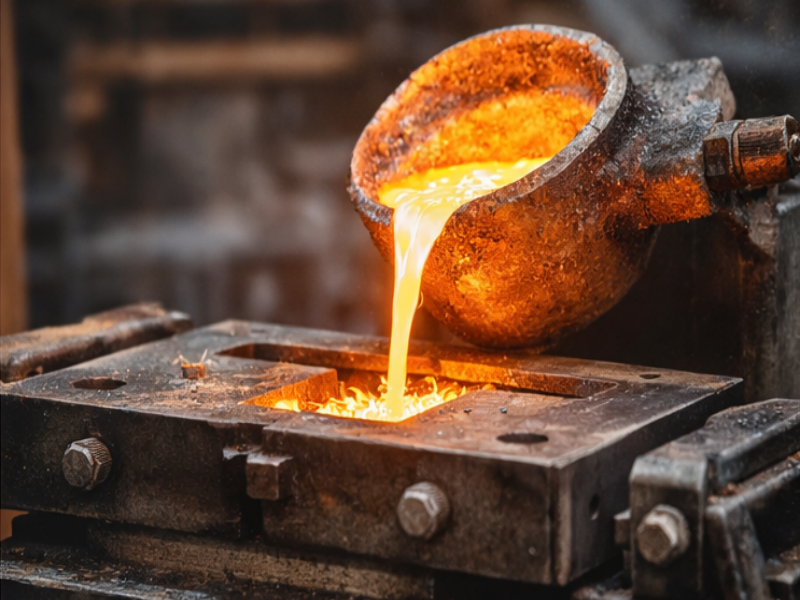
Because zinc casting involves molten metal filling a mold and rapidly solidifying, the manufacturing process directly affects dimensional accuracy, surface structure, and internal integrity. Prototype parts allow engineers to observe how design features—such as ribs, bosses, thin walls, and integrated fasteners—behave during casting and cooling.
In product development, prototypes usually fall into two main categories:
Conceptual Prototypes
● Used to confirm the overall shape and layout of a design.
● Often produced through machining or additive manufacturing for quick evaluation.
● Useful for checking assembly space, ergonomics, and packaging constraints.
● However, they do not accurately represent the structural or manufacturing behavior of die cast parts.
Manufacturing Validation Prototypes
● Designed to simulate the real casting process as closely as possible.
● Used to evaluate manufacturability, dimensional stability, and mechanical performance.
● Help engineers study how the part reacts to mold filling, cooling, and shrinkage.
● Provide practical data that supports final tooling design decisions.
Prototype Type | Primary Purpose | Manufacturing Representation | Typical Stage |
Conceptual Prototype | Verify geometry and design layout | Low | Early design |
Manufacturing Prototype | Validate casting feasibility and performance | High | Pre-production |
Understanding these prototype categories helps engineering teams select the right validation method and avoid manufacturing issues during later stages of development.
Engineers typically use prototype zinc die casting at key stages of product development to verify that a component can both function properly and be manufactured efficiently.
One of the most common applications is design validation before tooling investment. High-pressure die casting molds are complex steel tools that require significant cost and lead time. If design flaws appear after tooling is built, modifications can be expensive. Prototypes allow engineers to refine the design while changes are still manageable.
Another important use is functional testing of mechanical components. Zinc die cast parts are often used in products exposed to mechanical loads, vibration, or impact. Prototypes enable engineers to perform stress testing, fatigue analysis, or durability checks to ensure the part meets performance requirements.
Prototypes are also valuable for assembly verification. Many die cast components interact with multiple parts within a larger system. Testing a prototype within the assembly helps engineers detect alignment issues, interference problems, or structural weaknesses before production begins.
Typical engineering objectives include:
● Validating geometry and manufacturability
● Testing mechanical strength and durability
● Confirming assembly compatibility with surrounding components
By incorporating prototype zinc die casting early in the design process, engineering teams can reduce manufacturing risk and improve the reliability of the final production parts.
One of the fastest ways to produce a prototype of a zinc die cast component is CNC machining from zinc bar stock. This approach removes material from a solid metal block using precision cutting tools, allowing engineers to create parts that closely match the CAD geometry.
Machining is particularly valuable during the early design stage because it requires no casting molds or tooling. As a result, engineers can quickly generate test parts to verify that the design fits correctly within an assembly. Dimensional accuracy is typically very high, making machined prototypes ideal for evaluating mechanical interfaces such as threaded connections, mounting holes, and mating surfaces.
Another major advantage of CNC machining is flexibility. Design revisions can be implemented quickly by modifying the machining program rather than rebuilding tooling. This enables engineers to iterate rapidly when refining the geometry of a component.
However, machining also has important limitations when used to simulate die cast parts. Because the part is cut from solid material, it does not replicate the microstructure or surface characteristics created during casting. Zinc die cast components typically develop a dense outer layer during solidification, often referred to as a “casting skin.” This surface structure influences strength, surface finish, and coating adhesion.
For this reason, machined prototypes are best suited for geometry validation rather than manufacturing validation. The table below summarizes the strengths and limitations of CNC machining for zinc prototype parts.
Factor | CNC Machining Prototype |
Lead Time | Very short (often days) |
Tooling Required | None |
Dimensional Accuracy | Excellent |
Surface Representation | Does not replicate die cast surface |
Manufacturing Simulation | Limited |
Although machining cannot fully replicate die casting behavior, it remains an essential first step in many product development workflows.
When engineers require prototypes that behave more like real die cast components, investment casting is often used as an intermediate solution. This process creates parts by forming a ceramic mold around a wax pattern, which is later melted away before molten metal is poured into the mold.
Investment casting offers several advantages for prototype testing. Because the metal solidifies inside a mold rather than being machined from solid stock, the resulting part more closely resembles the internal structure of a cast component. This allows engineers to evaluate mechanical performance in conditions that better approximate the final production environment.
Another important benefit is the ability to produce complex geometries with relatively good surface quality. Features such as thin walls, ribs, and detailed shapes can often be reproduced with greater realism than in machined prototypes. As a result, investment casting prototypes are commonly used when engineers need to perform structural or mechanical testing before committing to die casting tooling.
Typical scenarios where investment casting is useful include:
● Stress testing components that experience repeated loads
● Evaluating structural behavior under impact or vibration
● Validating material properties for functional performance
Although investment casting provides more realistic prototypes than machining, it still differs from high-pressure die casting in terms of cooling rate and metal density. Engineers therefore often treat investment cast prototypes as performance approximations rather than exact production replicas.
The most accurate way to evaluate a zinc die cast design is to produce prototypes using actual high-pressure die casting equipment. In this approach, engineers build simplified tooling—often a single-cavity mold—to manufacture prototype parts under real production conditions.
Unlike other prototyping methods, prototype tooling reproduces the entire die casting process. Molten zinc is injected into the mold under high pressure, allowing the metal to fill intricate features and cool rapidly. This process generates parts with the same internal structure, surface density, and dimensional characteristics expected from full production runs.
Because of this high level of accuracy, prototype tooling is often used when engineers need definitive validation of a design before launching mass production. Testing parts produced under real casting conditions allows teams to evaluate multiple aspects of performance, including:
● Final surface finish and coating compatibility
● Dimensional stability across multiple castings
● Mechanical strength and structural integrity
Although prototype tooling requires a higher initial investment than machining or investment casting, it provides the most reliable insight into production behavior. This makes it particularly valuable when a product is approaching its final development stage.
In practice, engineers select prototype tooling when the project requires maximum confidence in manufacturability and product performance. By validating the design under real casting conditions, they significantly reduce the risk of unexpected problems during large-scale production.
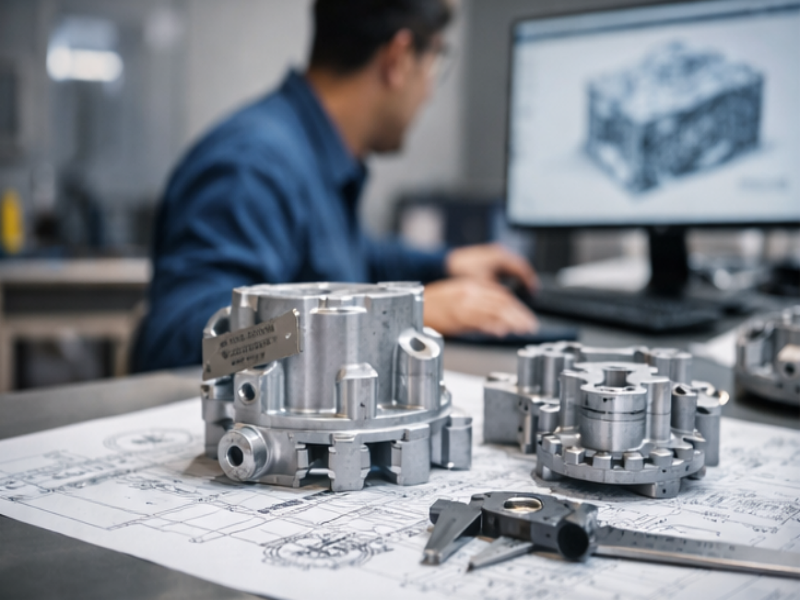
When designing parts for prototype zinc die casting, geometry plays a critical role in determining whether the component can be manufactured successfully. Zinc alloys are known for excellent fluidity, allowing intricate features and thin walls to be produced more easily than many other metals. However, even with this advantage, certain design principles must be followed to ensure the molten metal fills the mold properly and solidifies without defects.
Engineers often begin by reviewing the overall wall thickness distribution of the part. Uniform wall thickness promotes consistent cooling and reduces internal stresses that could lead to distortion or shrinkage. Thin walls are achievable in zinc casting, but abrupt transitions between thick and thin sections should be avoided because they may cause uneven solidification.
In addition to wall thickness, many modern zinc die cast parts integrate functional elements directly into the casting. These may include threaded inserts, ribs for reinforcement, mounting bosses, or snap-fit features. Integrating these structures into the casting reduces the need for secondary machining operations and simplifies assembly.
Typical geometry considerations include:
● Maintaining consistent wall thickness to avoid shrinkage defects
● Adding fillets at internal corners to improve metal flow
● Designing ribs instead of thick solid sections to maintain strength while reducing weight
● Integrating features such as mounting points or hinges directly into the casting
The following table highlights common geometry practices that improve casting feasibility:
Design Feature | Recommended Approach | Benefit |
Wall Thickness | Keep sections uniform | Reduces shrinkage and warping |
Corners | Add fillets or radii | Improves metal flow |
Reinforcement | Use ribs instead of thick masses | Maintains strength with less material |
Feature Integration | Include bosses or mounts in casting | Reduces secondary machining |
By applying these geometry guidelines early in the design process, engineers can greatly improve the manufacturability of prototype parts while also preparing the design for efficient production.
Another critical design consideration for prototype zinc die casting is the inclusion of draft angles, which are slight tapers applied to vertical surfaces of a part. Draft angles allow the casting to be released from the mold without damaging the part or the die itself.
During die casting, molten zinc is injected into a steel mold under high pressure. After the metal solidifies, the mold opens and ejector pins push the part out. If vertical surfaces are completely straight, the part may stick to the mold walls, causing scratches, deformation, or excessive tool wear. Draft angles reduce friction during this ejection process.
Designing appropriate draft angles requires balancing several factors. Engineers must ensure that the taper is large enough to allow smooth part release while maintaining the dimensional accuracy required by the product design. In many applications, draft angles are incorporated into surfaces that are not critical for assembly alignment, preserving tight tolerances where needed.
Key draft design considerations include:
● Increasing draft angles on deeper cavities or tall features
● Maintaining consistent draft direction to simplify mold design
● Applying smaller draft angles on precision surfaces where necessary
Surface quality is another important consideration when designing prototypes for zinc die casting. Although the casting process itself produces relatively smooth surfaces, many applications require additional finishing processes to achieve the desired appearance, durability, or corrosion resistance.
Common finishing treatments applied to zinc die cast parts include electroplating, polishing, and protective coatings. These processes improve both functional performance and visual quality, particularly in applications such as hardware, consumer appliances, and decorative components. During prototyping, engineers often evaluate how well the surface of the casting accepts these treatments.
For example, plating processes require a clean and consistent substrate to ensure proper adhesion of the coating layer. Surface irregularities, porosity, or poor mold filling can affect the final finish quality. By testing finishing processes on prototype parts, engineers can confirm that the casting design supports the desired surface treatment.
Manufacturers with integrated casting and finishing capabilities—such as Kunshan Diamond Precision Mold Co., Ltd.—often combine zinc die casting with processes like electroplating, chromate protection, silver plating, and polishing to produce components that meet both structural and aesthetic requirements. These integrated manufacturing approaches allow prototype parts to closely resemble final production products in both performance and appearance.
Typical finishing options for zinc die cast parts include:
Finishing Process | Purpose | Typical Applications |
Electroplating | Improves corrosion resistance and surface shine | Hardware, decorative components |
Chromate Treatment | Provides protective coating against oxidation | Industrial components |
Polishing | Enhances surface smoothness and aesthetics | Consumer products |
Silver Plating | Adds high-end decorative finish | Furniture and appliance hardware |
Evaluating these finishing processes during prototype development helps ensure that the final production parts will achieve the desired appearance and durability.
One of the primary advantages of prototype zinc die casting is its ability to replicate many of the physical characteristics found in production components. When parts are produced using actual casting processes, they develop material structures that are difficult to reproduce through machining or additive manufacturing.
During high-pressure die casting, molten zinc is injected into a mold and cools rapidly under controlled conditions. This rapid solidification creates dense outer surfaces and fine internal grain structures that influence strength, durability, and surface finish. Prototype castings produced under similar conditions allow engineers to observe how these characteristics affect the final product.
Because of this similarity to production parts, prototype castings provide valuable insights into:
● Dimensional stability after cooling
● Surface finish quality and coating compatibility
● Structural behavior under load
By observing these characteristics in prototype components, engineers gain a clearer understanding of how the design will behave during full-scale manufacturing.
Another major advantage of prototype zinc die casting is the ability to perform real-world functional testing. While digital simulations and CAD models can predict certain aspects of performance, physical prototypes allow engineers to validate how components behave under actual operating conditions.
Functional testing may involve applying mechanical loads, vibration, or environmental stress to determine whether the component meets performance requirements. Zinc die cast parts are commonly used in mechanical assemblies, enclosures, hardware components, and consumer products, all of which require reliable structural performance.
In addition to mechanical evaluation, prototypes also support assembly testing. Engineers can install the prototype within the larger product system to confirm that alignment, clearances, and mounting features function as intended. Even small design adjustments can improve assembly efficiency and reduce the need for later modifications.
Typical validation tests performed with prototypes include:
● Load-bearing and fatigue testing
● Assembly alignment verification
● Fastener and mounting performance evaluation
● Environmental testing such as temperature or corrosion exposure
These evaluations ensure that the design performs correctly before production tooling is finalized.
Perhaps the most important benefit of prototype zinc die casting is the ability to reduce manufacturing risk before investing in expensive production tooling. Production molds for high-pressure die casting are complex tools made from hardened steel and are designed to produce large volumes of parts. Once these tools are manufactured, making design changes can be both costly and time-consuming.
By validating a design through prototypes, engineers can identify potential manufacturing problems early in the development process. Issues such as poor mold filling, dimensional instability, or insufficient strength can be corrected before the design moves into production.
The impact of prototype validation can be summarized as follows:
Development Stage | Without Prototype Testing | With Prototype Testing |
Design Validation | Potential hidden defects | Early detection of design issues |
Tooling Investment | Higher financial risk | Improved confidence before tooling |
Production Launch | Possible delays due to redesign | Smoother transition to manufacturing |
Ultimately, prototype zinc die casting allows engineering teams to refine designs, validate manufacturability, and ensure reliable performance. By addressing potential issues before production tooling is built, companies can shorten development cycles and reduce the likelihood of costly redesigns later in the manufacturing process.
Prototype zinc die casting bridges design and production. It helps engineers test structure, fit, and manufacturability.Choosing the right prototype method improves validation. It reduces tooling risk and speeds development. Experienced partners matter in this stage. Kunshan Diamond Precision Mold Co., Ltd. delivers precision zinc die cast parts and integrated finishing. Their solutions support reliable prototypes and stable production.
A: Prototype zinc die casting helps engineers test manufacturability, fit, and mechanical behavior before investing in production tooling.
A: Prototype zinc die casting is used during early validation stages to confirm design feasibility and casting performance.
A: Prototype zinc die casting replicates casting conditions, while machining only verifies geometry and assembly fit.
A: Yes. Prototype zinc die casting reflects real casting behavior, helping evaluate tolerances, strength, and potential defects.


