
Views: 0 Author: Site Editor Publish Time: 2025-11-24 Origin: Site
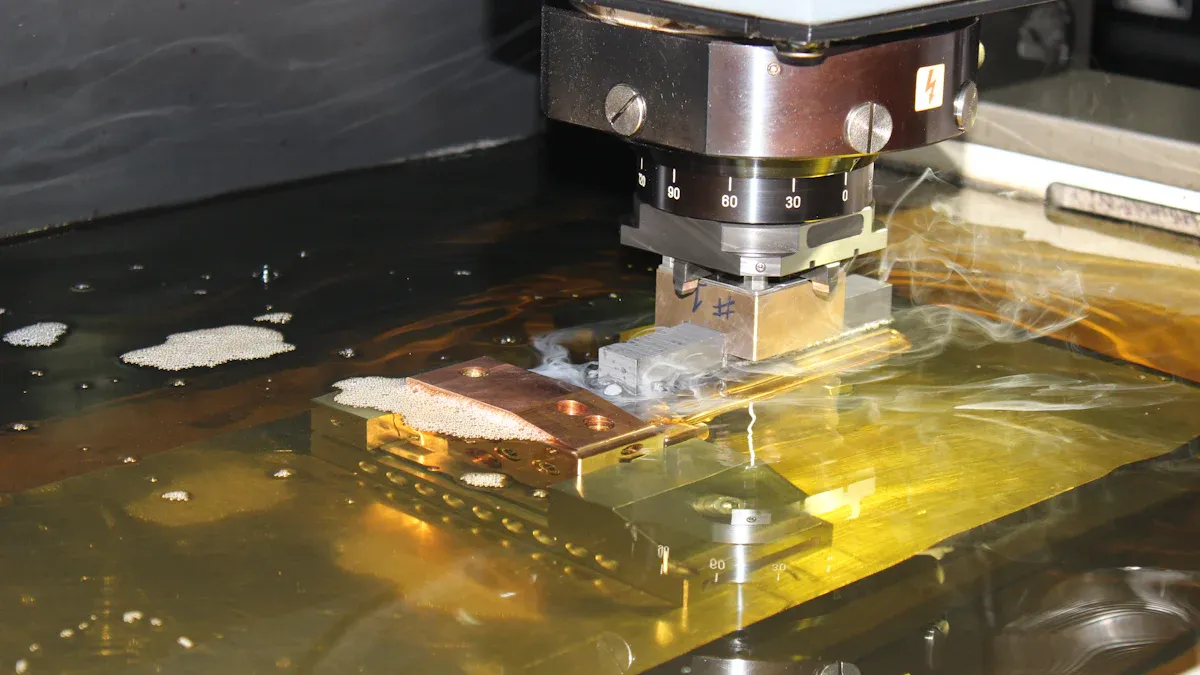
You use the precision molding process when you need parts that fit exactly. This method uses special plastic and CNC/injection molding. It shapes materials with very close measurements. The process makes sure each part is the same every time. You can pick the color, finish, and shape you want for your product.
Aspect | Explanation |
|---|---|
Material Selection | You pick materials that fit your needs. |
Design Flexibility | You change designs for special needs. |
Tight Tolerances | You get parts with exact sizes. |
You get strong parts, steady quality, and careful quality checks.
Precision molding makes parts that fit just right. This helps keep quality high and parts the same every time.
Picking the right materials is very important. It changes how strong or bendy the part is. It also helps the part follow rules.
Good design and planning stop problems like warping and shrinking. This gives better results.
New machines and real-time checks make molding better. They help cut down on mistakes and waste.
Precision molding is used in many fields. These include cars, planes, and medical tools. These jobs need parts made to exact rules.
You use the Precision Molding Process to make parts that fit exactly. This method works with plastics and uses special machines like CNC and injection molders. It can make parts with hard shapes and very close sizes. The process has many steps to make sure each part is right.
The main steps in the Precision Molding Process are:
Clamping: The mold plates push together.
Injection: Melted plastic goes into the mold.
Dwelling: Pressure keeps the mold full.
Cooling: The plastic gets cool and hard.
Mold Opening: The mold opens up.
Ejection: The finished part comes out.
The machines watch each step to make sure it is the same every time. This makes the process great for things like medical devices, electronics, and cars. These things need every part to be just right.
The Precision Molding Process is special because it uses smart machines and careful checks. You get things like advanced runner systems, hot runner temperature controls, and valve gate systems for good material flow. Real-time monitoring checks everything during production.
You get parts with close sizes, so there are fewer mistakes and less waste.
Good cooling systems help keep the process steady and correct.
Using materials well helps save resources and is better for the planet.
Quality checks make sure each part is what you need.
Aspect | Benefit |
|---|---|
Tight Tolerances | Makes fewer bad parts and less waste. |
Optimized Cooling Systems | Keeps pressure and material amounts right. |
Material Efficiency | Cuts down on waste and helps the environment. |
You can count on the Precision Molding Process to give you good, steady parts, even for hard jobs.
You begin by thinking about how your part should look and work. This is called part design and DFM. Good planning now helps you avoid problems later. Smart choices make parts easier to mold and better in quality.
Here are some tips to follow:
Pick the best resin for how your part will be used.
Make sure the walls are the same thickness.
Put the gate where the mold fills best.
Add draft angles so parts come out of the mold easily.
Plan special shapes, like undercuts, to help remove parts.
Some problems can happen if you are not careful:
The wrong material can make parts break.
Walls that are too thick or thin can cause warping.
Not enough draft makes it hard to get parts out.
Sharp corners can make parts weak.
Extra undercuts make it tough to remove parts.
You must choose the right material for your part. This choice changes how your part works and how easy it is to make.
Think about these things:
Does your part need to bend, be strong, or stay stiff?
Will your part get hot during use?
Does your material need to follow special rules, like FDA approval?
Here is a table that shows some materials and what they are used for:
Material | Properties | Applications |
|---|---|---|
PEEK | Handles high heat, strong, resists chemicals, insulates electricity | Used in planes, medical tools, and electronics |
HIPS | Light, stiff, keeps its shape | Used for packaging, toys, and electronics |
LDPE | Light, bends easily, resists chemicals | Used for packaging, toys, and home items |
PBT | Keeps its shape, resists chemicals, strong | Used in electronics and cars |
POM | Slippery, keeps its shape, very strong | Used for machine parts, electronics, and gears |
PPS | Handles high heat, resists chemicals, keeps shape | Used in electronics and cars |
PVC | Light, resists chemicals, insulates electricity | Used for pipes, cables, and floors |
Silicone | Handles heat, resists chemicals, bends well | Used in medical tools, cars, and home products |
TPE | Bends well, resists chemicals | Used in medical tools, home products, and cars |
TPU | Bends, resists chemicals, tough against wear | Used in shoes, cars, and medical tools |
UHMW | Very tough, resists wear and chemicals | Used for bearings, gears, and machine parts |
After you finish your part design, you work on the mold. The mold shapes your part and helps it work right.
Step | Description |
|---|---|
Mold Base Design | Build the main part of the mold. |
Cavity and Core Design | Make the shapes that form your part. |
Cooling Channel Design | Plan how to cool the mold during use. |
Ejector Pin Design | Decide how to push the part out of the mold. |
New tools help you work faster and better. AI can help you get quotes and program machines. CAD/CAM automation makes design quick and correct. New molding tech lets you make tiny, detailed parts. AI also helps control EDM for better results.
You must check your mold before making many parts. This step makes sure your mold works well and gives good parts.
Stage | Description |
|---|---|
Mold Qualification | Test the mold to see if it is the right size and surface. The mold maker checks this with samples. |
Process Validation | Find the best settings so every part is the same. You test many things and check the first parts. |
Now you use the mold to make your parts. Injection and cooling are very important steps.
Watch these things closely:
Temperature: Keeps plastic melted and helps it cool.
Pressure: Fills the mold and stops shrinking.
Mold Temperature: Changes how fast the part cools and its quality.
Melt Temperature: Changes how the material moves and hardens.
Cooling Time: Decides how the part gets hard and keeps its shape.
Packing Parameters: Includes pressure and barrel size, which change the part’s shape.
Factor | Impact on Product Quality |
|---|---|
Cooling Time | Most of the cycle is cooling. Uneven cooling can bend or stress parts. |
Cooling System Design | Good cooling channels spread heat and stop defects. |
Injection Pressure | Fills the mold and stops empty spots. |
Packing Pressure | Stops shrinking and keeps the part the right size. |
Holding Pressure | Stops shrinking, prevents sink marks, and helps accuracy. |
You finish your parts and check them at the end. This step makes sure your parts are the right size and work well.
Quality Control Measure | Description |
|---|---|
ISO-Certified Processes | Use ISO rules for high quality. |
Precision Tooling and Molding | Use smart machines and software for even parts. |
In-Process Monitoring | Watch settings in real time to keep parts right. |
Comprehensive Testing | Check parts by looking and using tools to match the design. |
Traceability | Track every batch to fix problems fast and know where parts came from. |
You can trust the Precision Molding Process to give you parts that meet strict rules. Careful checks at each step help you get the best parts.
You need special machines for the Precision Molding Process. CNC machines and injection molders shape plastic parts very accurately. These machines have smart features to help every part match your design.
The gate and runner system lets plastic move smoothly. This helps stop problems in the parts.
The cooling system keeps parts from bending. It also makes the process faster.
The machines control speed, pressure, and temperature. This helps make every part the same.
Quality control tools check each part’s size and shape. They use inspections and systems to find mistakes.
These machines help you make parts that follow strict rules. They help you avoid errors and keep your work going well.
You need to choose the best material for your parts. Thermoplastic polymers are popular because they melt and harden again and again. They do not lose their strength. Each polymer type has special features for different jobs.
Polyethylene (PE) is flexible and strong. It does not soak up water. You see it in bottles and packaging.
Polyvinyl Chloride (PVC) is strong and stable. You find it in pipes and wire covers.
Polyamide (PA) is tough and bends without breaking. You use it for gears and moving parts.
Some thermoplastics, like PEEK, Ultem, and Polycarbonate, are very strong. They also resist heat. These are good for medical, car, and electronic parts.
Tip: Always pick a material that fits your product’s needs. The right polymer helps your part last longer and work better.
You can run into problems during precision molding. Warping and shrinkage can change the size and strength of parts. These problems happen when the material cools unevenly or shrinks too much. You can lower these risks by picking materials that shrink less. You can also make your cooling system better.
Other problems can happen too:
Issue | Description |
|---|---|
Inconsistent cavity performance | Some mold cavities make parts that do not match. |
Persistent defects after optimization | Some defects stay even after you fix the process. This can mean the mold design is not good. |
Environmental conditions | Changes in heat or wetness can change part quality. |
Improper barrel and screw sizing | Using the wrong size can make the material flow badly. |
You might also see short shots, sink marks, or weld lines. These happen if the material does not move well. Flow simulation software can help you find and fix these problems before you start making parts.
You must keep tight tolerances so every part matches your design. There are ways to help with this:
Method | Description |
|---|---|
Design For Manufacturability (DFM) | Good design choices help you stay within the right size. |
Parting Line Mismatches | Small differences can show where the mold splits. Plan for this in your design. |
Material Selection | Pick materials that shrink less to keep parts the right size. |
Process Control | Watch pressure, time, and temperature to control shrinking. |
Tip: Always check your process and material to keep your parts the right size.
You can make your process better by making smart choices. Try these ideas:
Put gates in the best place to help material move.
Use DFM to make parts easier to mold and lower mistakes.
Run mold flow analysis to find and fix problems early.
Change wall thickness slowly to help the material fill the mold and lower stress.
If you follow these steps, you can make better parts. You will waste less material and keep your process working well. ️
Precision molding is used in many big industries. This process makes parts that must fit right and work well. Companies use it when they need strong and detailed parts.
Industrial Sector | Specific Requirements |
|---|---|
Automotive | Material properties, part geometry, production efficiency |
Aerospace | Material properties, part geometry, production efficiency |
Defense | Material properties, part geometry, production efficiency |
In cars, parts must handle heat and pressure. They also need to fit together with no gaps. In planes, parts must be light but still strong and safe. Defense needs parts that work in hard places and follow strict rules.
Note: Precision molding helps you control the size, shape, and material of each part.
You can find precision-molded parts in many things you use. Here are some examples:
Automotive: Molded gears, dashboard buttons, and light covers must fit and last.
Aerospace: Brackets, housings, and connectors keep planes safe and light.
Medical Devices: Syringes, inhalers, and surgical tools must be clean and exact.
Consumer Electronics: Phones, remotes, and headphones have molded cases and buttons.
Industrial Equipment: Gears, valves, and housings help machines in factories work.
Precision molding lets you make parts with special shapes and smooth finishes. The process uses strong materials. You can trust it to give you quality parts for many jobs.
You now know how the precision molding process shapes modern manufacturing. When you use CAD/CAM tools, you can cut lead times by up to 40%. Rigorous metrology practices help you lower production errors by 30%. CNC machining lets you create tight tolerances, while EDM speeds up your time-to-market. If you choose high-quality tool steels, you can boost mold life and reduce defects. Each step you master brings better quality and efficiency. For special projects, consider talking with experts to get the best results.
You get parts that match your design exactly. This process helps you avoid mistakes and waste. You can trust the size and shape of every part.
You look at how your part will be used. Think about strength, heat, and safety needs. You can use a table to compare materials and pick the best one.
Yes, you can. Precision molding lets you create tiny or detailed shapes. You use special machines and tools to get the exact features you want.
You use tests and inspections. You measure each part and compare it to your design. You also track batches to find and fix problems fast.


